


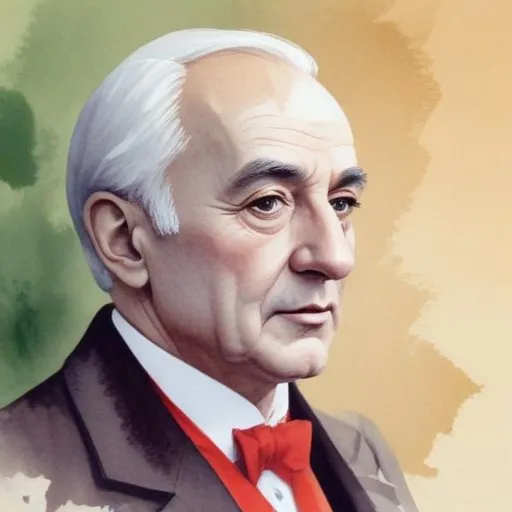
A Polish-born British historian who pioneered the study of 18th-century British politics and society through meticulous archival research, shedding light on the lives of ordinary people.
Lewis Bernstein Namier, a renowned British historian, is best known for his groundbreaking work on modern British history, particularly his influential theories on the 18th-century British parliamentary system. His seminal works, such as The Structure of Politics at the Accession of George III and England in the Age of the American Revolution, reshaped the understanding of British politics and society during the Georgian era.
Born on June 27, 1888, in Nikolayev, Ukraine, Namier was the son of a Jewish family of Polish descent. His family relocated to England in 1907, and Namier pursued his education at Balliol College, Oxford, where he earned a degree in Modern History. It was during his time at Oxford that Namier developed a deep interest in history, fostered by his mentor, H.A.L. Fisher.
Namier's historical approach emphasized the significance of individual personalities and factions in shaping political events. He rejected the traditional Whig interpretation of history, which portrayed British history as a steady progress towards democracy and liberty. Instead, Namier argued that the British political system was shaped by the interests and alliances of aristocratic families and factions.
His magnum opus, The Structure of Politics at the Accession of George III, published in 1929, challenged prevailing views of the British political system during the 18th century. Namier's innovative methodology, which combined archival research with sociological analysis, revealed the complex web of patronage, factionalism, and family connections that underpinned British politics.
Namier's work has had a profound impact on modern historical scholarship, influencing generations of historians and scholars. His approach to history has been applied to various fields, including political science, sociology, and anthropology. Namier's emphasis on the importance of individual agency and factionalism has also shaped modern political analysis.
Namier was elected a Fellow of the British Academy in 1934 and was awarded the Order of Merit in 1952. He also received honorary degrees from several universities, including Oxford, Cambridge, and Manchester.
Namier's work was not without controversy. His rejection of the Whig interpretation of history and his focus on the role of factionalism in British politics were met with criticism from some historians, who accused him of being overly pessimistic and skeptical of the progressive nature of British history.
Lewis Namier's contribution to modern British history has been profound and lasting. His innovative approach to historical research and his influential works have shaped the field of history, inspiring generations of historians and scholars. As a pioneer of modern British historiography, Namier's legacy continues to inspire and inform our understanding of the complex and multifaceted nature of British politics and society.
Born in 1906
A renowned historian and academic who reshaped the understanding of modern European history, particularly World War I and II, through provocative and insightful writings.
Born in 1909
A Latvian-English historian and philosopher who explored the intersection of philosophy, history, and politics, and is renowned for his work on the Enlightenment, liberty, and the nature of humanity.
Born in 1914
A renowned historian and academic who wrote extensively on European history, particularly the Renaissance and Nazi Germany, and was known for his meticulous research and engaging writing style.
Born in 1876
A renowned British historian and academic who wrote extensively on English history, particularly the social and cultural aspects of the 18th and 19th centuries.
