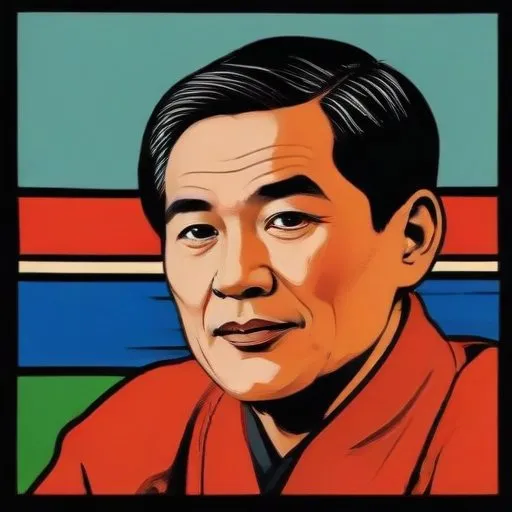
Liang Yusheng: The Pioneer of Modern Wuxia Fiction
A Master of Martial Arts Novels
Liang Yusheng, born Chen Wentong, is a renowned Chinese-Australian novelist celebrated for pioneering the new school of wuxia fiction in the 20th century. Alongside Jin Yong and Gu Long, he was one of the most prominent wuxia writers in the later half of the 20th century, leaving an indelible mark on the literary world.
Early Life and Inspirations
Born in 1924 in a scholarly family in Guangxi Province, China, Liang Yusheng was well-versed in ancient Chinese classics and duilian from a young age. He could recite the Three Hundred Tang Poems by the age of eight. During his high school years in Guilin, he developed a passion for writing poems. The outbreak of the Second Sino-Japanese War in 1937 led him to return to Mengshan County, where he studied history and literature under the tutelage of two scholars from Guangdong Province.
Literary Career and Notable Works
Liang Yusheng's literary career spanned decades, during which he published an impressive 35 wuxia novels. Some of his most notable works include:
- Baifa Monü Zhuan
- Yunhai Yugong Yuan
- Qijian Xia Tianshan
- Pingzong Xiaying Lu
Several of his novels have been adapted into films and television series, including the popular "The Bride with White Hair" (1993) and "Seven Swords" (2005).
Influence and Legacy
Liang Yusheng's contributions to the wuxia genre have been profound. He is credited with modernizing the genre, introducing new themes, and exploring the complexities of human relationships. His works have inspired generations of writers, filmmakers, and readers alike. Today, he is revered as a master of martial arts novels, and his literary legacy continues to captivate audiences worldwide.
Philosophical Contributions and Beliefs
Liang Yusheng's writing often reflected his philosophical beliefs, which emphasized the importance of literary tradition, cultural heritage, and personal relationships. He drew inspiration from Chinese classics, history, and poetry, weaving these elements into the fabric of his stories. His pen name, Liang Yusheng, was chosen to pay homage to his ancestors and favourite wuxia writers, such as Gong Baiyu.
Awards and Recognition
Throughout his illustrious career, Liang Yusheng received numerous awards and accolades for his contributions to literature. His impact on popular culture and his influence on the wuxia genre have cemented his place as one of the most iconic writers of the 20th century.
Personal Milestones and Key Life Events
Liang Yusheng's life was marked by significant events that shaped his writing and worldview. From his early years in China to his later life in Australia, he remained committed to his craft, leaving behind a body of work that continues to inspire and entertain.
Conclusion
Liang Yusheng's remarkable journey as a writer, pioneer, and cultural icon has left an indelible mark on the literary world. His wuxia novels have captured the hearts of readers worldwide, and his influence on modern Chinese literature is undeniable. As a master of martial arts fiction, Liang Yusheng's legacy will continue to inspire generations to come.
FAQ
What is Liang Yushengs most famous literary work?
Liang Yushengs most famous literary work is the novel The Legend of the Condor Hero, a wuxia classic that has been adapted into numerous films, television shows, and stage productions.
What genre of literature did Liang Yusheng specialize in?
Liang Yusheng specialized in wuxia, a genre of Chinese literature that combines elements of martial arts, adventure, and fantasy.
How did Liang Yushengs work influence Chinese popular culture?
Liang Yushengs work has had a significant influence on Chinese popular culture, inspiring generations of writers, filmmakers, and artists.
What awards did Liang Yusheng win for his writing?
Liang Yusheng won several awards for his writing, including the inaugural Hong Kong Literature Prize in 1991.
Is Liang Yusheng considered a pioneer of wuxia literature?
Yes, Liang Yusheng is considered a pioneer of wuxia literature, helping to popularize the genre and pave the way for later writers and creators.