


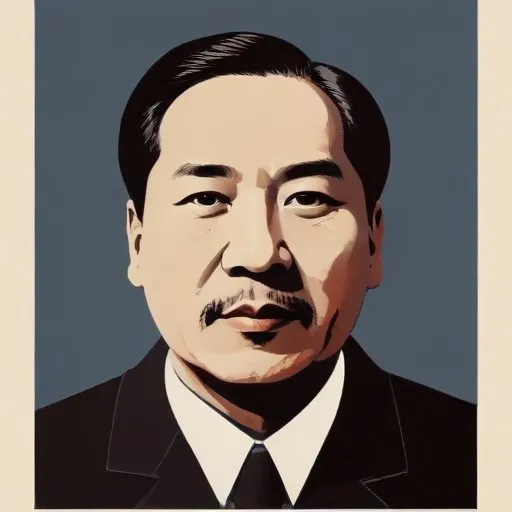
A pioneering Chinese writer and critic, known for his influential literary works that explored the country's social and political landscape, particularly during the Republican era.
Mao Dun's early life was marked by a strong educational foundation, courtesy of his parents. His father, Shen Yongxi, a teacher, designed a curriculum for his son, while his mother, Chen Aizhu, took over as his teacher after his father's untimely death when Mao Dun was just ten years old. This early exposure to learning instilled in him a deep passion for writing and reading, which would eventually become the hallmark of his illustrious career.
As the editor-in-chief of Fiction Monthly, Mao Dun played a pivotal role in promoting left-wing literature and fostering a community of like-minded writers. His leadership in the League of Left-Wing Writers further solidified his position as a driving force behind China's literary renaissance.
Through his work, Mao Dun sought to reconcile the contradictions between the Communist Party's utopian ideals and the practical challenges of building a socialist society. This philosophical inquiry is reflected in his pen name, Mao Dun, which literally means "contradiction" or " Spears and Shields," symbolizing the conflicting revolutionary ideologies within China during the 1920s.
Mao Dun's friendship with Ye Shengtao, who helped him modify his pen name, further underscores the significance of personal relationships in shaping his literary trajectory.
As the first Minister of Culture in the People's Republic of China (1949-1965), Mao Dun played a crucial role in shaping the country's cultural landscape, promoting a socialist cultural agenda that continues to resonate today.
Mao Dun's legacy extends far beyond his literary achievements, serving as a testament to the power of art and literature to shape our understanding of the world and our place within it.
Born in 1009
A renowned poet and essayist of the Song Dynasty, known for his lyrical and expressive writings that explored themes of nature, politics, and human emotions.
Born in 1902
A renowned Chinese writer and educator, celebrated for his vivid portrayals of rural life and cultural heritage in modern Chinese literature. His works often explored the complexities of human relationships and social change.
Born in 1904
A pioneering female writer and educator who explored themes of feminism, socialism, and individuality in her works, leaving a lasting impact on Chinese literature.
