


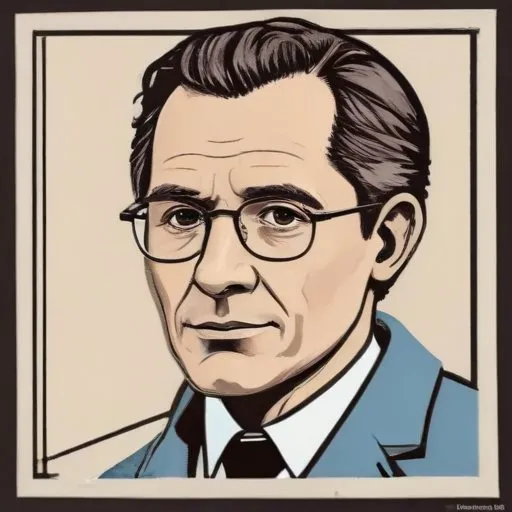
Developed pioneering research in theoretical physics, particularly in the field of quantum mechanics, and made significant contributions to the development of mathematical models.
Ljubov Rebane is renowned for her groundbreaking contributions to the field of high-spectral-resolution spectroscopy and persistent spectral hole burning of molecules and solids. Her innovative research earned her the esteemed USSR State Prize in 1986, solidifying her position as a leading physicist of her time.
Born on September 6, 1929, in Leningrad, Russia, Ljubov Rebane grew up in an era of great scientific discovery. She pursued her passion for physics, graduating from Leningrad University in 1952 and later earning her PhD in Physics and Mathematics in 1961 from the same institution.
Rebane's most significant contribution lies in her work on high-spectral-resolution spectroscopy and persistent spectral hole burning of molecules and solids. Her research, conducted in collaboration with other esteemed physicists, led to a deeper understanding of molecular interactions and the development of new spectroscopic techniques.
Her work was recognized with the USSR State Prize in 1986, alongside nine other prominent physicists, including Rein Avarmaa, Anel Gorohhovski, and Roman Personov. This prestigious award honored their collective efforts in advancing the field of spectroscopy.
Ljubov Rebane's personal life was marked by a strong sense of family and devotion to her craft. She married physicist Karl Rebane, and their children, Aleksander and Inna Rebane, followed in their parents' footsteps, becoming physicists themselves.
Rebane's legacy extends beyond her scientific contributions. She inspired a new generation of physicists, particularly women, to pursue careers in the field. Her dedication to her work and her family serves as a testament to the power of passion and perseverance.
Ljubov Rebane's remarkable story serves as a beacon of inspiration for aspiring physicists and scientists around the world. Her groundbreaking research and countless contributions to the field of spectroscopy continue to influence modern science, cementing her place as a pioneering physicist of the 20th century.
96 Years Old
Estonian physicist and academic who made significant contributions to solid-state physics, particularly in the field of semiconductors, and served as a prominent figure in Estonian science and education.
Born in 1902
Estonian-born educator and author developed a curriculum theory that emphasized student-centered learning and critical thinking, influencing modern educational practices. Her work focuses on the development of critical thinking and problem-solving skills in students.
