


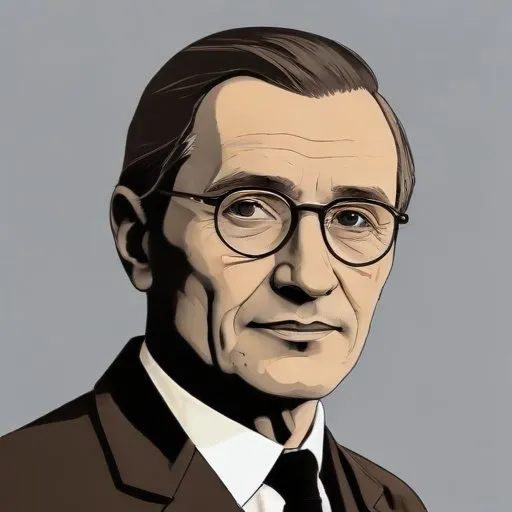
Developed the theory of impurity-band radiation and made significant contributions to the field of spectroscopy, particularly in the study of crystals and their optical properties.
Karl Rebane, a renowned Soviet and Estonian physicist, is best known for his groundbreaking contributions to the field of solid state theory. His work, which spanned over four decades, has had a profound impact on our understanding of the behavior of solids and has paved the way for significant advancements in the field of physics.
Rebane was born on April 11, 1926, in Prnu, Estonia. His father, Karl Rebane Sr., was a bookkeeper, and he was the second oldest of five children. During World War II, his family evacuated to a small village in the oblast of Chelyabinsk, where he worked at a local kolkhoz and attended a school for displaced Estonian children.
Rebane's academic pursuits took him to the Tallinn Technical University, where he studied from 1947 to 1949. He later graduated from Leningrad University in 1952, earning a PhD in Solid State Theory in 1955. Rebane further solidified his academic credentials by obtaining a Doctor of Sciences degree in Theoretical Physics from the Institute of Physics of the Belarusian AS at Minsk in 1964.
Rebane's illustrious career is marked by his association with Tartu University, where he held various teaching and administrative positions. He served as Professor and Chair of the Experimental Physics Department from 1958 to 1960 and later became Professor and Chair of the Joint Department of Laser Optics at the Institute of Physics and Tartu University from 1974 to 1993.
Rebane's research focused on the theoretical aspects of solid state physics, particularly in the areas of spectroscopy and luminescence. His work has led to a deeper understanding of the behavior of solids and has applications in the development of lasers, optical fibers, and other cutting-edge technologies.
Rebane's contributions to physics have been recognized through numerous awards and honors. Some of his notable accolades include the Estonian SSR National Prize (1965), the Order of the Red Banner of Labour (1976), and the P. N. Lebedev Gold Medal from the Academy of Sciences of the Soviet Union (1981). He was also awarded the title of Hero of Socialist Labour and the Order of Lenin in 1986.
Karl Rebane's legacy extends far beyond his academic achievements. His work has paved the way for significant advancements in the field of physics, and his contributions have had a profound impact on our understanding of the behavior of solids. As a testament to his enduring legacy, the Estonian Academy of Sciences recognized his contributions by awarding him the Medal of the Estonian Academy of Sciences in 1986.
Through his tireless efforts, Rebane has inspired generations of physicists and researchers, leaving behind a rich legacy that continues to inspire and motivate others to strive for excellence in the field of physics.
Born in 1895
A Soviet physicist who developed the concept of the "tokamak," a device used to confine and study plasmas at extremely high temperatures, leading to advancements in nuclear fusion research.
Born in 1921
A Soviet physicist and dissident who advocated for human rights and nuclear disarmament, earning a Nobel Peace Prize in 1975. He's known for his courageous stance against the Soviet regime, promoting peace and democracy.
Born in 1908
A renowned physicist and academic who made groundbreaking contributions to our understanding of quantum mechanics, superfluidity, and particle physics, earning a Nobel Prize in Physics in 1962.
Born in 1894
A Soviet physicist who discovered superfluidity and made significant contributions to the study of low-temperature physics, earning him a Nobel Prize in Physics in 1978.
Born in 1909
Developed mathematical methods for quantum field theory and made significant contributions to the development of theoretical physics, particularly in the areas of statistical mechanics and quantum mechanics.
Born in 1916
A Soviet physicist who made groundbreaking contributions to the theory of superconductivity and superfluidity, earning him the Nobel Prize in Physics in 2003.
Born in 1922
Russian physicist and academic who developed masers and lasers, pioneering the field of quantum electronics. He was awarded the Nobel Prize in Physics in 1964 for his work.
