


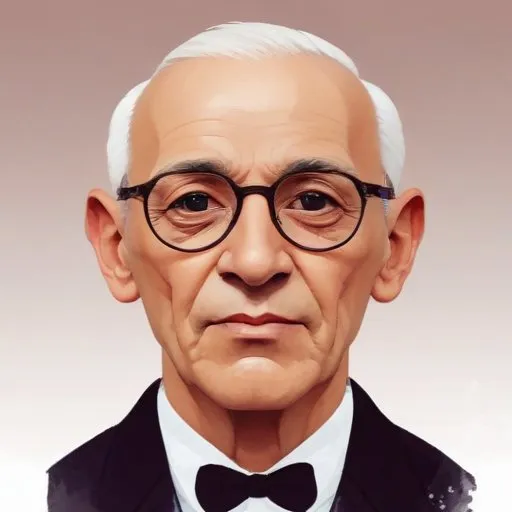
Pioneering African American chemist who developed innovative methods for synthesizing complex organic compounds, particularly in the field of pharmaceuticals.
Lloyd Noel Ferguson, a renowned American chemist, made groundbreaking contributions to the field of organic chemistry, leaving an indelible mark on the scientific community. He is celebrated for his pioneering research on the structure-taste relationship of organic compounds, paving the way for significant advancements in the field.
Born on February 9, 1918, in Oakland, California, Ferguson's fascination with chemistry began at a young age. As a child, he operated a backyard laboratory, where he developed innovative products, including a moth repellent, silverware cleanser, and lemonade powder.
Ferguson's academic journey took him to Oakland Technical High School, where he graduated at the age of 16. He then worked in construction and as a railway porter to fund his college education. His perseverance paid off when he earned his undergraduate degree from the University of California, Berkeley. Ferguson went on to receive his Ph.D. in chemistry from the same university in 1943, becoming the first African American to achieve this feat.
Ferguson's academic career spanned over four decades, with faculty positions at North Carolina Agricultural and Technical College, Howard University, and California State University, Los Angeles. At Howard University, he founded a doctoral program in chemistry, the first of its kind at a black college. During his tenure, he received a Guggenheim Fellowship in 1953 and an NSF grant in 1960, which enabled him to conduct research at the Carlsberg Laboratory in Copenhagen, Denmark, and ETH Zurich in Switzerland.
Ferguson's research focused primarily on organic chemistry and chemoreceptors. His seminal work on the structure-taste relationship of organic compounds, published in the Journal of Chemical Education in 1958, laid the foundation for numerous subsequent studies. He authored seven chemistry textbooks and over 50 research papers, cementing his reputation as a leading authority in his field.
Ferguson's contributions to chemistry were recognized with several awards and honors. He received the prestigious Guggenheim Fellowship and an NSF grant, which enabled him to pursue research opportunities abroad. Additionally, he played an advisory role to the Food and Drug Administration, further solidifying his influence in the scientific community.
Lloyd Noel Ferguson's pioneering work in organic chemistry has had a lasting impact on the field. His research on the structure-taste relationship of organic compounds has far-reaching implications for fields such as pharmaceuticals, agriculture, and food science. Ferguson's legacy extends beyond his scientific contributions, as he paved the way for future generations of African American scientists and scholars.
Through his groundbreaking research, Ferguson demonstrated the power of human curiosity and perseverance. His story serves as an inspiration to aspiring scientists, highlighting the importance of dedication, hard work, and innovation in advancing our understanding of the world around us.
Lloyd Noel Ferguson's remarkable journey, marked by trailblazing achievements and unwavering commitment to scientific inquiry, continues to inspire and educate future generations of chemists and scholars.
Born in 1912
A renowned chemist and academic who discovered and isolated ten transuranic elements, including plutonium, and was a leading figure in the development of nuclear energy. His work had a profound impact on our understanding of the periodic table and the properties of atomic nuclei.
Born in 1901
Pioneering chemist and peace activist who won two unshared Nobel Prizes, one for chemistry and one for peace, for his groundbreaking work on the nature of the chemical bond and his tireless efforts to promote nuclear disarmament.
Born in 1917
Pioneering organic chemist who synthesized complex natural products and developed new methods, earning a Nobel Prize in Chemistry. His work revolutionized the field of organic chemistry.
98 Years Old
Developed innovative synthetic methods, transforming organic chemistry and enabling the creation of complex molecules with precise structures.
Born in 1893
A pioneering scientist who discovered deuterium, a heavy isotope of hydrogen, and later contributed to the discovery of many other elements, revolutionizing our understanding of the universe.
Born in 1898
Developed groundbreaking research in molecular beams, leading to a deeper understanding of atomic and molecular structure, and pioneered the development of magnetic resonance imaging (MRI).
Born in 1893
Discovered the importance of vitamin K in blood clotting, leading to significant advancements in medicine and nutrition.
Born in 1884
A Nobel Prize-winning physicist and chemist who pioneered work in molecular structure, quantum mechanics, and X-ray diffraction, making significant contributions to our understanding of molecular interactions.
