


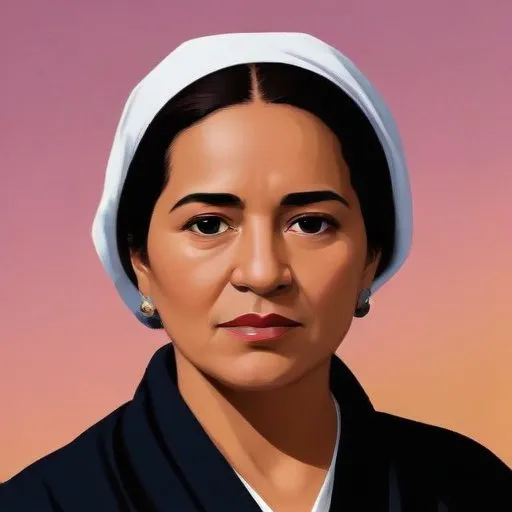
A pioneering poet, abolitionist, and women's rights activist who fought for social justice and equality in Puerto Rico, leaving a lasting legacy in the island's literary and feminist movements.
Lola Rodrguez de Ti, born Dolores Rodrguez de Astudillo y Ponce de León, is revered as the first Puerto Rican-born woman poet to gain recognition throughout Latin America. Her remarkable literary talent, coupled with her unwavering commitment to women's rights, abolition of slavery, and Puerto Rican independence, has left an indelible mark on the cultural and political landscape of her native island.
Rodríguez de Ti was born on September 14, 1843, in San Germán, Puerto Rico, to Sebastián Rodríguez de Astudillo, a founding member of the Ilustre Colegio de Abogados de Puerto Rico, and Carmen Ponce de León, a descendant of Juan Ponce de León, the first Spanish Governor of Puerto Rico. She received her education at home, where she developed a lifelong love for literature, particularly the works of Fray Luis de León, which later inspired her writing.
Rodríguez de Ti's writing career began in her teenage years, when she would publish articles in the local press, often addressing issues related to women's rights and the abolition of slavery. Her first book of poetry, Mis Cantos, published in 1863, was a groundbreaking success, selling an astonishing 2,500 copies. This marked the beginning of her journey as a celebrated poet and activist.
Her marriage to Bonocio Ti Segarra in 1863 led to her relocation to Mayagüez, where she continued to write and publish works that advocated for social justice and reforms. Her activism, although tolerated by the Spanish government, led to her banishment from Puerto Rico in 1867 and again in 1889.
Rodríguez de Ti's poetry is characterized by its lyricism, passion, and depth, often exploring themes of love, nature, and social justice. Her works, including Mis Cantos, Poesías, and Cantos de la tarde, have been widely acclaimed and anthologized, solidifying her position as one of the most important Puerto Rican poets of the 19th century.
Her legacy extends beyond literature, as she played a pivotal role in the struggle for women's rights, abolition, and Puerto Rican independence. Her unwavering commitment to these causes has inspired generations of Puerto Rican women to pursue careers in literature, politics, and social activism.
Lola Rodríguez de Ti's life and work have had a profound impact on modern Puerto Rican society. Her poetry and activism have inspired a new generation of writers, artists, and social activists, who continue to draw inspiration from her legacy. Her struggle for women's rights, abolition, and independence has paved the way for contemporary social movements in Puerto Rico.
In conclusion, Lola Rodríguez de Ti's remarkable life and work have left an indelible mark on Puerto Rican literature, politics, and culture. Her pioneering spirit, literary talent, and commitment to social justice have cemented her place as one of the most important figures in Puerto Rican history.
Born in 1851
A Puerto Rican soldier and poet who fought in the Spanish-American War and wrote influential poetry that explored themes of love, nature, and patriotism. He's considered a national hero in Puerto Rico.
Born in 1839
A prominent figure in Latin American philosophy, he advocated for education, women's rights, and independence, shaping modern Puerto Rican thought and identity.
46 Years Old
Dominican professional baseball player who played in MLB from 1991 to 2007, known for his defensive skills and winning multiple Gold Glove Awards.
Born in 1891
A leading figure in the Puerto Rican independence movement, advocating for self-governance and social justice through non-violent means. He's revered for his courageous stance against colonialism and his commitment to social reform.
