


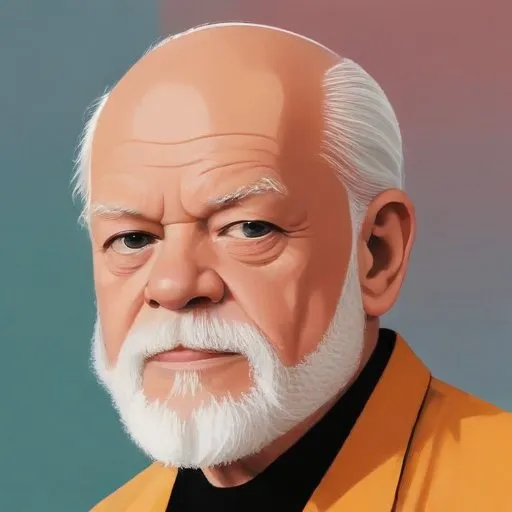
A pioneering composer who blended Eastern and Western musical traditions, creating a unique fusion of sounds and instruments, including the use of unconventional materials like car horns and tin cans.
Lou Harrison was a American composer, music critic, music theorist, painter, and instrument inventor, renowned for his unconventional and innovative approach to music. He is best known for incorporating elements of non-Western cultures into his work, particularly in his use of Javanese gamelan instruments and microtones, which earned him a reputation as a pioneer of the American gamelan movement and world music.
Harrison was born on May 14, 1917, in Portland, Oregon, to parents Clarence Pop Harrison and Calline Lillian Cal Harrison. His family's financial struggles during the Great Depression led them to move to various locations in Northern California, exposing Harrison to the cultural influences of the East, particularly in San Francisco's large Asian American community.
His early life was marked by a passion for music, and he began composing at the age of 12. Harrison's talent was soon recognized, and he began studying with prominent composers, including Henry Cowell, who became a significant influence on his early work.
Harrison's most notable contribution to music was his creation of unique instruments, often in collaboration with his partner, William Colvig. These instruments, such as the "well-canons" and "slackCanon," were designed to produce microtones, allowing for a more nuanced and expressive sound.
Harrison's music was written primarily in just intonation, diverging from the traditional equal temperament system. This approach enabled him to explore new harmonic possibilities and create a distinctive, eclectic sound.
Harrison's work was deeply influenced by his international travels and studies. He was one of the first composers to incorporate elements of non-Western cultures into his music, particularly in his use of Javanese gamelan instruments. This fascination with international sounds and styles led him to become a pioneer of world music.
Harrison's music also explored themes of homosexuality, making him a trailblazer for LGBTQ+ representation in classical music. His compositions often incorporated strong, unapologetic statements of his identity, challenging the norms of the time.
Lou Harrison's unconventional approach to music and instrument invention has had a profound influence on modern classical music. His pioneering work in world music and microtonal experimentation has inspired generations of composers and musicians.
Today, Harrison's music and instruments continue to be celebrated and performed around the world, ensuring his legacy as a true innovator and maverick in the world of classical music.
"The only music that's worth making is the music that's going to change the world."
"I'm not interested in making music that's just going to be forgotten. I want to make music that's going to make people stop and think."
84 Years Old
A visionary musician and producer who co-founded The Velvet Underground, pushing boundaries in rock music and influencing generations of artists. Known for experimental and avant-garde work .
Born in 1897
A pioneering composer and pianist who experimented with avant-garde techniques, creating innovative works that blended traditional and modern styles. Known for his radical approach to music, pushing boundaries and inspiring future generations.
Born in 1876
A pioneering avant-garde composer and painter, known for his innovative and dissonant music, as well as vibrant, abstract artworks.
Born in 1883
A pioneering composer who blended classical and modernist styles, creating innovative, avant-garde works that explored new sounds and techniques.
Born in 1874
A pioneer of atonality and 12-tone serialism, revolutionizing classical music with innovative compositions that pushed boundaries of harmony and melody.
Born in 1882
A Russian master of music, renowned for revolutionizing classical music with bold, avant-garde compositions that blended traditional and modern elements. His iconic works, such as "The Rite of Spring," continue to inspire and influence artists across genres.
Born in 1866
A pioneering composer of minimalist and avant-garde music, known for his unconventional and humorous approach to classical music, creating a new kind of simplicity and clarity. His music often featured repetitive patterns and witty titles.
Born in 1892
A French composer and educator who blended jazz and classical music to create a unique sound, and is best known for his ballet scores and chamber music compositions.
