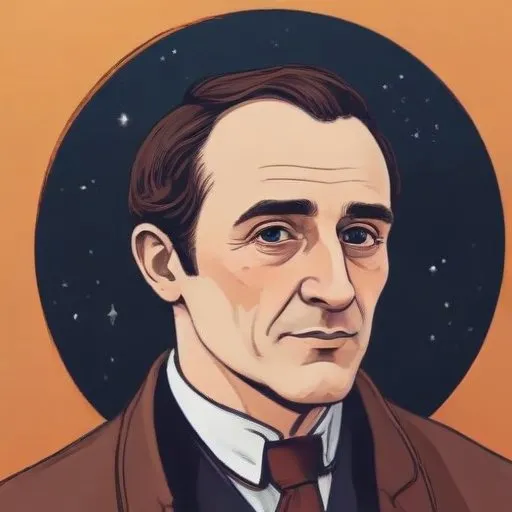
Louis Godin: The French Astronomer Who Redefined the Figure of the Earth
A Life Dedicated to Uncovering the Secrets of the Universe
Louis Godin, a renowned French astronomer, is best known for his groundbreaking expedition to Peru in 1734, which aimed to determine the shape of the Earth. This endeavor, commissioned by the French Academy of Sciences, marked a significant milestone in the history of astronomy and geography, solidifying Godin's place among the most prominent scientists of his time.
Early Life and Education
Born on February 28, 1704, in Paris, France, Godin was the son of Franois Godin and Elisabeth Charron. He received his education at the prestigious College of Louis le Grand, where he developed a strong foundation in mathematics and astronomy. Under the guidance of
Joseph-Nicolas Delisle, a prominent astronomer, Godin honed his skills and eventually produced his celebrated astronomical tables in 1724.
Astronomical Contributions and Expeditions
Godin's astronomical tables, which provided accurate calculations of celestial bodies, earned him recognition from the French Academy of Sciences. He was subsequently appointed a pensionary member and tasked with continuing the history of the academy, left unfinished by
Bernard le Bovier de Fontenelle. This appointment paved the way for his most notable expedition to Peru, where he, along with
Charles Marie de La Condamine and
Pierre Bouguer, aimed to determine the Earth's shape by measuring the length of a degree at the equator.

During the expedition, Godin and his team crossed the Andes, establishing stations in the interior and conducting observations for two years. They returned to Europe in 1751, bringing with them valuable data that would later contribute to the development of modern geodesy.
Teaching and Seismological Contributions
Following the expedition, Godin accepted a professorship in mathematics at the University of Lima, where he also established a course of astronomical lectures. His work in Peru was interrupted by the devastating 1746 Lima-Callao earthquake, which prompted him to take valuable seismological observations and develop plans to minimize the risk of damage from future earthquakes.
Legacy and Impact
Godin's contributions to astronomy and geodesy left an indelible mark on the scientific community. His expedition to Peru not only provided critical data for understanding the Earth's shape but also paved the way for future geodetic surveys. Today, Godin is remembered as a trailblazer in the field of astronomy, and his work continues to inspire new generations of scientists and explorers.
- Major Works:
- Astronomical tables (1724)
- Expedition to Peru (1734-1738)
- Seismological observations and plans for earthquake-resistant construction (1746)
- Awards and Honors:
- Pensionary member of the French Academy of Sciences
Godin's remarkable life and achievements serve as a testament to his unwavering dedication to the pursuit of scientific knowledge and his enduring impact on our understanding of the universe.
FAQ
What was Louis Godins contribution to astronomy?
Louis Godin, a French astronomer, made significant contributions to the field of astronomy, including the discovery of several comets and the development of more accurate astronomical tables.
How did Godins work improve navigation?
Godins tables enabled more accurate navigation, as they provided precise information about celestial bodies and their positions. This improved navigation and facilitated exploration and trade.
What was Godins role in the development of the metric system?
Godin was a key figure in the development of the metric system, which was introduced during the French Revolution. He was a member of the Committee of Weights and Measures, which oversaw the development of the system.
How did Godins work influence later astronomers?
Godins work influenced later astronomers, including Pierre-Simon Laplace and William Herschel, who built upon his discoveries to develop more accurate models of the solar system.
What is Godins legacy in the history of astronomy?
Louis Godins legacy lies in his contributions to the development of modern astronomy, his innovative approaches to astronomical tables, and his influence on later astronomers and mathematicians.