


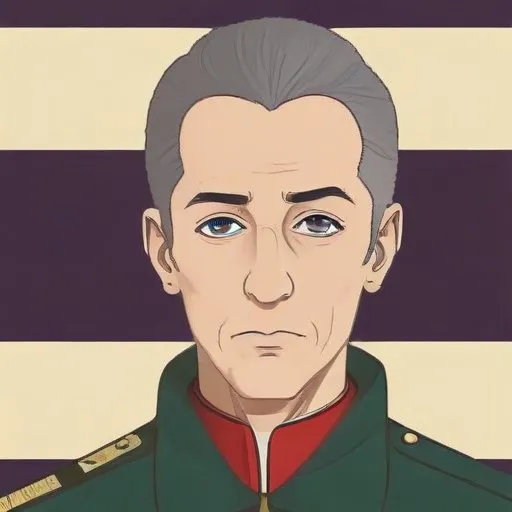
Louis, Grand Cond, also known as Louis II de Bourbon, Prince of Cond, was a renowned French military commander celebrated for his exceptional military prowess and brilliant strategies. He is regarded as one of France's greatest generals, particularly distinguished for his triumphs in the Thirty Years War and his campaigns during the Franco-Dutch War.
Born on September 8, 1621, in Paris, Louis was the son of Henri II de Bourbon, Prince of Cond, and Charlotte Marguerite de Montmorency. He was immediately endowed with the title of Duke of Enghien and demonstrated exceptional military skills from a young age.
During the Thirty Years War, Louis distinguished himself at the Battle of Rocroi against Spain in 1643, showcasing his tactical genius and earning him recognition as a brilliant commander. He continued to prove himself in various battles, solidifying his position as a powerful and influential figure in France.
However, Louis's rise to prominence made him a threat to Anne of Austria, regent for the young Louis XIV, and her prime minister Mazarin. During the Fronde revolt, Louis initially supported the crown but was later imprisoned on Mazarin's orders.
After his release, Louis launched an open rebellion against the royal forces, fighting bravely until his defeat by Turenne. Following his defeat, he defected to Spain, where he commanded Spanish forces during the final phase of the Franco-Spanish War.
Following the Treaty of the Pyrenees in 1659, Louis was pardoned by Louis XIV and returned to France. He became a loyal supporter of the king, living a quiet life at the Château de Chantilly and associating with literary figures such as Molière and Racine.
Despite his renewed contributions to France's military success in the War of Devolution against Spain and the Franco-Dutch War, Louis's personal life was marred by his unhappy marriage and estrangement from his wife, Claire-Clémence de Maillé-Brézé, a niece of Richelieu.
Louis, Grand Cond, died on December 11, 1686, at the age of 65. His descendants include the present-day pretenders to the thrones of France and Italy, and the kings of Spain and Belgium.
Louis's military prowess and brilliant strategies have left an indelible mark on French history, earning him the title of "le Grand Cond" or "the Great Cond." His legacy continues to inspire military leaders and historians alike, solidifying his place as one of the greatest generals in French history.
In conclusion, Louis, Grand Cond, was a brilliant military commander whose exceptional skills and strategies have left a lasting impact on French history. His legacy serves as a testament to his genius and continues to inspire generations to come.
Born in 1608
Third son of King Henry IV of France, a rebellious prince who plotted against his brother King Louis XIII and was known for his military prowess and romantic escapades.
Born in 1601
The queen who ruled France alongside her son Louis XIV, known as the Sun King, and played a significant role in shaping the country's politics and culture during the 17th century. She was a skilled diplomat and strategist who helped to establish France as a dominant European power.
Born in 1585
A powerful and cunning statesman who dominated French politics during the 17th century, known for his ruthless suppression of dissent and centralization of power. He was a master strategist and diplomat who shaped the course of European history.
Born in 1785
The last king of the French monarchy before the French Revolution, known for his tragic and mysterious life, including his imprisonment and disputed death.
