


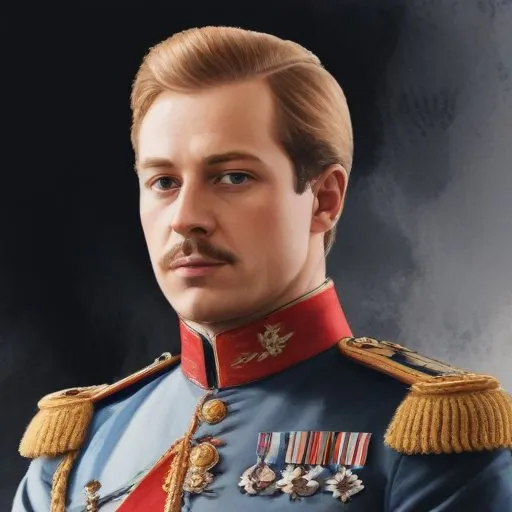
Grand Duke of Baden, a German monarch who ruled from 1818 to 1830, is known for his liberal reforms and support for the German Revolution of 1848. He played a key role in the unification of Germany.
Louis I, Grand Duke of Baden, is renowned for his instrumental role in shaping the Grand Duchy of Baden's cultural, educational, and architectural landscape during the early 19th century. As a visionary leader, he succeeded in securing the continued existence of the University of Freiburg, founded the Polytechnic Hochschule Karlsruhe, and left an indelible mark on the region's classical revival architecture.
Born on February 9, 1763, Louis I was the uncle of his predecessor, Karl Ludwig Friedrich, and ascended to the throne on December 8, 1818. His accession marked the beginning of a new era for Baden, characterized by cultural and educational advancements.
Louis I's commitment to education is exemplified in his support for the University of Freiburg, which he ensured would continue to thrive in 1820. In recognition of his efforts, the university was renamed the Albert-Ludwig University. Furthermore, he founded the Polytechnic Hochschule Karlsruhe in 1825, which would become the oldest technical school in Germany.
In collaboration with architect Friedrich Weinbrenner, Louis I oversaw the construction of numerous classical revival buildings in the city center, including the iconic pyramid. His architectural endeavors not only beautified the cityscape but also reflected his refined taste and appreciation for the arts.
Louis I's personal life was marked by controversy, particularly surrounding the mysterious circumstances of his death in 1830. Rumors and speculation swirled, with some even linking his demise to the enigmatic Kaspar Hauser, who appeared in 1828 and died under unclear circumstances in 1833.
The Grand Duke's illegitimate daughter, Countess Louise von Langenstein und Gondelsheim, was born to his mistress, Katharina Werner. Louis I provided for his daughter, creating her Countess of Langenstein and Gondelsheim in 1818. She would go on to marry Swedish aristocrat Carl Israel, Count Douglas, in 1848.
Louis I's contributions to education, culture, and architecture have left a lasting impact on modern society. His vision and dedication have inspired generations, cementing his place as a pioneering figure in Baden's history.
In conclusion, Louis I, Grand Duke of Baden, was a visionary leader who transformed the cultural, educational, and architectural landscape of Baden. His legacy continues to inspire and influence to this day, serving as a testament to his enduring impact on modern society.
Born in 1455
A Dutch bishop who served as the Prince-Bishop of Utrecht from 1496 to 1517, known for his role in the Burgundian-Habsburg struggle for power in the Netherlands.
Born in 1455
A Dutch bishop who served as the Prince-Bishop of Utrecht from 1496 to 1517, known for his role in the Burgundian-Habsburg struggle for power in the Netherlands.
Born in 1594
A military genius who transformed warfare with innovative tactics and technologies, leading Sweden to dominance in the Thirty Years' War. He's revered as a hero and a symbol of Swedish power.
Born in 1826
King of Sweden and Norway from 1859 to 1872, known for his liberal reforms and modernization of the Swedish military.
