


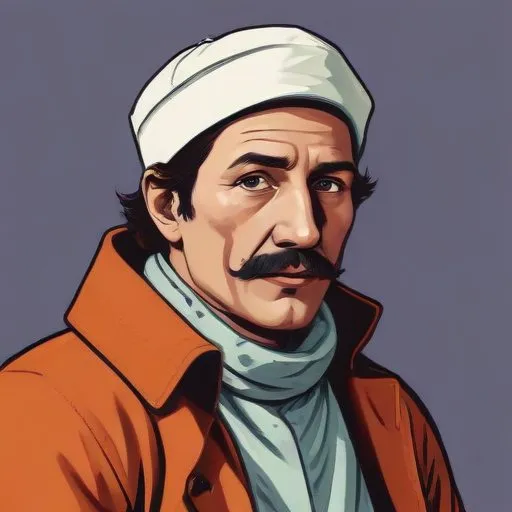
French-Canadian explorer who charted the Mississippi River and claimed the region for France, opening up the Midwest to further exploration and settlement.
Louis Jolliet, a French-Canadian explorer, is renowned for his groundbreaking discoveries in North America, particularly his expedition to explore and map the Upper Mississippi River in 1673. Alongside Jesuit priest and missionary Jacques Marquette, Jolliet became the first non-native to venture into the uncharted territories of the Mississippi River, uncovering its vast secrets and opening doors to new trade opportunities.
Born on September 21, 1645, in Beaupré, a French settlement near Quebec City, Jolliet was raised in a family of modest means. After his father's untimely death when Jolliet was just six years old, his mother remarried twice, first to a successful merchant, Geoffroy Guillot dit Lavalle, and later to Martin Prevost. This exposure to different family dynamics and cultural influences had a profound impact on Jolliet's early life, allowing him to develop a unique understanding of the Indigenous languages and cultures of the Americas.
Jolliet's educational pursuits took him to a Jesuit school in Quebec, where he focused on philosophical and religious studies, initially aiming to become a priest. He displayed a remarkable talent for music, becoming an accomplished harpsichordist and church organist. However, Jolliet eventually abandoned his plans to join the priesthood in 1667, opting instead to pursue a career in fur trading.
In 1673, Jolliet embarked on his most notable expedition, venturing into the unexplored territories of the Upper Mississippi River alongside Jacques Marquette. Although Hernando de Soto had discovered the river's southern entrance in 1541, Jolliet and Marquette became the first Europeans to explore its upper reaches, traveling approximately 130 years after de Soto's initial discovery. The duo's journey opened up new opportunities for trade and commerce, solidifying Jolliet's place in the annals of exploration history.
Louis Jolliet's expeditions not only expanded European knowledge of the North American continent but also facilitated trade and cultural exchange between European settlers and Indigenous communities. His contributions to the field of exploration paved the way for future generations of explorers, cementing his status as a pioneering figure in the history of North American discovery.
Although Jolliet's life was cut short, his fearless spirit and unwavering determination continue to inspire generations of explorers, historians, and enthusiasts alike. As we reflect on his remarkable journey, we are reminded of the power of human curiosity and the boundless wonders waiting to be uncovered in the uncharted territories of our world.
Born in 1637
French missionary and explorer who established missions in the Great Lakes region and mapped many of its rivers and lakes, including the Mississippi River. He played a key role in the European exploration of North America.
Born in 1567
French explorer who mapped much of eastern North America, establishing trade and settlement in what is now Canada and the northeastern United States.
