


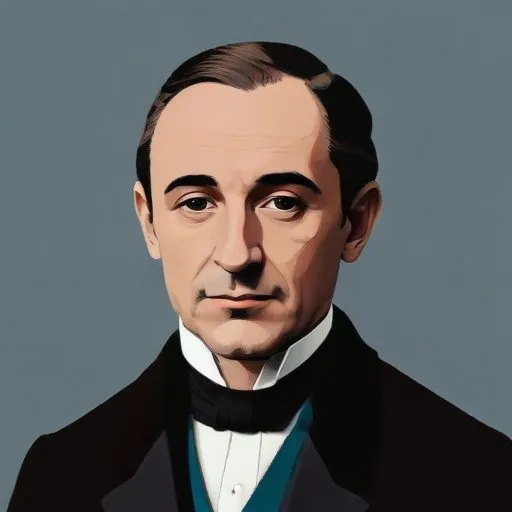
A 17th-century French poet and diplomat who served as a trusted advisor to King Louis XIV, known for his witty writings and influential role in shaping French foreign policy.
Louis Jules Mancini Mazarini was a French diplomat and statesman, best known for his pivotal role in shaping the course of European politics during the 17th and 18th centuries. As the nephew of the powerful Cardinal Mazarin, Louis leveraged his family's influence to secure key positions in the French government, ultimately becoming Minister of Foreign Affairs under King Louis XIV.
Born in 1641, Louis Jules Mancini Mazarini was the son of Philippe Mancini, the Duke of Nevers, and Claude Mazarin, the sister of Cardinal Mazarin. His uncle's guidance and patronage played a significant role in shaping Louis' early life and career. He received a comprehensive education, studying law and literature at the University of Paris, which laid the foundation for his future diplomatic pursuits.
Louis' career in diplomacy began in 1668, when he was appointed as the French Ambassador to Rome. This significant posting marked the beginning of his rise to prominence, as he effectively navigated the complex web of alliances and rivalries between European powers. His diplomatic prowess and strategic thinking earned him the trust of King Louis XIV, who appointed him Minister of Foreign Affairs in 1699.
Louis Mazarini's most notable achievement was his role in negotiating the Treaty of Ryswick in 1697, which brought a temporary end to the Nine Years' War between France and the Grand Alliance. This accomplishment showcased his exceptional diplomatic skills, as he successfully balanced the competing interests of European powers to achieve a fragile peace.
Furthermore, Louis was instrumental in promoting the arts and sciences, serving as a patron to prominent intellectuals and artists of his time. He encouraged the development of French culture, fostering an environment that allowed creative minds to flourish.
Louis Mazarini's legacy extends beyond the realm of diplomacy and politics, as his contributions to the arts and sciences continue to influence modern society. His patronage of artists and intellectuals helped shape the cultural landscape of 17th-century France, paving the way for future generations of creatives.
Louis Mazarini's personal life was marked by significant relationships, including his marriage to Anne-Catherine de La Trémoille, the daughter of the Duke of Noailles. This union solidified his ties to the French nobility and further cemented his position within the royal court.
Despite his many accomplishments, Louis faced personal challenges, including the execution of his uncle, Cardinal Mazarin, in 1661. This traumatic event likely shaped his worldview and informed his approach to politics and diplomacy.
Louis Jules Mancini Mazarini's life and legacy are inextricably linked to the complex tapestry of 17th-century European politics. His diplomatic prowess, cultural patronage, and commitment to the arts have left an indelible mark on French history. As a testament to his enduring influence, his name remains synonymous with diplomatic excellence and statesmanship.
Louis Jules Mancini Mazarini's remarkable life and achievements serve as a testament to his exceptional diplomacy, cultural vision, and statesmanship. As a diplomat, politician, and patron of the arts, he left an indelible mark on European history, shaping the course of politics, culture, and society for generations to come.
Born in 1639
A 17th-century master of French tragedy, crafting intricate, psychologically complex dramas that probed the human condition, influencing the development of Western theatre.
Born in 1622
A 17th-century master of comedy, he penned witty plays that satirized the French aristocracy, leaving a lasting impact on Western theater. His works remain widely performed and adapted today.
Born in 1606
A 17th-century French mastermind behind iconic plays like "Le Cid" and "Horace", known for pioneering the classical French tragedy genre.
Born in 1694
A witty and insightful 18th-century writer and philosopher who used satire to critique societal norms and advocate for reason, tolerance, and human rights.
Born in 1712
A pioneering thinker who shaped modern democracy and education with his ideas on social contracts, general will, and the importance of early childhood education. His writings influenced the French Revolution and modern political thought.
Born in 1689
A French lawyer and philosopher who developed the concept of separation of powers, which divides a government into legislative, executive, and judicial branches to prevent abuse of power. His ideas greatly influenced modern democracy.
Born in 1799
A prolific writer who created a vast array of characters and stories that explored the human condition, particularly in the context of post-Napoleonic France. His works are considered a cornerstone of French literature.
