


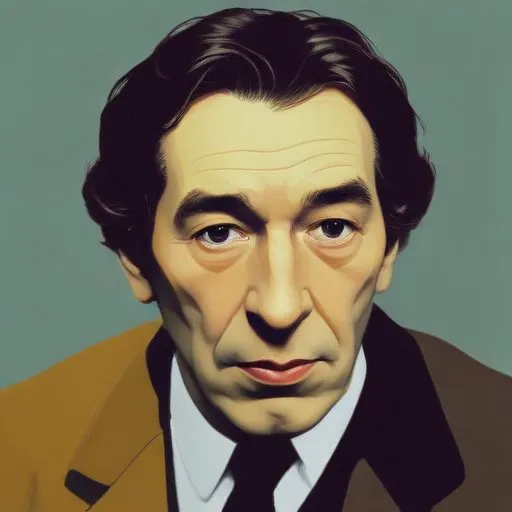
A leading figure of the 1930s poetic movement, known for his lyrical and introspective verse that explored themes of love, nature, and the human condition.
Louis MacNeice is renowned for his thought-provoking poetry, plays, and productions that delve into the intricacies of human existence, identity, and society. As a prominent figure in the Auden Group, his work is celebrated for its unique blend of introspection, empiricism, and sense of belonging, earning him a place among the greatest writers of the twentieth century.
Born on September 12, 1907, in Belfast, Ireland, MacNeice was the youngest son of Rev. John Frederick and Elizabeth Margaret Lily MacNeice. His father, an Anglican clergyman, would later become a bishop in the Church of Ireland, while his mother, originally from Connemara, County Galway, had been a schoolmistress. MacNeice's early life was marked by tragedy, with his mother's clinical depression and eventual death from tuberculosis when he was just six years old.
MacNeice's interest in literature and poetry began at an early age, and he went on to study at Oxford University, where he developed his writing skills and formed lasting relationships with fellow writers, including W.H. Auden and Stephen Spender. His early poetry, characterized by its relaxed yet socially and emotionally aware style, resonated with the public and established him as a distinct voice in the literary world.
Louis MacNeice's literary contributions continue to inspire and influence contemporary writers, poets, and playwrights. His distinctive style, which balanced introspection with social awareness, has left an indelible mark on modern literature. Through his exploration of the human condition, MacNeice's work remains a testament to the power of creative expression to capture the essence of our shared experiences.
Through his remarkable body of work, Louis MacNeice continues to inspire and captivate audiences, offering a unique perspective on the human experience and our place in the world.
Born in 1907
A renowned poet, playwright, and composer who explored themes of love, morality, and social justice through his works, leaving a lasting impact on 20th-century literature.
Born in 1909
A prominent literary figure of the 20th century, known for his poetry and novels that explored themes of love, politics, and social justice. His work often reflected his experiences as a gay man and his involvement in left-wing politics.
Born in 1904
A renowned poet laureate and author of mystery novels, known for his vivid imagery and exploration of human nature, as well as his pseudonym Nicholas Blake.
Born in 1887
A celebrated poet of the Georgian school, known for his romantic and patriotic verse, particularly his sonnets that captured the spirit of World War I.
Born in 1885
A pioneering modernist poet and critic who transformed 20th-century literature with innovative styles and provocative ideas, shaping the course of modern poetry.
Born in 1888
A renowned poet, playwright, and critic who reshaped modern poetry with works like "The Waste Land" and "Old Possum's Book of Practical Cats", influencing literature and art with their unique style.
Born in 1865
A renowned Irish wordsmith and dramatist, celebrated for his mystical and nationalistic verse that explores the human condition, as well as his contributions to the Irish Literary Revival.
Born in 1914
A renowned wordsmith celebrated for his emotive, lyrical poetry and plays that explored the human condition, particularly in his iconic work "Under Milk Wood".
