


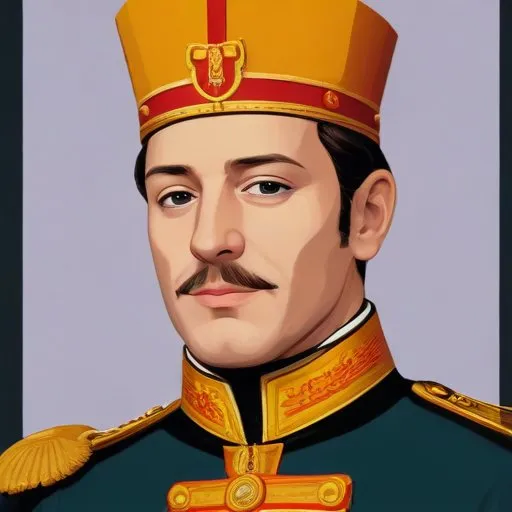
French aristocrat and politician who played a key role in the French Revolution, advocating for liberal reforms and constitutional monarchy. He's known for his moderate stance and attempts to reconcile monarchy with democracy.
Louis Philippe II, Duke of Orléans, is best known for his bold support of the French Revolution, which led to the execution of King Louis XVI and eventually claimed his own life during the Reign of Terror in 1793. As a French Prince of the Blood and one of the wealthiest men in France, Louis Philippe II's stance on the revolution was a pivotal moment in French history.
Born on April 13, 1747, at the Château de Saint-Cloud, Louis Philippe II was the son of Louis Philippe I, Duke of Chartres, and Louise Henriette de Bourbon. He was titled Duke of Montpensier at birth and was a member of the House of Orléans, a cadet branch of the French royal family.
In 1785, Louis Philippe II became the Duke of Orléans and First Prince of the Blood after his father's death. As the French Revolution gained momentum, he changed his name to Philippe Égalité and actively supported the elimination of the absolute monarchy in favor of a constitutional monarchy. He voted for the death of King Louis XVI, a decision that would ultimately seal his own fate.
Louis Philippe II's support for the French Revolution was rooted in his belief in the principles of liberty, equality, and fraternity. He advocated for a constitutional monarchy, where the power of the king was limited and the people had a greater say in governance. His views were influenced by the Enlightenment thinkers, such as Rousseau and Voltaire, who emphasized the importance of reason, individual rights, and democracy.
Louis Philippe II's legacy extends beyond his role in the French Revolution. His support for a constitutional monarchy and his advocacy for the principles of liberty, equality, and fraternity have had a lasting impact on modern democracy. The term "Orléanist" came to be associated with the movement in France that favored a constitutional monarchy, and his son, Louis Philippe, became King of the French in 1830.
Louis Philippe II's life and actions were marked by a desire to bring about change and reform to the French monarchy. While his support for the French Revolution led to his own downfall, it also paved the way for the development of modern democracy in France. His legacy serves as a reminder of the power of individual action and the importance of standing up for one's beliefs, even in the face of adversity.
Louis Philippe II, Duke of Orléans, was a complex figure who played a pivotal role in shaping French history. His story serves as a testament to the power of individual action and the importance of standing up for one's beliefs, even in the face of adversity.
Born in 1710
The monarch who ruled France from 1715 to 1774, known as the "Sun King's" great-grandson, and remembered for his extravagance, absolutism, and the decline of the French monarchy.
Born in 1755
The last queen of France before the French Revolution, known for her extravagance and mismanagement of the French economy, which contributed to the downfall of the monarchy.
Born in 1785
The last king of the French monarchy before the French Revolution, known for his tragic and mysterious life, including his imprisonment and disputed death.
Born in 1338
The King of France from 1364 to 1380, known for his military victories and rebuilding of Paris, earning him the nickname "Charles the Wise".
Born in 1519
King of France from 1547 to 1559, known for his cultural and artistic patronage, and his role in the Italian Wars.
Born in 1674
The Regent of France from 1715 to 1723, known for his cultural and artistic patronage, and his role in shaping the country's politics during a period of significant change.
Born in 1785
The last king of the French monarchy before the French Revolution, known for his tragic and mysterious life, including his imprisonment and disputed death.
Born in 1710
The monarch who ruled France from 1715 to 1774, known as the "Sun King's" great-grandson, and remembered for his extravagance, absolutism, and the decline of the French monarchy.
