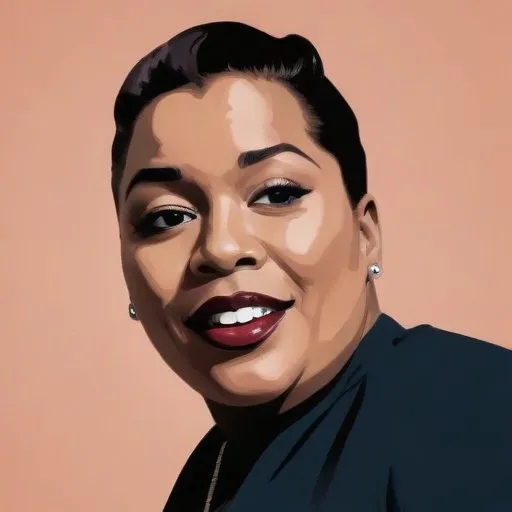
Louise Beavers: A Pioneering Actress and Advocate for Racial Equality
A Trailblazing Career in Hollywood
Louise Beavers was a renowned American film and television actress who broke barriers for African Americans in the entertainment industry. With a prolific career spanning over three decades, she appeared in dozens of films and two hit television shows, leaving an indelible mark on the industry.
Early Life and Influences
Born on March 8, 1900, in Cincinnati, Ohio, Beavers grew up in a family that valued education and the arts. Her mother, Ernestine Monroe Beavers, was a school teacher and voice instructor, who instilled in her a love for music and drama. After her mother's illness led the family to move to Pasadena, California, Beavers attended school and developed her skills in basketball and church choir. Her early exposure to the performing arts laid the foundation for her future success.
Rise to Prominence
Beavers' acting career began with the Lady Minstrels, an amateur theater group that performed at the Loews State Theatre. Her talent caught the attention of Charles Butler, an agent for African American actors, who encouraged her to audition for film roles. Initially hesitant due to the negative portrayal of blacks in film, Beavers eventually won a role in the 1927 film "Uncle Tom's Cabin." This marked the beginning of her journey as a leading lady in Hollywood.
Breaking Stereotypes and Pushing Boundaries
Beavers' early roles often relegated her to stereotypical portrayals of African American women, such as slaves, mothers, and domestic servants. However, she refused to be typecast and sought to challenge these conventions. Her breakout role as Julia, the maid and mother figure, in the 1929 film "Coquette" earned her critical acclaim and recognition. This pivotal performance paved the way for her transition to more nuanced and complex roles, demonstrating her range and versatility as an actress.
Notable Roles and Collaborations
Beavers' most iconic role was as Delilah in the 1934 film "Imitation of Life," where she played a housekeeper and mother figure. This powerful performance showcased her ability to bring depth and nuance to her characters. Throughout her career, she collaborated with prominent directors and actors, including
John M. Stahl,
Claudette Colbert, and Fredi Washington.
Advocacy and Legacy
Beavers' impact extended beyond her on-screen performances. She was an ardent advocate for racial equality and social justice, using her platform to challenge the negative portrayal of African Americans in film and television. Her work inspired future generations of actors, including
Dorothy Dandridge and
Sidney Poitier, who credited her as a pioneer and role model.
Awards and Recognition
Throughout her career, Beavers received numerous awards and accolades for her contributions to the entertainment industry. She was honored with a star on the Hollywood Walk of Fame and inducted into the Black Filmmakers Hall of Fame.
Personal Milestones
Beavers' personal life was marked by significant milestones, including her graduation from Pasadena High School in 1920 and her work as a dressing room attendant for a photographer and personal maid to film star Leatrice Joy.
Impact on Popular Culture
Beavers' influence on popular culture is still felt today. Her trailblazing legacy has inspired countless actors, filmmakers, and social activists. Her commitment to challenging stereotypes and promoting racial equality continues to resonate with audiences worldwide.
Trivia and Fun Facts
- Beavers was one of the first African American actresses to have her name appear in film credits.
- She was an avid singer and performed in various musical revues throughout her career.
- Beavers worked closely with the NAACP to promote greater diversity and representation in the entertainment industry.
Conclusion
Louise Beavers' remarkable career and advocacy have left an indelible mark on the entertainment industry. Her pioneering spirit, talent, and dedication to challenging stereotypes continue to inspire new generations of actors, filmmakers, and social activists. As a testament to her enduring legacy, Beavers remains an icon in American popular culture.
FAQ
What was Louise Beavers early life and career?
Louise Beavers was an American actress and singer, born in 1902 in Cincinnati, Ohio. She began her career in show business as a singer and dancer, performing in vaudeville and on Broadway before transitioning to film and television in the 1920s.
What were Louise Beavers most notable film roles?
Louise Beavers most notable film roles include her Oscar-nominated performance in Imitation of Life (1934), as well as Du Barry Was a Lady (1943) and Mr. Blandings Builds His Dream House (1948). She was one of the first African American actresses to gain widespread recognition in Hollywood.
How did Louise Beavers challenge racial stereotypes in Hollywood?
Louise Beavers challenged racial stereotypes in Hollywood by refusing to play roles that perpetuated negative African American stereotypes. She worked to promote greater diversity and representation in the film industry, paving the way for future generations of African American actors.
What awards and recognition did Louise Beavers receive?
Louise Beavers received an Academy Award nomination for Best Supporting Actress for her performance in Imitation of Life (1934). She was also recognized for her contributions to the film industry with a star on the Hollywood Walk of Fame.
What is Louise Beavers legacy in American film history?
Louise Beavers legacy in American film history is one of trailblazing achievement and perseverance. She broke down racial barriers in Hollywood, paving the way for future generations of African American actors and continuing to inspire audiences with her remarkable talent and dedication.