


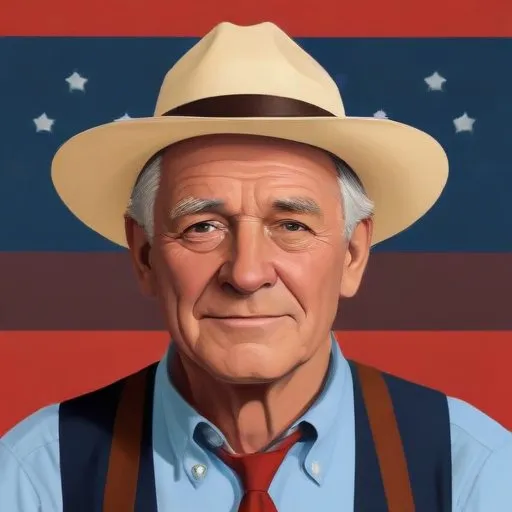
A pioneering farmer and politician who championed agricultural cooperatives and rural development, leaving a lasting impact on American farming practices.
Lowell Stockman, a stalwart Republican representative from Oregon, left an indelible mark on the United States House of Representatives from 1943 to 1953. As a devoted public servant, he championed the interests of his constituents, earning the respect and admiration of his peers.
Born on April 12, 1901, on a farm near Helix, Oregon, Lowell Stockman was instilled with the values of hard work and dedication from a young age. He attended public schools at Pendleton, Oregon, and later graduated from Oregon State University at Corvallis in 1922 with a strong foundation in agriculture.
Stockman's foray into politics began in Eastern Oregon, where he became a member of the Pendleton School Board and the Oregon Liquor Control Commission. His commitment to public service propelled him to the United States House of Representatives, where he served for five consecutive terms from 1943 to 1953.
During his tenure, Stockman worked tirelessly to represent the interests of his constituents, supporting legislation that promoted agricultural growth, education, and economic development. He was a vocal advocate for the state's interests, earning the respect of his colleagues across party lines.
After stepping down from politics in 1952, Stockman resumed his passion for farming until 1959. He then served as the vice president of Oregon Fiber Products, Inc. and treasurer of Pilot Rock Lumber Company, demonstrating his versatility and commitment to his community.
In 1924, Stockman married Dorcas Conklin, and the couple had two daughters and one son. He was deeply devoted to his family and community, always putting the needs of others before his own.
In 1959, Stockman moved to Bellevue, Washington, where he operated a trailer court until his passing on August 9, 1962. He was buried on University of Washington property near Pack Forest, Washington, a testament to his enduring connection to the region.
Lowell Stockman's legacy extends far beyond his political accomplishments. He embodied the spirit of public service, dedicating his life to the betterment of his community and country. His unwavering commitment to the people of Oregon and beyond continues to inspire future generations of leaders.
"A true statesman, Lowell Stockman's dedication to his constituents and community continues to inspire and motivate."
Born in 1911
The 38th Vice President of the United States was a prominent liberal politician and journalist who played a key role in shaping the country's civil rights policies. He's most known for his strong support of the Civil Rights Act of 1964.
Born in 1916
A poet and politician who ran for president in 1968, known for his anti-war stance and inspiring a generation of young people to get involved in politics.
98 Years Old
The 42nd Vice President of the United States was a prominent politician who served under Jimmy Carter and was known for his strong liberal stance and advocacy for social justice. He was also the Democratic nominee for president in 1984.
Born in 1909
A businessman and politician who served as the 30th Governor of Minnesota, known for his leadership during World War II and his role in shaping the state's economy. He was a respected figure in Minnesota politics and a champion of education and infrastructure development.
Born in 1907
A lawyer and politician who served as the 25th Governor of Minnesota, known for his numerous presidential campaigns and advocacy for progressive policies. He was a prominent figure in American politics during the mid-20th century.
