


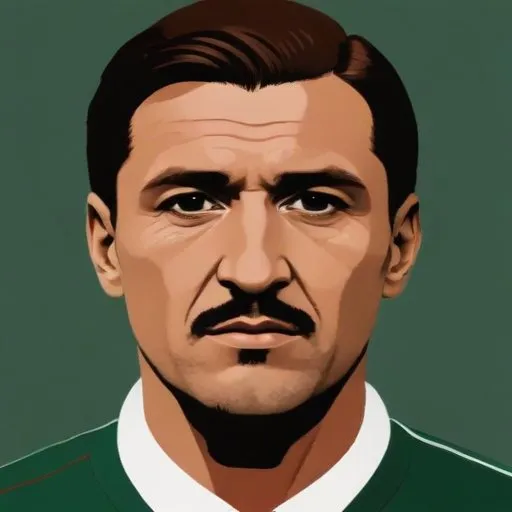
A Hungarian football legend who played for Barcelona and coached several teams, known for his exceptional skill, speed, and scoring ability on the field. He's a iconic figure in European football history.
Lszl Kubala is revered as one of the greatest footballers of all time, renowned for his exceptional dribbling skills, powerful finishing, and uncanny accuracy from free kicks. As a forward, he left an indelible mark on the sport, earning himself a hero's status at Barcelona, where he is still celebrated as the club's greatest player ever.
Kubala was born on June 10, 1927, in Budapest, Hungary, to parents of mixed backgrounds. His mother, Anna Stecz, had Polish, Slovak, and Hungarian roots, while his father, Pl Kubala Kurjas, belonged to the Slovak minority of Hungary. This diverse heritage perhaps contributed to Kubala's self-description as a "cosmopolitan."
At the tender age of 11, Kubala was already playing with teammates three to five years older than him. By 18, he had signed with Ferencvrosi, where he played alongside the legendary Sndor Kocsis. In 1946, Kubala moved to Czechoslovakia, allegedly to avoid military service, and joined Slovan Bratislava.
Kubala's remarkable talents soon earned him a spot on the Hungarian national team, with whom he played from 1946 to 1948. However, he also went on to represent Czechoslovakia and Spain at the international level, making him one of the rare players to have played for three national teams.
In 1950, Kubala defected to Spain, where he became a naturalized citizen. He played for Barcelona from 1950 to 1961, scoring an impressive 280 goals in 345 appearances, including unofficial goals. During the club's 1999 centenary celebrations, a fan poll declared Kubala the best player ever to play for Barcelona.
After retiring as a player, Kubala went on to have two spells as coach of Barcelona, as well as stints as coach of Spain's senior national team and under-21 team. His coaching career was marked by innovative tactics and a focus on developing young talent.
Kubala's impact on the sport extends far beyond his impressive playing career and coaching stints. He inspired generations of footballers with his skills, vision, and creativity on the pitch. As a true pioneer, he paved the way for future stars, earning himself a lasting legacy as one of the greatest footballers of all time.
Kubala's extraordinary life and career serve as a testament to his boundless passion, dedication, and innovative spirit. As a footballing icon, he continues to inspire and captivate fans around the world.
99 Years Old
A legendary Hungarian footballer and manager who scored 746 goals in 629 games, leading his national team to the 1954 World Cup final and winning four Hungarian championships. He's a iconic figure in the sport, known for his incredible goal-scoring ability and innovative tactics.
Born in 1925
A Hungarian footballer and manager who won two Olympic titles and played in four World Cups, known for his exceptional skills and leadership on the pitch.
Born in 1922
A Hungarian football legend who revolutionized the sport with his innovative "deep-lying center-forward" position, leading his team to numerous victories and earning him a place in football history.
Born in 1926
A Hungarian goalkeeper who played in the Golden Team of the 1950s, known for his exceptional reflexes and shot-stopping abilities, earning him a place in football history.
Born in 1899
A Hungarian football legend who coached Benfica to unprecedented success, winning two European Cups, and is infamous for placing a curse on the team after leaving.
Born in 1897
A pioneering football manager who led West Germany to their first World Cup title in 1954, known for his innovative tactics and motivational skills.
