


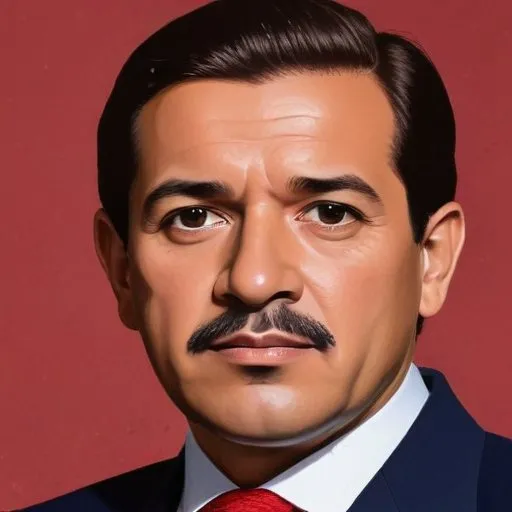
A 19th-century Mexican politician and historian who wrote extensively on Mexico's history, economy, and politics, and is considered one of the country's most important historians.
Lucas Alamn y Escalada, a Mexican polymath, is renowned for his profound impact on the country's history, politics, and culture. As a scientist, historian, writer, and statesman, he played a pivotal role in shaping Mexico's destiny, earning him the title of the founder of the Conservative Party.
Born on October 18, 1792, in Guanajuato, New Spain, Alamn was part of an elite family with a rich mining heritage. His father, Juan Vicente Alamn, was an immigrant from Navarre, while his mother, Maria Ignacia Escalada, was a member of a distinguished American-born Spanish family, holding the title of the fifth marchioness of San Clemente.
Alamn's educational journey began at the amiga, a children's school, and continued at the Bethlehem School, where he was taught by Fr. Jose de San Geronimo. This solid foundation in education would later enable him to excel in various fields.
Alamn's life took a dramatic turn when he witnessed the troops of insurgent leader Miguel Hidalgo y Costilla sack Guanajuato City during the Mexican War of Independence. This event deeply influenced his conservative and antidemocratic views, shaping his future political and intellectual pursuits.
He went on to become a prominent figure in Mexican politics, advocating for a strong central government based on a close alliance of the army, the Catholic Church, and the landed classes. This ideology earned him the label of the "archreactionary of the epoch."
Alamn is credited with founding the Conservative Party, which aimed to counterbalance the liberal forces in Mexico. He was also a vocal supporter of establishing a monarchy in Mexico, drawing comparisons with Metternich, the Austrian statesman.
As a guiding force behind several administrations, Alamn actively promoted economic development, earning him recognition as the major political and intellectual figure of independent Mexico until his death in 1853.
Lucas Alamn's contributions to Mexican history are multifaceted and far-reaching. His conservative ideology, though controversial, played a significant role in shaping the country's political landscape. As a historian and writer, he left behind a rich body of work, offering valuable insights into Mexico's past.
Today, Alamn's legacy continues to inspire and influence Mexican politics, economy, and society, cementing his place as one of the most important figures in Mexican history.
Alamn's philosophical contributions were deeply rooted in his conservative ideology. He believed in the importance of a strong central government, the role of the Catholic Church, and the landed classes in shaping Mexico's destiny.
His antidemocratic views, though contested, were a product of his time and experiences, offering a unique perspective on the complexities of Mexican politics during the 19th century.
Born in 1794
A charismatic and cunning leader who dominated Mexican politics for decades, known for his role in the Texas Revolution and multiple presidential terms.
Born in 1753
A Mexican priest who sparked the country's war for independence from Spain with his famous "Grito de Dolores" cry for freedom, leading a rebellion against colonial rule.
Born in 1765
A Mexican priest who led the country's war for independence from Spain, known for his bravery and strategic military tactics. He's considered a national hero in Mexico.
Born in 1783
Mexican royalist turned insurgent who led the country to independence and became its first emperor, known for uniting the country and establishing the Mexican Empire. He played a crucial role in shaping Mexico's early history.
Born in 1786
Led Mexico's war for independence from Spain, becoming the country's first president and establishing its democratic government. He's revered as a national hero and symbol of Mexican independence.
Born in 1782
Led Mexico's struggle for independence from Spain and later became the country's president, abolishing slavery and promoting equality. He's remembered for his bravery and progressive reforms.
Born in 1823
The 32nd President of Mexico, serving from 1872 to 1876, known for his liberal reforms and modernization efforts, particularly in education and infrastructure.
