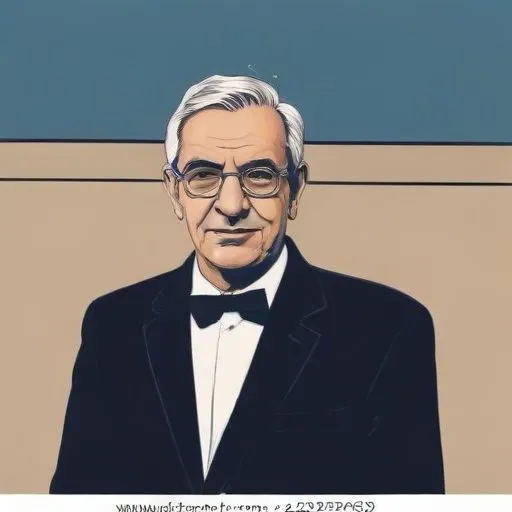
Lucas Papademos: The Greek Economist Who Steered the Nation Through Turbulent Times
A Leader in Economic Policy and Governance
Lucas Papademos is a renowned Greek economist and academic, best known for serving as the 12th Prime Minister of Greece from November 2011 to May 2012, during which he led a national unity government to address the country's debt crisis. As a technocrat, Papademos has had a profound impact on Greece's economic landscape, with a career spanning over four decades in academia, central banking, and government.
Early Life and Education
Born on October 11, 1947, in Athens, Greece, Papademos hails from a family with roots in Desfina, Phocis. He pursued his higher education at the Massachusetts Institute of Technology (MIT), where he earned a Bachelor's degree in Physics in 1970, a Master's degree in Electrical Engineering in 1972, and a Ph.D. in Economics in 1978.
Career as an Economist
Papademos' illustrious career began in 1975, when he worked alongside Nobel laureate
Franco Modigliani on the NAIRU concept. He then taught economics at Columbia University from 1975 to 1984 and later at the University of Athens from 1988. His stint as a senior economist at the Federal Reserve Bank of Boston in 1980 marked the beginning of his work as an economist.
Central Banking Career
Papademos joined the Bank of Greece in 1985 as its chief economist, rising through the ranks to become its deputy governor in 1993 and eventually governor in 1994. During his tenure, he played a crucial role in Greece's transition from the drachma to the euro as its national currency. In 2002, he left the Bank of Greece to become the Vice President of the European Central Bank, serving under
Wim Duisenberg and
Jean-Claude Trichet until 2010.
Prime Minister of Greece
In 2011, Papademos was appointed Prime Minister of Greece, heading a national unity government to tackle the country's debt crisis. His leadership during this period was marked by efforts to implement austerity measures, secure international bailouts, and restore economic stability.
Legacy and Impact
Papademos' contributions to Greece's economic development, central banking, and governance have left an indelible mark on the nation. His leadership during the debt crisis helped Greece avoid a disorderly default and paved the way for its eventual recovery. As a respected economist and statesman, Papademos continues to influence economic policy and governance in Greece and beyond.
- Awards and Honors: Papademos has received several awards and honors, including the Grand Cross of the Order of the Phoenix and the Grand Cross of the Order of Honor.
- Philosophical Contributions: Papademos' work on the NAIRU concept has had a lasting impact on macroeconomic theory and policy.
- Personal Milestones: Papademos is married to Shahnaz Papademos, and they have two children together.
Conclusion
Lucas Papademos' remarkable career is a testament to his unwavering commitment to economic governance, central banking, and public service. As a trailblazing economist and statesman, he has left an enduring legacy that continues to shape Greece's economic landscape and inspire future generations of policymakers and economists.
FAQ
What is Lucas Papademoss background in economics?
Lucas Papademos is a Greek economist and politician who served as the 183rd Prime Minister of Greece. He previously worked as the Vice President of the European Central Bank and the Governor of the Bank of Greece.
What are Lucas Papademoss areas of expertise in economics?
Lucas Papademos is an expert in macroeconomic policy, monetary economics, and international economics. He has also worked on issues related to European economic integration and financial stability.
What is Lucas Papademoss legacy in Greek politics?
Lucas Papademos played a crucial role in navigating Greece through a critical period of economic crisis, implementing reforms and austerity measures to secure bailout packages from international creditors.
Has Lucas Papademos written any books on economics?
Yes, Lucas Papademos has co-authored several books on economics, including Exchange Rate Regimes and Macroeconomic Stability and Monetary Policy and the Economy in the Euro Area.
What is Lucas Papademoss current role in international affairs?
Lucas Papademos continues to participate in international economic forums, sharing his expertise and insights on global economic issues, European integration, and economic governance.