


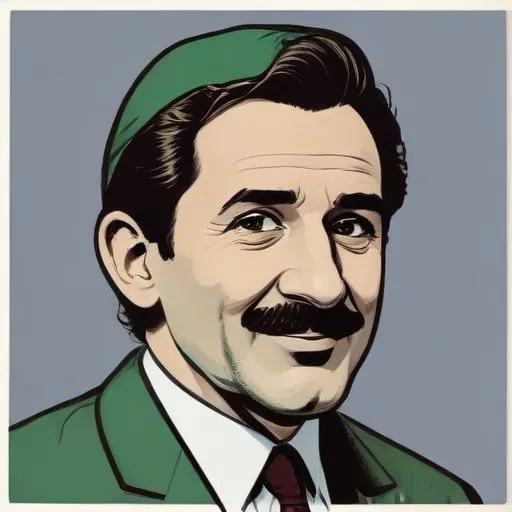
An Italian politician and journalist who served as the last Prime Minister of Italy before Benito Mussolini's rise to power, known for his inability to prevent the fascist takeover.
Luigi Facta is remembered as the last prime minister of Italy before the dictatorship of Benito Mussolini, and his term in office was marked by a tumultuous struggle against the rising fascist insurgency. As a seasoned politician, lawyer, and journalist, Facta played a significant role in Italy's pre-fascist era, shaping the country's political landscape in the early 20th century.
Born on November 16, 1861, in Pinerolo, Piedmont, Italy, Facta pursued a career in law and later became a lawyer and journalist. He entered politics in 1892, when he was elected to the Chamber of Deputies for Pinerolo, a seat he held for an impressive 30 years.
Facta's political career was marked by several significant milestones. He served as Undersecretary of the Justice and Interior Departments in the coalition cabinet and later became the Italian Minister of Finance from 1910 to 1914 and again from 1920 to 1921. During World War I, Facta initially supported Italy's neutrality, but later backed the country's entry into the war. Tragically, his son was killed in the war, and Facta famously declared that he was proud to have given a son to his country.
In February 1922, Facta was appointed Prime Minister of Italy, a position he held during a time of great political turmoil. Mussolini's fascist insurgency was gaining momentum, and Facta faced mounting pressure to take action. When Mussolini decided to march on Rome, Facta reacted by seeking to declare martial law and deploy the army to stop Mussolini. However, King Victor Emmanuel III refused to sign the declaration of emergency, and Facta resigned in protest the following day.
In 1924, King Victor Emmanuel III appointed Facta as a senator in the Italian Senate. Facta passed away on November 5, 1930, in Pinerolo, Italy. His legacy is marked by controversy, with many believing that he was too weak and faithful to the King to take a decisive stand against Mussolini and the rise of fascism.
Facta's political beliefs were rooted in liberalism, and he served as a member of the Liberal Party throughout his career. He was committed to upholding democratic values and preserving Italy's fragile democratic institutions.
Facta's term in office was marked by a struggle against fascism, which ultimately led to the downfall of Italy's democratic government. His failure to stop Mussolini's rise to power serves as a cautionary tale about the dangers of complacency and inaction in the face of authoritarianism.
Facta's legacy is inextricably linked to the tumultuous period of Italian history that preceded World War II. His story serves as a reminder of the importance of political courage and the need for leaders to stand up against authoritarianism and defend democratic values.
Born in 1883
Italian fascist revolutionary and politician who led the National Fascist Party and ruled Italy from 1922 to 1943, known for his authoritarian regime and aggressive military campaigns.
Born in 1842
The 13th Prime Minister of Italy, a master of political maneuvering, dominated Italian politics in the early 20th century with his flexible and pragmatic approach. He's most known for his ability to maintain power and stability during a time of great social and economic change.
Born in 1873
A lawyer-turned-politician who served as Italy's Prime Minister during a tumultuous post-WW1 period, known for his efforts to stabilize the country and rebuild its economy.
