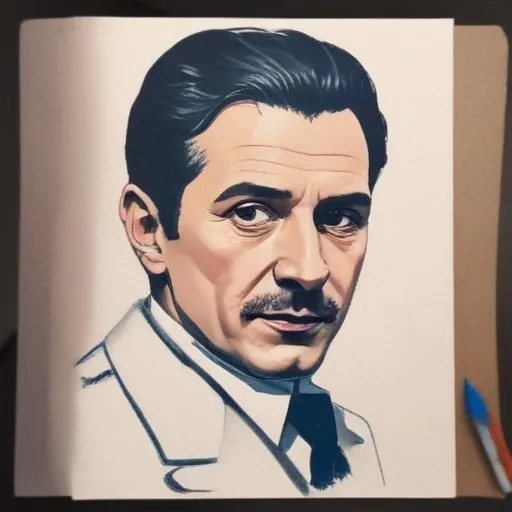
Magnus Pyke: The Prolific Nutritional Scientist and Media Personality
Renowned for His Contributions to Nutrition and Science Communication
Magnus Pyke was a British nutritional scientist, governmental scientific adviser, writer, and presenter who made significant contributions to the field of nutrition and science communication. He is perhaps best known for his work as a TV and radio personality, and his appearance on
Thomas Dolby's 1982 synthpop hit, "She Blinded Me with Science."
Early Life and Education
Born on December 29, 1908, in Gloucester Terrace, Paddington, London, Pyke was the son of Clara Hannah Lewis and
Robert Bond Pyke, manager of a wholesale confectionery business. He attended St. Paul's School in Barnes, London, where he developed a unique combination of confidence and a lack of self-consciousness. Pyke later emigrated to Canada to study agriculture at Macdonald College, McGill University, Montreal, where he earned a BSc in 1933.
Scientific Career
Pyke's scientific career began in 1934 when he became the chief chemist at Vitamins Ltd., Hammersmith, London. He worked closely with Professor J.C. Drummond of University College, London, on vitamin research, and earned a Ph.D. in biochemistry in 1936. During World War II, Pyke joined the Ministry of Food, where he studied the nutritional effects of food restrictions due to wartime shortages. His work during this period led to the publication of "The Manual of Nutrition" in 1945, which remains in print to this day.
Media Personality and Public Presence
Pyke's ability to communicate complex scientific concepts in an accessible and engaging manner made him a natural in front of the camera. He became a familiar face on British television and radio, sharing his expertise on nutrition and science with a wide audience.
Philosophical Contributions and Beliefs
Pyke's work was guided by a deep commitment to improving public health through better nutrition. He believed in the importance of educating people about the role of nutrition in maintaining good health, and he worked tirelessly to promote this message throughout his career.
Awards and Honors
Pyke's contributions to the field of nutrition and science communication were recognized with several awards and honors, including his appointment as an Officer of the Order of the British Empire (OBE) in 1974.
Personal Life and Legacy
Pyke married Dorothea Mina Vaughan in 1937, and the couple had two children together. He passed away on October 19, 1992, leaving behind a legacy as a pioneering nutritional scientist and science communicator.
Trivia and Fun Facts
- Pyke was known for his charismatic personality and was often described as having a "bouncy" demeanor.
- He worked as a farm laborer during his summers in Canada, giving him a unique perspective on agriculture and nutrition.
- Pyke's appearance on "She Blinded Me with Science" made him an unlikely pop culture icon of the 1980s.
Historical Context and Legacy
Magnus Pyke's life and work reflect the significant advances made in the field of nutrition during the mid-20th century. His contributions to our understanding of the importance of nutrition in maintaining public health continue to influence science and policy today. As a science communicator, Pyke played a vital role in promoting the value of scientific knowledge to a broad audience, paving the way for future generations of scientists and science communicators.
FAQ
What was Magnus Pykes contribution to science communication?
Magnus Pyke was a British scientist and writer who made significant contributions to science communication, making complex scientific concepts accessible to a broad audience.
What was Magnus Pykes role in popularizing science?
Magnus Pyke played a key role in popularizing science, writing books and articles that explored the wonders of science and technology, and hosting a popular BBC science program.
What awards did Magnus Pyke receive for his work?
Magnus Pyke received several awards for his work, including the Kalinga Prize for the Popularization of Science.
What is Magnus Pykes legacy in science communication?
Magnus Pykes legacy is as a pioneering science communicator who inspired generations of scientists and science writers, and helped to promote a broader understanding of science and its importance in society.
How did Magnus Pykes work influence later science communicators?
Magnus Pykes work influenced later science communicators, including those who continued to develop innovative ways to communicate complex scientific concepts to a broad audience.