


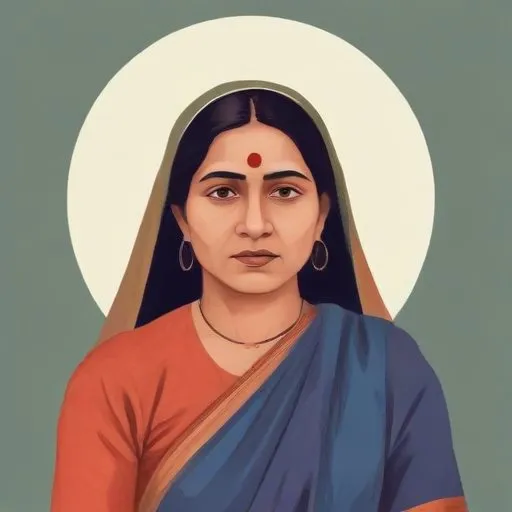
A pioneering Hindi poet and women's rights activist, known for her powerful writings that challenged social norms and advocated for women's empowerment.
Mahadevi Varma, a stalwart of Hindi literature, is renowned for her poignant poetry, thought-provoking essays, and captivating short stories. As one of the four major pillars of the Chhayawadi era, she has been aptly called the Modern Meera, a testament to her profound impact on the literary world.
Mahadevi Varma was born on 26 March 1907 in Farrukhabad, Uttar Pradesh, India, to a Hindu Chitraguptavanshi Kayastha family. Her father, Govind Prasad Verma, was a college professor, and her mother, Hem Rani Devi, was a devout, music-loving woman who instilled in her a love for the arts.
Varma's literary oeuvre is a testament to her innovative style, which introduced a soft, lyrical vocabulary to Hindi poetry, previously confined to Braj Bhasha. Her poetry, characterized by its euphemistic tone and sharp expressions, resonated with readers and critics alike. Her novel, Deepshikha, is a seminal work that showcased her ability to capture the essence of Indian society.
Varma's literary works reflect her deep concern for the social upliftment of women and the development of Indian society as a whole. Her poetry and stories often highlighted the struggles and triumphs of women, as well as the need for social reform and progress.
Mahadevi Varma was the recipient of numerous prestigious awards, including the Jnanpith Award, the Padma Bhushan, and the Sahitya Akademi Award, among others. Her contributions to Hindi literature have been recognized and celebrated by scholars, critics, and readers alike.
Varma's life and work spanned a tumultuous period in Indian history, from the pre-independence era to the post-independence period. Her literary contributions continue to inspire generations of writers, scholars, and readers, cementing her place as a pioneer of Hindi literature.
Varma chose to lead an ascetic life, dedicating herself to her literary pursuits and social work. Despite being married, she remained devoted to her craft, creating a lasting impact on the literary world.
Mahadevi Varma's influence extends beyond the realm of literature to the broader Indian society. Her work has inspired social reform, women's empowerment, and cultural revival, leaving an indelible mark on modern Indian society.
Google celebrated Varma's birth centenary in 2007 with a Google Doodle, recognizing her immense contribution to Hindi literature.
Mahadevi Varma's life and work serve as a testament to her dedication, passion, and innovative spirit, cementing her place as one of the most revered and beloved figures in Hindi literature.
Born in 1879
A pioneering Indian poet and activist who used her lyrical voice to advocate for women's rights and Indian independence, leaving a lasting legacy in Indian literature and politics.
Born in 1824
A 19th-century Bengali poet and playwright who pioneered Bengali drama and is known for his epic poem "Meghnad Badh Kavya", which is considered a masterpiece of Bengali literature.
Born in 1861
A Bengali polymath who wrote extensively on love, nature, and humanity, creating a unique blend of Indian and Western literary styles, and was the first non-European to win the Nobel Prize in Literature.
Born in 1838
A pioneering Bengali writer and poet who played a significant role in shaping Indian literature, known for his iconic novel "Anandamath" that inspired India's freedom movement.
Born in 1919
A pioneering female voice in Punjabi literature, known for her bold and emotive poetry and novels that explored themes of love, feminism, and social justice.
Born in 1880
A pioneering Hindi writer who crafted socially conscious stories that explored the complexities of Indian society, particularly the struggles of the rural poor.
