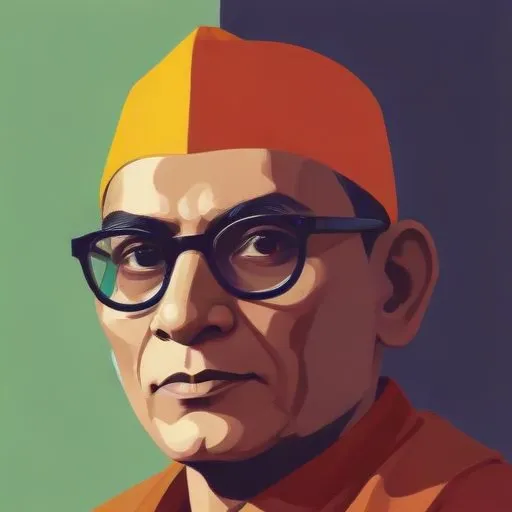
Bankim Chandra Chattopadhyay: The Visionary Bengali Novelist and Patriot
A Literary Giant and a National Icon
Bankim Chandra Chattopadhyay is revered as one of the most influential Bengali novelists of the 19th century, celebrated for his pioneering contributions to Bengali literature and his unwavering patriotism. Chattopadhyay's remarkable works not only shaped the literary landscape of Bengal but also played a significant role in igniting the flames of India's struggle for independence.
Early Life and Education
Born on June 27, 1838, in Naihati, Bengal Presidency, British India (now in West Bengal, India), Chattopadhyay was the youngest of three brothers. His father, Yadav Chandra Chattopadhyay, was a government official, which enabled the family to lead a comfortable life. Bankim Chandra's early education began at home, where he developed a deep love for literature and music. He later pursued his studies at the Hooghly College and the University of Calcutta, where he was exposed to the works of European authors, including
William Shakespeare and French Romantics.
Literary Career and Major Works
Chattopadhyay's writing career spanned over three decades, during which he penned numerous novels, short stories, and essays that captivated the Bengali reading public. Some of his most notable works include:
- Anandamath (1882), a novel that not only showcased his literary prowess but also became an anthem for India's freedom struggle;
- Kapalkundala (1866), a romantic novel that explores the complexities of human relationships;
- Vishabriksha (1872), a novel that delves into the themes of love, family, and social issues;
- Rajsimha (1882), a historical novel that narrates the tale of Raja Rajsimha, a brave king of ancient India.
Philosophical Contributions and Beliefs
Chattopadhyay's writings were deeply rooted in his philosophical beliefs, which were shaped by his fascination with Hinduism and the ideals of the Bengali Renaissance. He advocated for social reform, women's empowerment, and the preservation of Indian cultural heritage. Through his works, he emphasized the importance of education, reason, and scientific inquiry.
Influence on Modern Society
Bankim Chandra Chattopadhyay's contributions extended beyond the realm of literature. He played a significant role in shaping India's nationalist movement, inspiring generations of freedom fighters, including Netaji
Subhas Chandra Bose and
Mahatma Gandhi. His novel,
Anandamath, was banned by the British colonial government due to its perceived seditious content. However, this only added to its popularity, and it became a rallying cry for India's independence movement.
Awards and Honors
Chattopadhyay was awarded the title of "Companion of the Order of the Indian Empire" (CIE) in 1894 by the British government, a rare honor bestowed upon an Indian citizen during that era.
Personal Milestones and Key Life Events
Chattopadhyay's personal life was marked by tragedy, including the loss of his wife, Monomohini, in 1889. This personal tragedy greatly affected his writing, and he subsequently shifted his focus from romantic novels to more philosophical and historical works.
Legacy and Impact
Bankim Chandra Chattopadhyay's legacy is a testament to his unwavering commitment to Indian culture, literature, and nationalism. He is remembered as a visionary who inspired generations of Indians to fight for their freedom and dignity. His works continue to be celebrated and studied, offering a glimpse into the tumultuous era of India's struggle for independence.
Trivia and Fun Facts
- Chattopadhyay was an ardent fan of music and was known to have composed several songs, including the popular Bengali song, "Vande Mataram," which was later adopted as India's national song.
- He was a prolific writer, penning over 20 novels, numerous short stories, and essays during his lifetime.
- Chattopadhyay was an avid collector of rare books and manuscripts, which he later donated to the University of Calcutta.
In conclusion, Bankim Chandra Chattopadhyay's life and works serve as a testament to his unwavering dedication to Indian culture, literature, and nationalism. His pioneering contributions continue to inspire generations of Indians, cementing his place as one of the most revered figures in Bengali literature and Indian history.
FAQ
What was Bankim Chandra Chattopadhyays contribution to Bengali literature?
Bankim Chandra Chattopadhyay was a prominent Bengali writer and poet who made significant contributions to Bengali literature, exploring themes of love, nature, and social reform in his novels and poetry.
How did Bankim Chandra Chattopadhyays writing reflect his experiences in colonial India?
Bankim Chandra Chattopadhyays writing reflected his experiences in colonial India, addressing issues related to colonialism, identity, and social change, and providing a powerful critique of British rule.
What was Bankim Chandra Chattopadhyays role in the Indian independence movement?
Bankim Chandra Chattopadhyay was affiliated with the Indian independence movement, advocating for Indian self-rule and promoting nationalist sentiment through his writing and public lectures.
How did Bankim Chandra Chattopadhyays novels influence the development of Indian fiction?
Bankim Chandra Chattopadhyays novels significantly expanded the scope of Indian fiction, providing a new generation of writers with inspiration and models for their own creative work.
What is Bankim Chandra Chattopadhyays legacy in Indian literary history?
Bankim Chandra Chattopadhyays legacy in Indian literary history is one of a pioneering author who enriched the Bengali literary canon with his novels, essays, and poetry, and paved the way for future generations of Indian writers.