


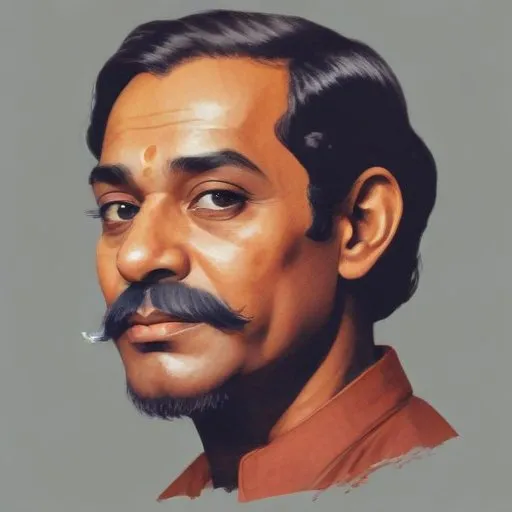
A renowned Bengali novelist celebrated for his poignant and thought-provoking works that explored the complexities of Indian society, particularly the lives of women and the rural poor.
Sarat Chandra Chattopadhyay is renowned as one of the most celebrated Bengali novelists and short story writers of the early 20th century, known for his poignant and nuanced portrayals of Bengali family life, society, and culture. His works have transcended linguistic and geographical boundaries, earning him the distinction of being the most popular, translated, and adapted Indian author of all time.
Born on September 15, 1876, in Debanandapur, a small village in Hooghly, West Bengal, Sarat Chandra was the eldest son of Matilal and Bhubanmohini Chattopadhyay. His family's poverty and his father's incomplete literary endeavors instilled in him a restless spirit and a passion for literature. Despite the lack of formal education, Sarat Chandra was driven to pursue his creative calling.
Sarat Chandra's writing style was characterized by his keen powers of observation, deep understanding of human psychology, and a natural flair for storytelling. He captured the essence of Bengali life, exploring themes such as love, family, social hierarchies, and the struggles of everyday people. His works showcased his profound empathy for women and children, making him a pioneer in portraying their experiences.
Sarat Chandra's contributions to Bengali literature were recognized during his lifetime, earning him the following accolades:
Sarat Chandra's works have continued to inspire generations of writers, filmmakers, and artists. His writing has transcended linguistic and cultural barriers, making him a beloved figure in Indian literature. His legacy extends beyond the realm of literature, influencing Bengali culture and society as a whole.
Sarat Chandra's writing reflected his philosophical beliefs, which were rooted in his deep understanding of human nature and society. He advocated for social reform, women's empowerment, and the importance of education. His works continue to inspire readers to introspect and explore the complexities of human relationships.
In addition to his literary accomplishments, Sarat Chandra's life was marked by personal milestones and challenges:
Sarat Chandra Chattopadhyay's enduring legacy is a testament to his remarkable literary talent, his profound understanding of human nature, and his indomitable spirit. His works continue to captivate readers, inspiring new generations of writers and thinkers.
Born in 1861
A Bengali polymath who wrote extensively on love, nature, and humanity, creating a unique blend of Indian and Western literary styles, and was the first non-European to win the Nobel Prize in Literature.
Born in 1838
A pioneering Bengali writer and poet who played a significant role in shaping Indian literature, known for his iconic novel "Anandamath" that inspired India's freedom movement.
Born in 1876
A renowned Bengali novelist celebrated for his poignant and thought-provoking works that explored the complexities of Indian society, particularly the lives of women and the rural poor.
Born in 1894
A renowned Bengali writer, he crafted poignant stories and plays that explored the human condition, earning him a revered place in Indian literary circles.
Born in 1899
A Bengali poet and writer who explored themes of love, nature, and the human condition through his unique and innovative style, leaving a lasting impact on Bengali literature.
Born in 1908
A renowned Bengali writer, poet, and playwright, celebrated for his contributions to Indian literature, particularly in the genre of magic realism. His works often explored the human condition, blending fantasy and reality.
