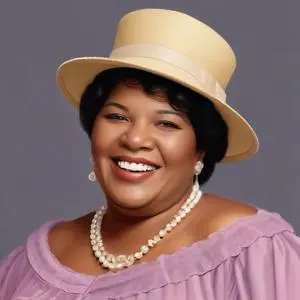
Mahalia Jackson: The Voice of Hope and Faith
A Gospel Legend Born from Humble Beginnings
Mahalia Jackson, widely regarded as one of the most influential vocalists of the 20th century, was a gospel singer who rose to fame with her powerful, soulful voice and unwavering devotion to spreading the word of God. With a career spanning over 40 years, Jackson's remarkable talent and dedication helped shape the development and spread of gospel blues in black churches throughout the United States.
A Childhood Shaped by Faith and Music
Born on October 26, 1911, in New Orleans, Louisiana, Mahalia Jackson grew up in poverty, the granddaughter of enslaved people. Despite the hardships she faced, Jackson found solace in her church, where she discovered her passion for music and her dedication to delivering God's word through song.
The Early Years: From Church to Concert Halls
As an adolescent, Jackson moved to Chicago, where she joined the Johnson Singers, one of the earliest gospel groups. Influenced by musician-composer Thomas Dorsey and blues singer
Bessie Smith, Jackson adapted Smith's style to traditional Protestant hymns and contemporary songs. Her talent soon earned her recognition in Chicago churches, and she began singing at funerals, political rallies, and revivals.
Breakthrough and International Acclaim
In 1947, Jackson's career took a monumental leap forward with the release of "Move On Up a Little Higher," which sold two million copies and reached number two on Billboard charts – a first for gospel music. This groundbreaking success propelled Jackson to international fame, making her the first gospel recording artist to tour Europe.
A Voice for the People
Jackson's music and message transcended racial and cultural divides, earning her a platform to perform for world leaders, including presidents and heads of state. She sang the national anthem at
John F. Kennedy's Inaugural Ball in 1961, and her music inspired civil rights activists, including Dr. Martin Luther King Jr.
Legacy and Impact
Mahalia Jackson's remarkable life and career serve as a testament to the power of faith, determination, and the human spirit. Her contributions to gospel music paved the way for future generations of artists, and her message of hope and redemption continues to inspire people around the world.
Notable Achievements and Honors
- Estimated 22 million records sold worldwide
- First gospel artist to tour Europe
- Performed for presidents and heads of state
- Sang at John F. Kennedy's Inaugural Ball in 1961
- Inducted into the Gospel Music Hall of Fame, Rock and Roll Hall of Fame, and Louisiana Music Hall of Fame
A Life of Devotion and Service
Mahalia Jackson's unwavering commitment to her faith and her music inspired countless people around the world. Through her remarkable life and career, she demonstrated the transformative power of gospel music, leaving behind a legacy that continues to uplift and inspire future generations.
FAQ
What was Mahalia Jacksons music style?
Mahalia Jackson was a renowned American gospel singer known for her powerful, soulful voice and traditional gospel music style. She was dubbed the Queen of Gospel Music and was a major influence on the development of gospel and soul music.
What was Mahalia Jacksons early life like?
Mahalia Jackson was born in 1911 in New Orleans, Louisiana. She grew up in a devout Christian family and began singing in church choirs at a young age.
What were Mahalia Jacksons most famous songs?
Mahalia Jacksons most famous songs include Move On Up a Little Higher, Take My Hand, Precious Lord, and How I Got Over. Her music was characterized by its emotional intensity and spiritual depth.
What role did Mahalia Jackson play in the Civil Rights Movement?
Mahalia Jackson was a close friend and supporter of Martin Luther King Jr. and performed at several Civil Rights Movement events, including the 1963 March on Washington.
How is Mahalia Jackson remembered in music history?
Mahalia Jackson is remembered as a legendary gospel singer who inspired generations of musicians and helped to popularize gospel music. Her legacy continues to influence music today.