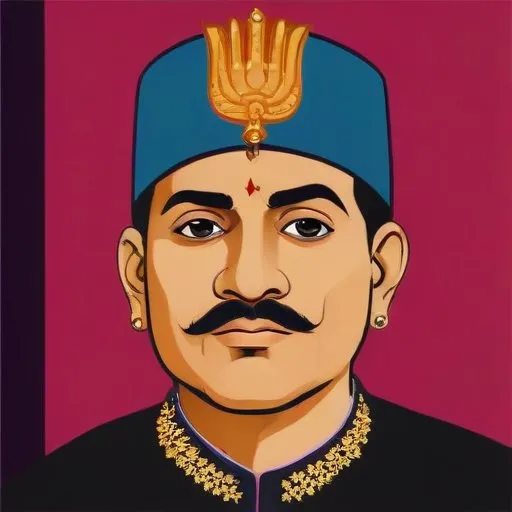
Mahbub Ali Khan, Asaf Jah VI: The Visionary Ruler of Hyderabad
A Legacy of Prosperity and Architectural Marvels
Mahbub Ali Khan, Asaf Jah VI, is revered as one of the most illustrious rulers in the history of Hyderabad, India. He is renowned for transforming the city into a hub of cultural, economic, and architectural splendor during his reign from 1869 to 1911.
The Early Life and Ascension
Born on August 17, 1866, Mahbub Ali Khan was the second son of Afzal ad-Dawla, the fifth Nizam of Hyderabad. Following the death of his father in 1869, the six-year-old prince ascended to the throne, marking the beginning of his remarkable 42-year reign.
Administrative Reforms and Infrastructure Development
Asaf Jah VI is credited with introducing a plethora of administrative reforms, which led to significant improvements in the state's infrastructure, economy, and social welfare. He established the Hyderabad State Bank, introduced a new currency, and implemented a modern system of justice and administration. The city witnessed rapid growth, with the construction of roads, bridges, hospitals, schools, and palaces, earning it the nickname "Mumbai of the South".
Architectural Marvels and Cultural Legacy
The Nizam's passion for architecture and art is evident in the numerous iconic structures built during his reign. The famous Falaknuma Palace, with its stunning blend of Indian and European styles, was constructed as a royal guesthouse. Other notable creations include the Osmania General Hospital, the Hyderabad Railway Station, and the Andhra Pradesh High Court building. His love for Urdu literature and poetry led to the establishment of the Osmania University, which has since become a center of excellence in higher education.
Philanthropy and Social Welfare
Asaf Jah VI was a patron of the arts and a committed philanthropist. He founded the Hyderabad Relief and Charity Fund, which provided aid to those affected by natural disasters and poverty. His generosity extended to the establishment of orphanages, widow homes, and hospitals, cementing his reputation as a benevolent ruler.
Personal Life and Milestones
Mahbub Ali Khan was known for his simple and austere lifestyle, despite his immense wealth. He was married to Amat-uz-Zehra Begum and had two sons, Osman Ali Khan and Moazzam Jah. His reign was marked by several milestones, including the introduction of electricity in Hyderabad, the establishment of the Hyderabad Telephone Company, and the hosting of the first All-India Industrial Conference in 1903.
Legacy and Influence on Modern Society
Asaf Jah VI's visionary leadership and reforms have had a lasting impact on Hyderabad and modern India. His emphasis on education, healthcare, and infrastructure development has inspired generations of leaders and policymakers. The city's rich cultural heritage, architectural landmarks, and economic prosperity are testaments to his enduring legacy.
Trivia and Fun Facts
- The Nizam was an avid collector of rare books and manuscripts, with a personal library of over 20,000 volumes.
- He was awarded the Grand Cross of the Order of the Star of India by Queen Victoria in 1884.
- Asaf Jah VI was known for his love of animals and maintained a menagerie of exotic species, including lions, tigers, and elephants.
Conclusion
Mahbub Ali Khan, Asaf Jah VI, was a trailblazing leader who transformed Hyderabad into a beacon of progress and cultural excellence. His remarkable reign, marked by administrative reforms, architectural innovation, and philanthropy, has left an indelible mark on Indian history. As we reflect on his legacy, we are reminded of the power of visionary leadership and the importance of preserving our cultural heritage for future generations.
FAQ
What was Mahbub Ali Khan Asaf Jah VIs role in Indian politics?
Mahbub Ali Khan Asaf Jah VI was the 6th Nizam of Hyderabad and a prominent figure in Indian politics during the late 19th and early 20th centuries. He played a key role in the Indian princely states relationship with the British Empire.
What were Mahbub Ali Khan Asaf Jah VIs major achievements?
Mahbub Ali Khan Asaf Jah VIs major achievements include the modernization of Hyderabad, the establishment of the Osmania University, and the promotion of education and healthcare in the state.
What was Mahbub Ali Khan Asaf Jah VIs relationship with the British Empire?
Mahbub Ali Khan Asaf Jah VI had a complex and often tumultuous relationship with the British Empire, balancing his desire for independence and self-rule with the need to maintain good relations with the colonial power.
What was Mahbub Ali Khan Asaf Jah VIs role in the Indian independence movement?
Mahbub Ali Khan Asaf Jah VI was a key figure in the Indian independence movement, although his views on independence were often at odds with those of other Indian leaders.
How did Mahbub Ali Khan Asaf Jah VIs legacy shape Indian history?
Mahbub Ali Khan Asaf Jah VIs legacy has had a lasting impact on Indian history, particularly in the areas of education, healthcare, and politics in the Hyderabad region.