


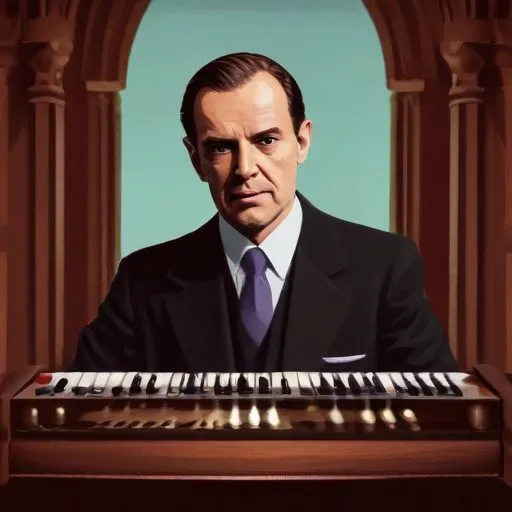
A renowned British musician who led the BBC Symphony Orchestra and composed iconic works, including the popular "An Occasional Overture".
Sir Harold Malcolm Watts Sargent was a renowned English conductor, organist, and composer, widely regarded as Britain's leading conductor of choral works. With a career spanning over four decades, Sargent was instrumental in popularizing classical music and elevating the reputation of British composers on the global stage.
Born on April 29, 1895, in Ashford, Kent, England, Sargent was drawn to music from an early age. He began his musical journey as a chorister at Rochester Cathedral and later studied organ and composition at the Royal College of Music. During World War I, he served in the British Army, where he organized concert parties to boost morale.
Sargent's illustrious career was marked by his association with some of the most prestigious musical ensembles of his time. He worked with the Ballets Russes, the Huddersfield Choral Society, the Royal Choral Society, the D'Oyly Carte Opera Company, and the London Philharmonic, Hallé, Liverpool Philharmonic, BBC Symphony, and Royal Philharmonic orchestras. His partnership with these ensembles helped him establish himself as a master of choral works.
In 1947, Sargent took the reins as chief conductor of London's iconic summer music festival, the Henry Wood Promenade Concerts, popularly known as the Proms. During his 20-year tenure, he transformed the festival, introducing a diverse range of music and performers. By the time of his death in 1967, Sargent had become synonymous with the Proms, and his reputation as a conductor and champion of British music had spread far and wide.
Sargent's contributions to classical music are immeasurable. He premiered numerous works by British composers, including Vaughan Williams, Arnold Bax, and William Walton. His commitment to promoting British music helped to establish the country as a hub for classical music.
Sargent's remarkable career was marked by numerous awards and honors. He was knighted in 1947 and received the Royal Philharmonic Society's Gold Medal in 1956. He also held honorary degrees from the University of Cambridge, the University of London, and the University of Leeds.
Sargent's personal life was marked by his dedication to music and his country. During World War II, he turned down an offer to become the musical director of the Sydney Symphony Orchestra and returned to Britain to contribute to national morale through music. His legacy continues to inspire generations of musicians and music lovers alike.
In conclusion, Malcolm Sargent was a towering figure in the world of classical music, leaving an indelible mark on British musical heritage. His passion, dedication, and advocacy for British composers have ensured his place in the annals of musical history.
Born in 1916
A renowned violinist and conductor who mesmerized audiences with his virtuosic performances and collaborations with esteemed musicians, also a passionate advocate for music education.
81 Years Old
A renowned English cellist celebrated for her passionate and expressive performances, particularly her iconic recordings of Elgar's Cello Concerto.
99 Years Old
A renowned Russian cellist and conductor, celebrated for his virtuosic performances and advocacy for human rights and freedom of expression. He was a prominent figure in the classical music world, known for his collaborations with prominent composers and musicians.
Born in 1908
A renowned maestro who led the Berlin Philharmonic for over three decades, elevating its reputation through precise and dramatic performances. He's also famous for his numerous recordings and charismatic stage presence.
Born in 1912
A renowned maestro who led the Chicago Symphony Orchestra to international acclaim, known for his intense performances and numerous recordings of operas and symphonies.
