


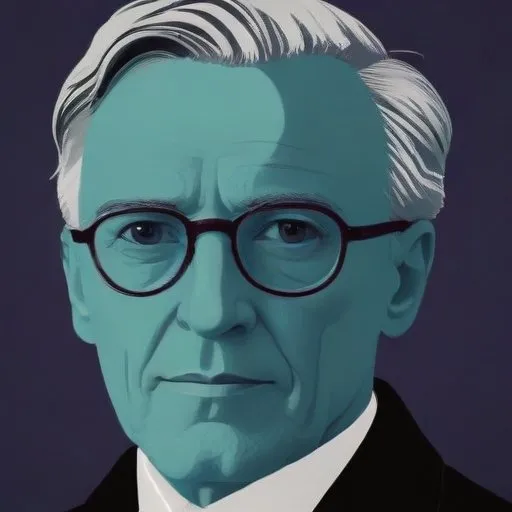
A celebrated composer and poet, he crafted symphonies, concertos, and tone poems that showcased his mastery of orchestration and poetic flair. His works evoke a sense of mysticism and Celtic mythology.
Sir Arnold Bax is renowned for his immense contribution to the world of classical music, particularly in the realm of orchestral compositions. With a prolific output that includes symphonies, symphonic poems, chamber pieces, and solo piano works, Bax is widely regarded as one of the most important British composers of the 20th century.
Born on November 8, 1883, in the London suburb of Streatham, Bax was fortunate to have a supportive family that encouraged his passion for music. He was a student at the Royal Academy of Music, where he developed a deep fascination with Ireland and Celtic culture. This fascination would later manifest in his early works, which showcased a strong Celtic influence.
In addition to his musical talents, Bax was also an accomplished poet and author. Under the pseudonym Dermot O'Byrne, he wrote fiction and verse during his time in Dublin, where he was an integral part of the city's literary circles. Later, his interests shifted towards Nordic culture, which would significantly impact his composition style in the years following World War I.
Between 1910 and 1920, Bax was incredibly productive, churning out an impressive array of works, including the symphonic poem Tintagel, which remains one of his most celebrated compositions. During this time, he also formed a lifelong association with the pianist Harriet Cohen, which began as a romantic affair and evolved into a close professional relationship.
In the 1920s, Bax embarked on a series of seven symphonies, which would come to form the core of his orchestral output. His mastery of the symphonic form earned him the prestigious title of Master of the King's Music in 1942. Although his output slowed down significantly in his later years, Bax's legacy as a composer continued to inspire generations of musicians.
After a period of relative neglect following his death in 1953, Bax's music experienced a resurgence in popularity in the 1960s, thanks in large part to a growing number of commercial recordings. Today, his works are recognized as a testament to his innovative spirit and his significant contribution to the world of classical music.
Bax was appointed Commander of the Order of the British Empire (CBE) in 1937 and knighted in 1943 for his services to music.
"The only way to avoid being a mannerist is to be a master."
With his remarkable body of work and unwavering dedication to his craft, Sir Arnold Bax continues to inspire and influence musicians and composers around the world.
Born in 1872
A renowned composer and educator, he's celebrated for his symphonies and folk-song inspired works that evoke a sense of English heritage and nostalgia. His music is a testament to his love for his homeland's cultural roots.
Born in 1857
A renowned composer and educator, best known for his iconic orchestral works, including the majestic "Pomp and Circumstance" march, which is a staple at graduations worldwide.
Born in 1902
A renowned composer of orchestral and choral works, particularly famous for his iconic score for Laurence Olivier's 1944 film "Henry V" and his ceremonial music for British coronations.
Born in 1874
A renowned composer and educator, best known for his orchestral suite "The Planets", which evokes a sense of cosmic wonder and exploration. His music is a staple of classical repertoire, still widely performed today.
Born in 1862
A pioneering composer of the early 20th century, known for his impressionistic and expressive works that evoke a sense of nature and the human experience. His music is characterized by lush harmonies and orchestration.
Born in 1914
A prolific actor and director, known for his rugged, versatile performances in film and television, often playing cowboys and authority figures.
Born in 1892
A renowned British organist, composer, and educator, he was a prominent figure in the development of 20th-century Anglican church music, particularly in his contributions to the genre of hymnody.
