


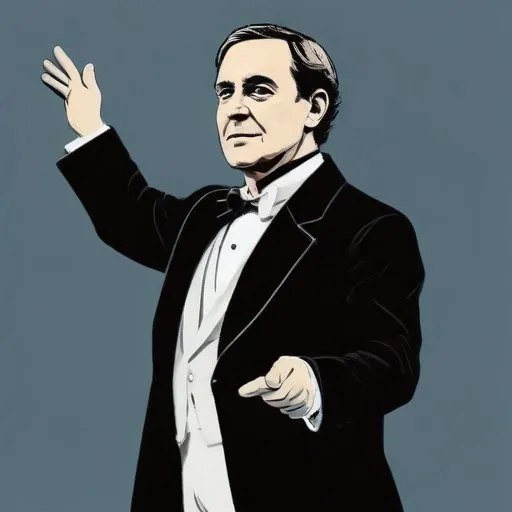
A renowned British conductor, he led the Proms concerts in London's Royal Albert Hall for nearly 50 years, popularizing classical music and introducing new works. He championed British composers and premiered many notable pieces.
No other conductor has left an indelible mark on British musical heritage like Sir Henry Wood. For nearly half a century, Wood was the driving force behind London's beloved Promenade Concerts, popularly known as the Proms, introducing hundreds of new works to British audiences and earning himself a reputation as a champion of classical music.
Born on March 3, 1869, in modest circumstances, Wood's parents encouraged his musical talent from an early age. His journey as a musician began as an organist, eventually leading him to study at the Royal Academy of Music, where he came under the influence of renowned voice teacher Manuel García.
Wood's early career was marked by his association with Richard D'Oyly Carte's opera companies, where he worked on the works of Arthur Sullivan and others. He soon became the conductor of a small operatic touring company and later joined the Carl Rosa Opera Company. A notable highlight of his operatic career was conducting the British premiere of Tchaikovsky's Eugene Onegin in 1892.
In the mid-1890s, Wood's focus shifted to concert conducting. Engaged by impresario Robert Newman, he began conducting a series of promenade concerts at the Queen's Hall, offering a unique blend of classical and popular music at affordable prices. The series was an instant success, and Wood went on to conduct the annual promenade series until his death in 1944. By the 1920s, he had steered the repertoire entirely towards classical music.
Wood's impact on British musical life was profound. He declined prestigious offers from the New York Philharmonic and Boston Symphony Orchestras, choosing instead to serve music in the United Kingdom. In addition to the Proms, he conducted concerts and festivals throughout the country and trained the student orchestra at the Royal Academy of Music.
Wood believed in making classical music accessible to the masses, hence his commitment to the Proms and his efforts to keep ticket prices low. He was also a strong advocate for British composers and musicians, frequently featuring their works in his concerts.
Wood's conducting repertoire was vast, but some notable highlights include:
Wood's legacy continues to be felt in the world of classical music. The Proms, now officially known as the Henry Wood Promenade Concerts, remain one of the most popular and beloved classical music events in the world.
"I have always believed that music is for the people, not just for the few."
Wood's dedication to the Proms and classical music has left an indelible mark on British cultural heritage. His influence can be seen in the continued popularity of the Proms, which remain a testament to his vision of making classical music accessible to all.
Born in 1867
A renowned conductor who led the NBC Symphony Orchestra and was known for his intense performances and perfectionism, shaping the sound of classical music in the 20th century.
Born in 1886
A renowned German conductor and composer, he was a dominant figure in the Berlin Philharmonic, known for his intense and expressive performances of Beethoven, Brahms, and Bruckner. He was also a composer of symphonies and other works.
Born in 1864
A renowned composer and conductor of the late Romantic era, known for his tone poems and operas that showcased his mastery of orchestration and expressive storytelling.
Born in 1860
A visionary composer and conductor who expanded symphonic music's emotional depth and complexity, creating works of profound beauty and intensity.
Born in 1813
A revolutionary composer who transformed opera with his epic, mythological works, creating a new era of musical storytelling. His iconic operas, such as "Der Ring des Nibelungen," continue to captivate audiences worldwide.
Born in 1809
A renowned 19th-century musician who masterfully blended classical and romantic styles, creating iconic works like the "Wedding March" and "Elijah" oratorio. His compositions continue to inspire and influence generations of artists.
Born in 1833
A renowned pianist and composer, he crafted complex, expressive works that blended traditional and innovative techniques, leaving an indelible mark on classical music.
