


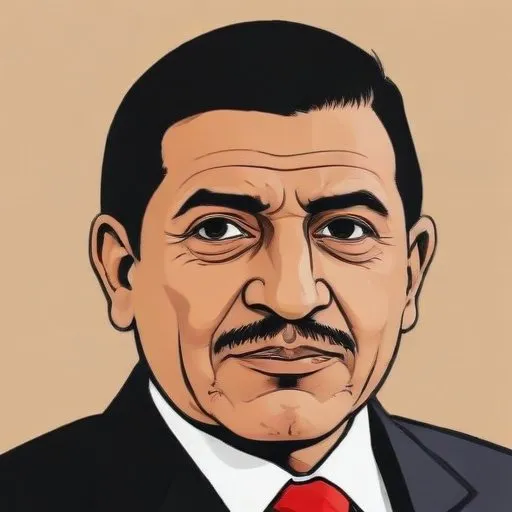
Iraqi politician who served as the Governor of Basra Province and was a key figure in the country's post-invasion politics. He played a crucial role in rebuilding the war-torn region.
Malik Dohan alHassan, a renowned Iraqi politician and academician, left an indelible mark on his country's justice system and education sector. He is best known for his tenure as Minister of Culture and Information in 1967, heading the Iraqi Bar Association in 2003, and serving as Minister of Justice in the Iraqi Interim Government in 2004.
Born on July 1, 1919, in al-Hilla, south of Baghdad, to a Shia Arab family belonging to the Jubur clan, one of the largest clans in Iraq. AlHassan pursued his higher education at the University of Baghdad, graduating in 1947. He furthered his studies in France, receiving a Diploma in Public and Private Law from Montpellier University and a Doctorate in Law from the Paris 1 Pantheon-Sorbonne University.
AlHassan's academic prowess led him to become a Professor of Law at the University of Baghdad. He authored seminal books on tort law, which became staples in Iraqi law schools. His expertise in the field earned him the presidency of Al-Mustansiriya University in 1966.
In 1967, President Abdul Rahman Arif appointed alHassan as the Minister of Culture and Information. During this tenure, he solidified his reputation as an authority on tort law, and his works continued to influence Iraqi universities.
Under Saddam Hussein's regime, alHassan faced severe persecution. He was imprisoned for two years and subsequently interned in Baghdad, barred from traveling for ten years, and permanently banned from practicing politics and holding public office. Despite these challenges, he continued to practice private law until the end of the Baathist rule in 2003.
In 2003, alHassan was elected to head the Iraqi Bar Association. He was part of a task force established to provide compensation to victims of the Saddam Hussein government. In June 2004, he became the Minister of Justice in the Iraqi Interim Government.
During his tenure as Minister of Justice, alHassan was targeted by a car bomb that killed four people, including his nephew. Abu Musab al-Zarqawi, head of al-Qaeda in Iraq, claimed responsibility for the attack. Despite this attempt on his life, alHassan remained committed to his work, defending the use of the death penalty against terrorists.
Malik Dohan alHassan's life was a testament to his unwavering dedication to justice and education. His contributions to Iraq's legal system and education sector continue to inspire future generations. His courage in the face of adversity and persecution serves as a beacon of hope for those fighting for a better tomorrow.
Malik Dohan alHassan's remarkable journey serves as a reminder of the transformative power of education, courage, and perseverance. His legacy continues to shape Iraq's justice system and inspires generations to come.
89 Years Old
The authoritarian leader who ruled Iraq with an iron fist, notorious for his brutal suppression of dissent and invasion of neighboring countries.
75 Years Old
The 76th Prime Minister of Iraq, a Shia Islamist politician who served from 2006 to 2014, is known for his role in shaping Iraq's post-Saddam Hussein government and his controversial policies. He's infamous for his sectarian agenda, which exacerbated Sunni-Shia tensions and contributed to the rise of ISIS.
79 Years Old
The President of Iraqi Kurdistan, a key figure in the Kurdish independence movement, known for leading the region through times of war and political turmoil. He's a unifying force for the Kurdish people, seeking autonomy and self-determination.
