


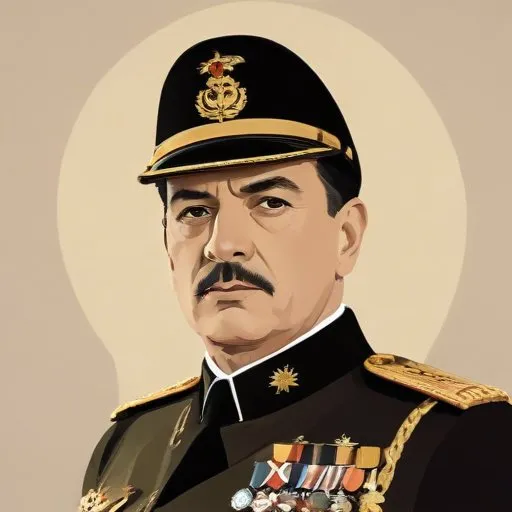
A Spanish field marshal and politician who dominated Spanish politics during the late 18th and early 19th centuries, known for his corrupt and authoritarian rule. He was a favorite of King Charles IV and Queen Maria Luisa, and his policies led to widespread discontent and eventually, the Spanish War of Independence.
Manuel Godoy: The Controversial Figure Behind Spain's Fall from Power
Manuel Godoy y Alvarez de Faria Rios, also known as the 1st Prince of the Peace, 1st Duke of Alcudia, and 1st Baron of Mascalb, was a central figure in Spanish politics during the late 18th and early 19th centuries. He is notorious for his role in the downfall of the Spanish Empire and the rise of Napoleon Bonaparte.
Godoy was born on May 12, 1767, in Badajoz, Spain, as the youngest child of Jose de Godoy y Caceres-Ovando and Antonia Alvarez de Faria. His family came from Galicia, claiming descent from Pedro Muiz de Godoy, a master of the orders of Santiago and Calatrava. Godoy's siblings included Jos, Luis, and Diego, all of whom held prominent positions in Spanish politics and society.
Godoy's rise to power began at a young age as the favorite of King Charles IV and Queen Maria Luisa. He quickly became the First Secretary of State of the Kingdom of Spain, a position he held from 1792 to 1797 and again from 1801 to 1808. During this time, Godoy wielded unparalleled power, making key decisions that shaped Spanish politics and foreign policy.
Godoy's decisions ultimately led to the outbreak of the Anglo-Spanish War of 1796-1808, which marked the beginning of the end of the Spanish Empire. The war drained Spain's resources, weakened its military, and paved the way for Napoleon's invasion. In 1808, Godoy was forced into exile following the Tumult of Aranjuez, ending his reign as First Secretary of State.
Godoy was known for his Enlightenment ideals, believing in the power of reason and progress. However, his actions were often contradictory, and he was criticized for his Machiavellian tactics and disregard for democracy.
Godoy's legacy is complex and multifaceted. While he played a significant role in the downfall of the Spanish Empire, he also contributed to the spread of Enlightenment ideas and the modernization of Spanish politics. Today, Godoy remains a controversial figure, remembered both for his achievements and his failures.
Godoy's life spanned a tumultuous period in Spanish history, marked by war, revolution, and the rise of Napoleon. His actions and decisions had far-reaching consequences, shaping the course of Spanish and European history. Despite his flaws, Godoy remains an important figure in understanding the complexities of this era.
Manuel Godoy's life was marked by both triumph and tragedy, leaving behind a legacy that continues to fascinate and intrigue historians and scholars today.
Born in 1661
The last ruler of the Spanish Empire's Habsburg dynasty, known for their physical and mental disabilities, which led to a decline in the empire's power and eventual downfall. They are infamous for their inbreeding and the subsequent weaknesses it brought to the throne.
Born in 1713
King of Spain from 1746 to 1759, known for his cultural and economic reforms, and for being the first Spanish monarch to visit Catalonia in over a century.
Born in 1768
The elder brother of Napoleon, he was a king of Naples and Sicily, and later of Spain, known for his brief but significant reigns in these countries.
Born in 1767
A flamboyant and daring cavalry commander who played a key role in Napoleon's military conquests, earning the title of King of Naples.
