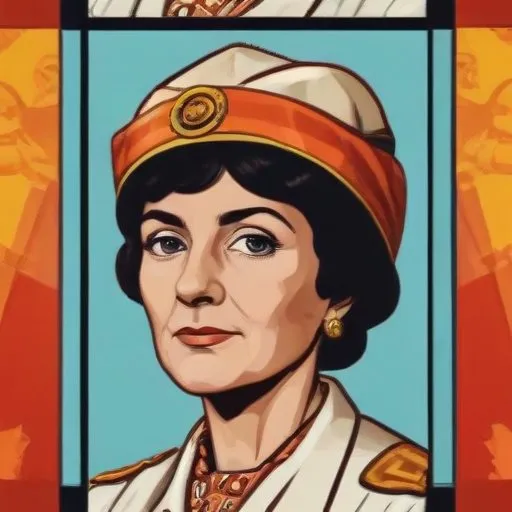
Margaret Rule

Margaret Rule

Margaret Rule was born on September 27th, 1928

Full Name: Margaret Rule
Nationality: English
Profession: Archaeologist, Historian
Birthplace: England
Notable Works: Mary Rose excavation
Education: University of Cambridge
Awards: Multiple awards
Specialization: Maritime archaeology

Led excavations of the Mary Rose, a 16th-century warship, and pioneered underwater archaeology. She's credited with recovering and preserving the ship's remains, providing valuable insights into Tudor-era history.

Written by: Emma Thompson Emma Thompson

Margaret Rule: The Pioneering Archaeologist Who Raised the Mary Rose

Meet Margaret Rule, the British archaeologist who made history by excavating and raising the iconic Tudor warship, Mary Rose, in 1982. This groundbreaking feat cemented her status as a pioneer in maritime archaeology, captivating the world's attention and earning her a permanent place in the annals of history.

Early Life and Education

Born on September 27, 1928, in Buckinghamshire, England, Margaret Rule (née Martin) was destined for greatness. She pursued her passion for chemistry at the University of London, laying the foundation for her future contributions to the field of archaeology.

Career Highlights

  • At Fishbourne, Rule played a crucial role in transforming the site into a thriving tourist attraction, showcasing her exceptional organizational skills and dedication to preserving history.
  • Her expertise in land archaeology earned her recognition, and she was soon consulted on the initial search for the Mary Rose in the Solent.
  • In 1967, Rule co-founded the Mary Rose Committee (later formalized as the Mary Rose Trust in 1979), driving the campaign to raise the warship and garnering crucial backing from prominent figures, including Charles, Prince of Wales.

Raising the Mary Rose

Rule's pivotal role in the Mary Rose project was instrumental in its success. She learned to dive with the Southampton branch of the British SubAqua Club to supervise and work on the wreck herself. On October 11, 1982, the Mary Rose was raised from the seafloor, an event watched by an estimated 60 million viewers worldwide.

Legacy and Contributions

Margaret Rule's contributions to maritime archaeology extended far beyond the Mary Rose project. She played a crucial role in the passage of the Protection of Wrecks Act in 1973, safeguarding Britain's underwater heritage for future generations.

  • In 1974, Rule became a member of the Advisory Committee reviewing the Protection of Wrecks Act, further solidifying her commitment to preserving maritime history.
  • Throughout her career, Rule's dedication to promoting public awareness and appreciation for archaeology inspired countless individuals to pursue careers in the field.

Awards and Honors

Margaret Rule's extraordinary achievements were recognized through numerous awards and honors, including the Order of the British Empire (OBE) in 1984.

Personal Milestones and Key Life Events

Rule's remarkable journey was marked by significant personal milestones, including her marriage to Arthur Rule and the birth of their two children.

Influence on Modern Society

Margaret Rule's groundbreaking work in maritime archaeology has had a profound impact on modern society, inspiring new generations of archaeologists, historians, and enthusiasts alike.

Her legacy continues to captivate audiences worldwide, ensuring that the secrets of the past remain accessible and fascinating for generations to come.

Remembering Margaret Rule

Margaret Rule passed away on April 9, 2015, leaving behind a testament to her unwavering dedication to archaeology and her indelible mark on history. Her remarkable story serves as a beacon of inspiration, reminding us that even the most seemingly impossible feats can be achieved through determination, passion, and perseverance.

Timeline
1928
Born in London, England
Margaret Rule was born on September 27, 1928, in London, England. She would go on to become a renowned archaeologist and historian.
1950
Started Research
Rule began her research on medieval history and archaeology, eventually earning her PhD.
1960
Excavated Portsmouth
Rule led excavations in Portsmouth, uncovering valuable insights into the citys medieval past.
1970
Published Research
Rule published her research, including books on medieval Britain and the history of Portsmouth.
2015
Passed Away
Margaret Rule passed away on April 9, 2015, leaving behind a legacy of groundbreaking research and discovery.
Margaret Rule

Margaret Rule Quiz

What was Margaret Rule's significant contribution to archaeology?

Score: 0/5
FAQ
What was Margaret Rules contribution to archaeology?
Margaret Rule was a renowned English archaeologist and historian who made significant contributions to the field of archaeology, particularly in the areas of maritime archaeology and the study of ancient shipwrecks.
What is Margaret Rules most famous discovery?
Margaret Rule is perhaps best known for her discovery of the Mary Rose, a 16th-century warship that sank off the coast of England in 1545. She led the excavation and recovery of the ship, which is now on display at the Portsmouth Historic Dockyard.
What awards has Margaret Rule won?
Margaret Rule was awarded the MBE (Member of the Order of the British Empire) for her services to archaeology, as well as numerous other awards and honors for her contributions to the field.
What was Margaret Rules approach to archaeology?
Margaret Rule was known for her meticulous and thorough approach to archaeology, which earned her a reputation as one of the leading experts in her field. Her work on the Mary Rose set a new standard for maritime archaeology and has inspired generations of archaeologists.
What is Margaret Rules legacy in the world of archaeology?
Margaret Rules legacy in the world of archaeology is one of innovation and discovery. Her work on the Mary Rose has helped to rewrite the history of maritime archaeology, and her contributions to the field continue to inspire and inform new generations of archaeologists and historians.

Related People:

Mary Leakey

Born in 1913

A pioneering archaeologist and anthropologist who uncovered crucial fossils and artifacts in Africa, shedding light on human evolution and ancient cultures.

Kathleen Kenyon

Born in 1906

Pioneering excavations in Jericho and Jerusalem uncovered ancient cities, rewriting biblical history. Her meticulous methods transformed archaeological practices.

Gertrude Bell

Born in 1868

Pioneering archaeologist and spy who mapped and excavated ancient Mesopotamian sites, shaping Middle Eastern politics and cultural understanding.

Flinders Petrie

Born in 1853

Pioneering excavations in Egypt uncovered ancient secrets, and innovative methods established modern archaeology standards.

Howard Carter

Born in 1874

Discovered the tomb of Pharaoh Tutankhamun in Egypt, uncovering thousands of artifacts and treasures that revealed secrets of ancient Egyptian life.

T. E. Lawrence

Born in 1888

A British colonel who led a rebellion in Arabia during WWI, and later wrote about his experiences in "Seven Pillars of Wisdom", a classic of military literature and adventure.

Agatha Christie

Born in 1890

Renowned author of mystery novels and plays, crafting intricate plots and iconic detectives, such as Hercule Poirot and Miss Marple.

Arthur Evans

Born in 1851

Uncovered the ruins of Knossos in Crete, revealing the Minoan civilization and its iconic bull-leaping frescoes. His excavations and interpretations shaped our understanding of ancient Mediterranean cultures.