


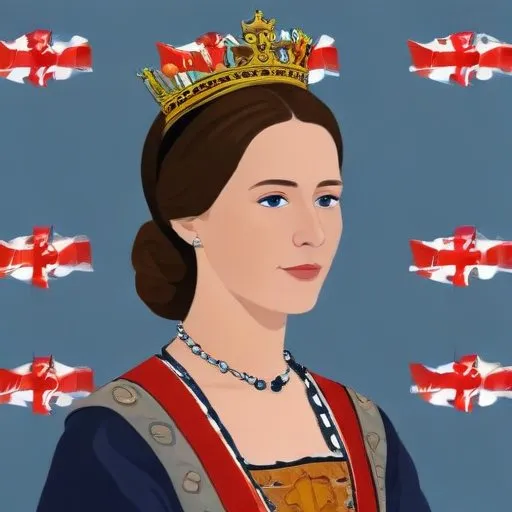
The daughter of King Alexander III of Scotland, she was a medieval queen of Norway through her marriage to King Eric II, and is most known for her efforts to strengthen ties between Scotland and Norway. Her short reign was marked by attempts to reform the Norwegian church and promote trade between the two nations.
Margaret of Scotland, also known as the Maid of Scotland, is renowned for her pivotal role in strengthening the ties between Scotland and Norway through her marriage to King Eric II of Norway. As the wife of the King, she played a significant part in fostering a sense of unity and cooperation between the two nations, a legacy that continues to inspire generations.
Born on February 28, 1261, at Windsor Castle, Margaret was the firstborn child of King Alexander III of Scotland and Margaret of England, his first wife. A committee of five earls, four bishops, and four barons was tasked with ensuring the safe transport of the King's firstborn child to Scotland. She was followed by two brothers, Alexander and David.
Margaret remained unmarried until the age of 20, an unusually long period for a medieval princess. In 1281, she was betrothed to Eric II, King of Norway, in a strategic move to ease the tensions between Norway and Scotland that had developed over the previous decades. Although Margaret was reportedly against the match, her father insisted, and the Scottish crown gifted her and Eric the estates of Rothiemay in Banffshire, Belhelvie in Aberdeenshire, Bathgate in West Lothian, and Ratho in Midlothian as her dowry.
Margaret sailed into the port of Bergen in the early morning of August 15, where her marriage to the 13-year-old King Eric II was celebrated two or three weeks later. She was crowned by Jon Raude, Archbishop of Nidaros, at Christ Church, Bergen. As a cultured woman, Margaret probably brought a sense of refinement and sophistication to the Norwegian court.
Margaret's marriage and subsequent rise to royalty not only strengthened the ties between Scotland and Norway but also facilitated the exchange of cultural practices and ideas between the two nations. Her influence can be seen in the artistic and literary developments that took place during her lifetime, as well as in the diplomatic relationships that flourished between the two countries.
Margaret's life was marked by her dedication to fostering peace and cooperation between nations. Her marriage to King Eric II of Norway was a testament to her commitment to this cause, and her legacy continues to inspire generations. Through her life and reign, Margaret of Scotland, Queen of Norway, has become an enduring symbol of diplomacy, culture, and cooperation.
Born in 1198
King of Scotland from 1214 to 1249, known for re-establishing Scottish independence and expanding the kingdom's borders through military campaigns and strategic marriages.
Born in 1240
The queen consort of Scotland in the 13th century, known for her efforts to strengthen ties between Scotland and England through her marriage to King Alexander III. She played a key role in maintaining peace and stability between the two nations.
Born in 1274
Led Scotland during the First War of Scottish Independence, ultimately securing a decisive victory at the Battle of Bannockburn and earning recognition as the country's rightful king. He's celebrated for his bravery, strategic thinking, and unwavering commitment to Scottish freedom.
Born in 1324
King of Scotland from 1329 to 1371, known for his role in the Second War of Scottish Independence and his attempts to strengthen the Scottish monarchy.
Born in 1284
The king whose disastrous reign led to his eventual deposition and mysterious death, remembered for his alleged homosexual relationships and power struggles with nobles.
Born in 1052
King of France from 1060 to 1108, known for his military campaigns and conflicts with the Church, particularly his excommunication by Pope Urban II.
