


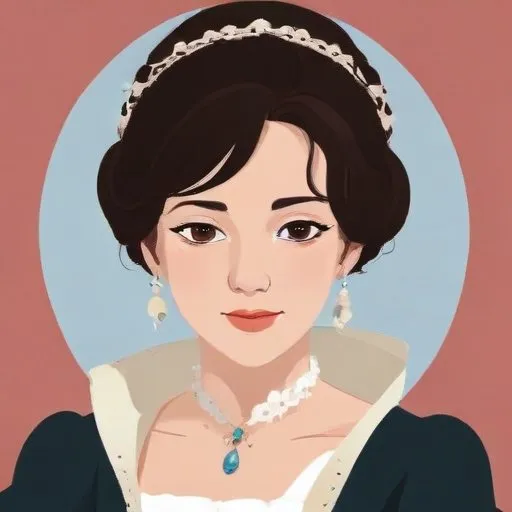
A 17th-century French aristocrat and writer, known for her witty and insightful letters that offer a unique glimpse into the lives of the French nobility during the reign of Louis XIV.
Marie de RabutinChantal, Marquise de Sévigné, is revered as one of the greatest icons of French 17th-century literature, celebrated for her witty and vivid letters that have captivated readers for centuries. These letters, mostly addressed to her daughter Franoise-Marguerite, are a testament to her exceptional writing skills, insight into human nature, and her ability to weave intricate narratives that transport readers to the vibrant world of 17th-century France.
Born on February 5, 1626, in the fashionable Place des Vosges, Paris, Marie de RabutinChantal was raised in an old and distinguished family from Burgundy. Her early life was marked by tragedy, with her father's death during the English attack on the Isle of Rhé in 1627, followed by her mother's passing a few years later. The young orphan was then taken under the care of her maternal grandparents, who fostered her love for literature and learning.
In 1644, Marie de RabutinChantal married Henri, Marquis de Sévigné, a nobleman from Brittany. The marriage was a strategic alliance, but it would soon prove to be a tumultuous one, with Henri's philandering and reckless spending threatening to deplete Marie's family fortune. Thanks to her uncle's careful financial oversight, Marie was able to maintain control over her inheritance, ensuring a sense of independence and security.
Marie de RabutinChantal's letters, penned over several decades, offer a unique glimpse into the intricacies of 17th-century French society. Her correspondence with her daughter, Franoise-Marguerite, is particularly celebrated for its wit, humor, and insight into the human condition. Through her letters, Marie de RabutinChantal paints a vivid portrait of life in rural France, regaling her daughter with stories of love, loss, and the mundane details of everyday life.
Marie de RabutinChantal's letters are renowned for their vivid descriptions of people, places, and events. Her writing is peppered with witty observations, acid-tongued remarks, and piercing insights into the human psyche. Her letters are a testament to her exceptional storytelling skills, as she effortlessly weaves together seemingly disparate threads to create a rich tapestry of 17th-century French life.
Marie de RabutinChantal's letters have had a profound impact on French literature, influencing generations of writers and thinkers. Her unique style, characterized by its wit, humor, and insight, has inspired countless imitators and admirers. Today, she is revered as one of the greatest epistolary writers of all time, her letters continuing to captivate readers with their timeless charm and wit.
Marie de RabutinChantal's letters have also had a profound impact on modern society, influencing the way we think about relationships, family, and social hierarchy. Her writing has inspired countless adaptations, from plays and operas to films and television dramas. Her legacy extends beyond the world of literature, shaping our understanding of history, culture, and human nature.
Marie de RabutinChantal, Marquise de Sévigné, remains an enigmatic figure, her life and letters continuing to captivate readers and inspire writers to this day. Her wit, humor, and insight have cemented her place as one of the greatest epistolary writers of all time, ensuring her legacy will endure for generations to come.
Born in 1712
A pioneering thinker who shaped modern democracy and education with his ideas on social contracts, general will, and the importance of early childhood education. His writings influenced the French Revolution and modern political thought.
Born in 1694
A witty and insightful 18th-century writer and philosopher who used satire to critique societal norms and advocate for reason, tolerance, and human rights.
Born in 1606
A 17th-century French mastermind behind iconic plays like "Le Cid" and "Horace", known for pioneering the classical French tragedy genre.
Born in 1622
A 17th-century master of comedy, he penned witty plays that satirized the French aristocracy, leaving a lasting impact on Western theater. His works remain widely performed and adapted today.
Born in 1639
A 17th-century master of French tragedy, crafting intricate, psychologically complex dramas that probed the human condition, influencing the development of Western theatre.
