


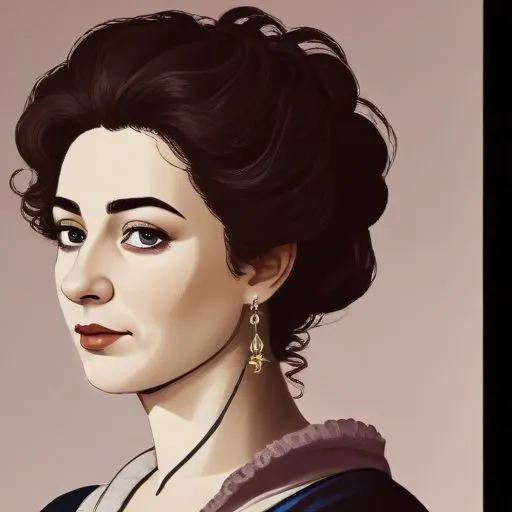
Madame de La Fayette, a 17th-century French writer, is renowned for authoring La Princesse de Clèves, France's first historical novel and one of the earliest novels in literature. This pioneering work of fiction not only showcased her remarkable writing skills but also paved the way for future generations of writers.
Born Marie-Madeleine Pioche de La Vergne in 1634, Madame de La Fayette was part of a wealthy noble family in Paris. At the tender age of 16, she became the maid of honor to Queen Anne of Austria, an experience that would later influence her writing.
Under the tutelage of Gilles Ménage, she received a literary education in Italian and Latin, which introduced her to the fashionable salons of Madame de Rambouillet and Madeleine de Scudéry. These intellectual gatherings played a significant role in shaping her writing style and exposing her to the works of prominent writers.
In 1655, Madame de La Fayette married François Motier, Comte de La Fayette, a widowed nobleman eighteen years her senior. The marriage brought her two sons and a life of luxury, but it was her trips to Paris that allowed her to maintain her connections with the literary circle.
Her salon became a hub for prominent writers, including Henrietta of England, Antoine Arnauld, and Segrais. It was during this period that she formed a close relationship with François de La Rochefoucauld, author of Maximes, who introduced her to literary luminaries like Racine and Boileau.
Madame de La Fayette's writing career began in 1662 with the publication of La Princesse de Montpensier, which she released anonymously. This practice of anonymity was a common practice among female writers of that era, as it allowed them to maintain their social standing while pursuing their literary passions.
Her most celebrated work, La Princesse de Clèves, was published in 1678. This novel is still studied and admired today for its intricate plot, well-developed characters, and historical accuracy.
Madame de La Fayette's contributions to French literature are undeniable. She not only wrote one of the first novels in literature but also paved the way for future generations of writers. Her work influenced authors like Madame de Sévigné and Jean-Jacques Rousseau, cementing her place in the literary canon.
Madame de La Fayette's legacy extends beyond her literary achievements. She was a strong, independent woman who navigated the complexities of 17th-century French society with grace and determination. Her life serves as an inspiration to anyone who has ever pursued their passion, despite the obstacles that stood in their way.
Madame de La Fayette's remarkable life and literary achievements serve as a testament to her pioneering spirit and her contributions to French literature. As we delve into the world of 17th-century France, we are reminded of the power of literature to transcend time and inspire future generations.
Born in 1803
A French Romantic-era mastermind who composed iconic symphonies, operas, and orchestral works, revolutionizing classical music with his bold, expressive style.
Born in 1639
A 17th-century master of French tragedy, crafting intricate, psychologically complex dramas that probed the human condition, influencing the development of Western theatre.
Born in 1622
A 17th-century master of comedy, he penned witty plays that satirized the French aristocracy, leaving a lasting impact on Western theater. His works remain widely performed and adapted today.
Born in 1606
A 17th-century French mastermind behind iconic plays like "Le Cid" and "Horace", known for pioneering the classical French tragedy genre.
Born in 1694
A witty and insightful 18th-century writer and philosopher who used satire to critique societal norms and advocate for reason, tolerance, and human rights.
Born in 1712
A pioneering thinker who shaped modern democracy and education with his ideas on social contracts, general will, and the importance of early childhood education. His writings influenced the French Revolution and modern political thought.
