


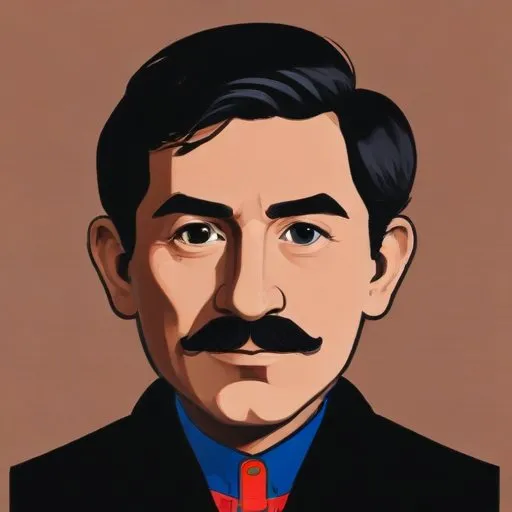
A physicist and philosopher who developed a comprehensive and systematic philosophy of science, known for his critiques of pseudoscience and his work on the philosophy of physics.
Throughout his long and distinguished career, Bunge remained committed to the pursuit of knowledge, never wavering in his dedication to the principles of scientific realism. As we reflect on his legacy, we are reminded of the power of unwavering intellectual curiosity and the importance of upholding the values of inquiry and discovery.
In a career that spanned nearly a century, Bunge left an indelible mark on the world of philosophy and science. As we celebrate his life and legacy, we honor the unwavering champion of scientific realism, who remained steadfast in his pursuit of knowledge and truth.
Born in 1879
A brilliant physicist who developed the theory of relativity and is considered one of the most influential scientists of the 20th century, known for his groundbreaking work in physics and mathematics.
Born in 1885
A pioneer in quantum mechanics, he introduced the concept of wave-particle duality, revolutionizing our understanding of atomic structure. His philosophical approach to science also explored the nature of reality and human understanding.
Born in 1901
A pioneer in quantum mechanics, he formulated the uncertainty principle, which revolutionized our understanding of the atomic world. His groundbreaking work reshaped modern physics.
Born in 1922
A physicist-turned-historian who challenged traditional notions of scientific progress, arguing that paradigm shifts occur in revolutionary leaps rather than gradual accumulation of knowledge. He's famous for his book "The Structure of Scientific Revolutions".
Born in 1922
A Hungarian mathematician and philosopher who developed the concept of "methodology of scientific research programs" and critiqued the traditional notion of scientific progress. He's known for his work on the philosophy of mathematics and science.
Born in 1924
A provocative philosopher who challenged traditional notions of science, reason, and knowledge, arguing that there is no single, objective truth. He's known for his anarchic approach to epistemology and his critique of scientific methodology.
Born in 1926
A pioneer in multiple fields, this mathematician, computer scientist, and philosopher made significant contributions to the development of functional programming, philosophy of mind, and philosophy of language. Their work continues to influence contemporary debates in these areas.
