


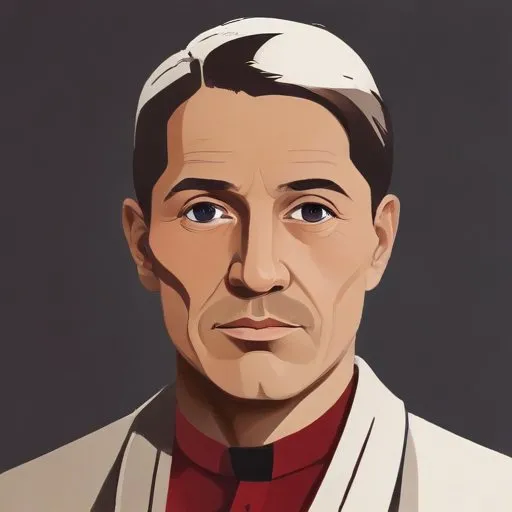
A pioneering Canadian ethnographer and academic who studied and preserved Indigenous cultures, particularly Inuit and Huron folklore, through extensive fieldwork and documentation. Their work helped raise awareness and appreciation for Native Canadian heritage.
Marius Barbeau is renowned for his groundbreaking contributions to Canadian anthropology, particularly in the fields of ethnography and folklore. As a pioneering ethnographer, he is credited with championing Québécois folk culture and exhaustively documenting the social organization, narrative, and musical traditions of the Tsimshian-speaking peoples in British Columbia.
Frdric Charles Joseph Marius Barbeau was born on March 5, 1883, in Sainte-Marie, Quebec. Initially, he pursued studies for the priesthood, but later shifted his focus to law, earning a degree from Université Laval in 1907. A Rhodes Scholarship took him to Oriel College, Oxford, where he discovered his passion for anthropology, archeology, and ethnography under the guidance of R. R. Marett.
In 1911, Barbeau joined the National Museum of Canada as an anthropologist, working alongside Edward Sapir. He spent his entire career at the museum, retiring in 1949. During this period, he conducted extensive fieldwork, initially among the Huron-Wyandot people in Quebec City and southern Ontario. His research focus then shifted to the Tsimshian, Gitxsan, and Nisgaa peoples of British Columbia, resulting in a vast repository of knowledge on their social organization, narrative, and musical traditions.
Barbeau's work was marked by unconventional theories about the peopling of the Americas. He challenged prevailing views by proposing that the Americas were inhabited by multiple waves of migrations from Asia, rather than a single migration. His research also highlighted the importance of indigenous cultures and their contributions to Canadian identity.
Marius Barbeau's contributions to Canadian anthropology are immeasurable. He is considered a founder of Canadian anthropology and his work has inspired generations of researchers. His legacy extends beyond academia, influencing modern society by promoting cross-cultural understanding and appreciation for indigenous cultures.
“The study of man is the study of his culture.” – Marius Barbeau
Barbeau's work was influenced by prominent anthropologists of his time, such as Marcel Mauss and Edward Sapir. His research methodology and theories were shaped by the intellectual climate of the early 20th century, which emphasized the importance of fieldwork and cultural relativism.
Marius Barbeau received numerous awards and honors for his contributions to anthropology, including the Royal Society of Canada's Tyrrell Medal in 1945.
A visual representation of Barbeau's life and career can be seen below:
| 1883 | Born in Sainte-Marie, Quebec |
| 1907 | Received law degree and Rhodes Scholarship |
| 1911 | Joined National Museum of Canada as anthropologist |
| 1911-1912 | Conducted fieldwork among Huron-Wyandot people |
| 1920 | Joined Victoria Memorial Museum (later National Museum of Canada) |
| 1949 | Retired from National Museum of Canada |
Marius Barbeau's remarkable career and contributions have cemented his place as a pioneer in Canadian anthropology, earning him a lasting legacy that continues to inspire and educate generations to come.
Born in 1858
Pioneering anthropologist and linguist who challenged prevailing racial and cultural stereotypes, establishing modern anthropology and contributing significantly to our understanding of human diversity and cultural relativity.
Born in 1901
A pioneering anthropologist and author who studied and wrote about diverse cultures, shedding light on human behavior and societal norms. Her groundbreaking work continues to influence modern anthropology and beyond.
75 Years Old
A Polish athlete who won Olympic medals in the 400 meters hurdles and 4x400 meters relay at the 1964 Tokyo Olympics, setting multiple national records.
Born in 1908
A founder of modern anthropology, known for structuralism and deciphering the underlying patterns of human culture and society. His work bridges the gap between sociology, psychology, and philosophy.
Born in 1926
A French historian and philosopher who critiqued power structures and social norms, arguing that knowledge and truth are shaped by those in power. He's known for his concepts of power, discipline, and surveillance.
96 Years Old
A French sociologist, anthropologist, and philosopher who developed the concept of "cultural capital" and critiqued social inequality, highlighting how power and privilege are maintained through cultural and symbolic means.
