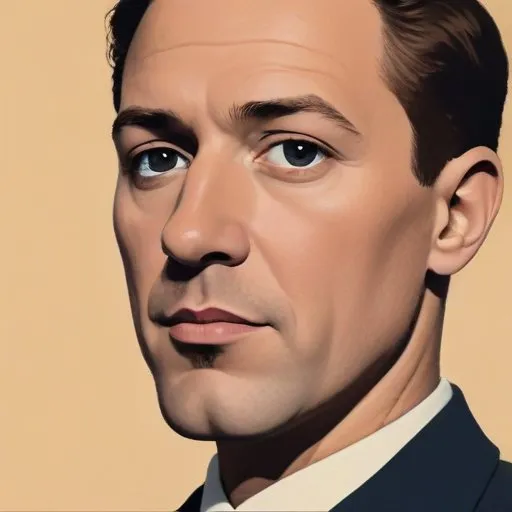
Mark Tobey

Mark Tobey

Mark Tobey was born on December 11th, 1890

Full Name: Mark Tobey
Occupation: Painter and Educator
Nationality: American-Swiss
Birthplace: Wisconsin
Birth Year: 1890
Known For: Abstract Expressionism and Calligraphic Paintings
Fields: Art and Education
Notable Works: White Writing

A pioneering abstract expressionist, known for his unique calligraphic style and fusion of Eastern and Western artistic traditions. His innovative works paved the way for future generations of artists.

Written by: Sofia Garcia Sofia Garcia

Mark Tobey: The Abstract Expressionist Pioneer

A Life of Artistic Innovation

Mark Tobey, an American painter, is renowned for his densely structured compositions that resonate with the principles of Abstract Expressionism. Born on December 11, 1890, in Centerville, Wisconsin, Tobey's artistic journey was marked by a unique blend of Eastern philosophies, calligraphic strokes, and a passion for exploring the human experience.

The Northwest School and the Birth of a Movement

Tobey was a founding member of the Northwest School, a group of artists that included Guy Anderson, Kenneth Callahan, Morris Graves, and William Cumming. This collective sought to break free from the conventions of traditional art forms, embracing a more expressive and intuitive approach. As a senior figure in the group, Tobey's guidance and mentorship played a significant role in shaping the artistic vision of his contemporaries.

Influences and Inspirations

Tobey's artistic style was deeply influenced by his fascination with Eastern religions, particularly the Bahá'í Faith, which he converted to in the 1920s. This spiritual awakening had a profound impact on his creative process, inspiring him to explore new forms of expression. His travels to Mexico, Europe, and the Middle East further enriched his artistic perspective, exposing him to diverse cultural and philosophical traditions.

Artistic Contributions and Legacy

Tobey's artistic contributions are multifaceted and far-reaching. His "white writing" technique, characterized by intricate, calligraphic strokes, introduced a new level of expressiveness to abstract art. This innovative approach paved the way for future generations of artists, influencing the development of Abstract Expressionism as a whole. His work has been exhibited extensively in the United States and Europe, earning him widespread recognition and acclaim.

Personal Life and Milestones

Tobey's personal life was marked by a series of significant milestones. In 1921, he founded the art department at The Cornish School in Seattle, Washington, where he taught for many years. His travels took him to various parts of the world, including Palestine, Israel, Turkey, Lebanon, China, and Japan. In the early 1960s, he relocated to Basel, Switzerland, where he spent the final years of his life with his companion, Pehr Hallsten.

Controversies and Debates

Tobey's artistic style has been the subject of debate among art critics and historians. Some have questioned whether his "allover" paintings, characterized by their dense, intricate structures, influenced the development of Jackson Pollock's drip paintings. While the exact nature of their influence remains unclear, it is undeniable that Tobey's innovative approach to abstract art left an indelible mark on the art world.

Philosophical Contributions and Beliefs

Tobey's artistic vision was deeply rooted in his philosophical beliefs. He saw art as a means of exploring the human condition, seeking to capture the essence of existence through his work. His interest in Eastern religions and philosophies reflected his desire to transcend the boundaries of the physical world, exploring the realms of the spiritual and the unknown.

quotes and Memorable Sayings

"The artist must be free to express himself, and the only way to do this is to be free from the conventions of the world."

Legacy and Impact

Mark Tobey's artistic legacy continues to inspire and influence generations of artists, art critics, and enthusiasts. His innovative approach to abstract art, combined with his philosophical and spiritual explorations, has left an indelible mark on the art world. As a pioneer of Abstract Expressionism, Tobey's contributions have shaped the course of modern art, ensuring his place as one of the most important artists of the 20th century.
Timeline
1890
Born in Centerville, Wisconsin
Mark Tobey was born on December 11, 1890, in Centerville, Wisconsin. He would go on to become an American-Swiss painter and educator.
1906
Started Art Studies
Tobey began his art studies at the Art Institute of Chicago, where he was exposed to a range of artistic styles and influences.
1921
Moved to New York City
Tobey moved to New York City, where he became a key figure in the citys avant-garde art scene and developed his signature calligraphic style.
1931
Taught at Dartington Hall
Tobey taught at Dartington Hall, a progressive school in England, where he developed his ideas on art and education.
1976
Passed Away
Mark Tobey passed away on April 24, 1976, leaving behind a legacy as a pioneering abstract expressionist painter.
Mark Tobey

Mark Tobey Quiz

What artistic style is Mark Tobey most associated with?

Score: 0/5
FAQ
What is Mark Tobeys artistic style?
Mark Tobeys artistic style is characterized by his unique blend of abstract expressionism and mysticism, often featuring intricate, web-like patterns and vibrant colors.
What is Mark Tobeys most famous artwork?
Mark Tobeys most famous artwork is Broadway Norm (1936), a painting that showcases his signature white writing style.
Where did Mark Tobey study art?
Mark Tobey studied art at the Art Institute of Chicago, where he was heavily influenced by the works of Paul Klee and Wassily Kandinsky.
What awards did Mark Tobey receive?
Mark Tobey received numerous awards, including the Guggenheim Fellowship and the Grand Prize at the 1958 Pittsburgh International Exhibition of Contemporary Painting.
What is Mark Tobeys contribution to modern art?
Mark Tobeys contribution to modern art lies in his innovative use of abstraction and his ability to create a unique visual language that explored the spiritual and philosophical dimensions of art.

Related People:

Mark Rothko

Born in 1903

A pioneer of abstract expressionism, creating bold, rectangular color fields that evoke emotions and spark introspection. His works are a testament to the power of art to transcend language and culture.

Barnett Newman

Born in 1905

A pioneer of Abstract Expressionism, creating bold, color-field paintings that evoke emotions and spirituality. His iconic "zip" paintings feature vibrant, vertical stripes that seem to pulse with energy.

Clyfford Still

Born in 1904

A pioneering abstract expressionist, creating large-scale, gestural paintings that explored the human experience and the American West. Known for his bold, expressive brushstrokes and vibrant color palette.

Robert Rauschenberg

Born in 1925

A pioneer of pop art, combining found objects and images to create innovative, thought-provoking works that blurred the lines between art and everyday life.

Jasper Johns

96 Years Old

A pioneer of pop art, creating enigmatic works that explore the relationship between perception, reality, and meaning, often using common images like flags and targets.

Franz Kline

Born in 1910

A prominent figure in the abstract expressionist movement, known for bold, expressive brushstrokes and vibrant colors that evoked intense emotions.

Willem de Kooning

Born in 1904

A pioneering abstract expressionist, he revolutionized modern art with bold, expressive brushstrokes and vibrant colors, creating dynamic, emotive pieces that continue to inspire.

Jackson Pollock

Born in 1912

Pioneering abstract expressionist artist who splattered and dripped paint to create dynamic, emotive works that redefined modern art. Known for chaotic, intricate pieces that evoke raw emotion.