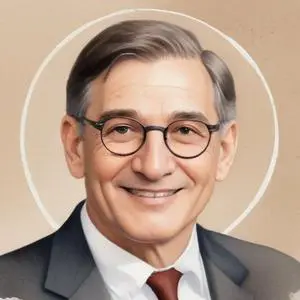
Marshall Rosenberg: The Pioneer of Nonviolent Communication
A Legacy of Peace and Understanding
Marshall Rosenberg is renowned for developing Nonviolent Communication (NVC), a groundbreaking approach to conflict resolution, interpersonal relationships, and personal growth. Through his pioneering work, Rosenberg has empowered countless individuals and communities worldwide to adopt a more compassionate, empathetic, and effective way of communicating.
Early Life and Influences
Born on October 6, 1934, in Canton, Ohio, Rosenberg grew up in a Jewish family with a strong sense of social justice. His parents, Jean and Fred Donald Rosenberg, instilled in him the importance of compassion and empathy. Rosenberg's maternal grandmother, Anna Satovsky Wiener, played a significant role in his early life, and her struggle with ALS would later influence his work on NVC.
The Development of Nonviolent Communication
In the early 1960s, Rosenberg began developing NVC, a process that combines mindfulness, empathy, and honest self-expression to resolve conflicts and foster deeper connections. This approach emphasizes active listening, empathy, and understanding, rather than judgment, blame, or violence. Rosenberg's work in NVC has been instrumental in transforming the way people communicate, both personally and professionally.
Founding the Center for Nonviolent Communication
In 1984, Rosenberg founded the Center for Nonviolent Communication (CNVC), a non-profit organization dedicated to promoting NVC worldwide. As the Director of Educational Services, Rosenberg traveled extensively, facilitating workshops and trainings, and establishing a global network of NVC practitioners.
Philosophical Contributions and Beliefs
Rosenberg's work is rooted in his conviction that empathy, kindness, and understanding are essential for creating a more peaceful and harmonious world. He believed that by adopting NVC, individuals could transform their relationships, communities, and societies, ultimately leading to a more compassionate and equitable world.
Personal Milestones and Key Life Events
- Rosenberg married three times, with his third wife, Valentina, being his partner until his passing in 2015.
- He had three children with his first wife, Vivian.
- Rosenberg's exposure to anti-Semitism in his childhood had a profound impact on his later work, as he sought to understand and address the underlying causes of violence and discrimination.
Influence on Modern Society
Rosenberg's work has had a profound impact on modern society, influencing various fields, including:
- Education: NVC has been integrated into school curricula, promoting more effective communication and conflict resolution among students, teachers, and administrators.
- Mediation: Rosenberg's approach has been used in mediation and conflict resolution, helping to resolve disputes and promote understanding between individuals, groups, and nations.
- Personal growth: NVC has empowered individuals to communicate more effectively, leading to deeper relationships, improved self-awareness, and increased empathy.
Quotes and Memorable Sayings
- "When we focus on clarifying what is being observed, felt, and needed, rather than on diagnosing and judging, we create a clear and empathetic communication."
- "Empathy is a choice, and it's a powerful tool for building connection and resolving conflict."
Legacy and Historical Context
Marshall Rosenberg's legacy extends far beyond his own work, as his Nonviolent Communication approach has inspired a global movement towards more compassionate and effective communication. His influence has been felt across various disciplines, from education and mediation to personal growth and conflict resolution. As we continue to navigate the complexities of modern life, Rosenberg's work serves as a beacon of hope, guiding us towards a more peaceful, empathetic, and harmonious world.
FAQ
What is Marshall Rosenbergs approach to conflict resolution?
Marshall Rosenbergs approach to conflict resolution is based on Nonviolent Communication (NVC), a methodology that emphasizes empathy, honesty, and understanding in resolving conflicts. Sub-question: What are the key principles of Nonviolent Communication?
How did Marshall Rosenberg develop Nonviolent Communication?
Marshall Rosenberg developed Nonviolent Communication through a combination of spiritual exploration, social activism, and psychological research, drawing on the work of thinkers such as Mahatma Gandhi and Carl Rogers.
What is Marshall Rosenbergs experience like working with international organizations?
Marshall Rosenbergs experience working with international organizations such as the United Nations has been marked by a sense of collaboration and cooperation, as well as the challenge of applying NVC principles in complex, high-stakes contexts.
Did Marshall Rosenberg win any awards for his work?
Marshall Rosenberg won several awards for his work, including the Warrior of Citizens Award and the Institute of Noetic Sciences Pax Artwork Award.
What is Marshall Rosenbergs legacy in the field of conflict resolution?
Marshall Rosenbergs legacy in the field of conflict resolution is one of pioneering innovation and dedication to promoting empathy, understanding, and peaceful communication.