


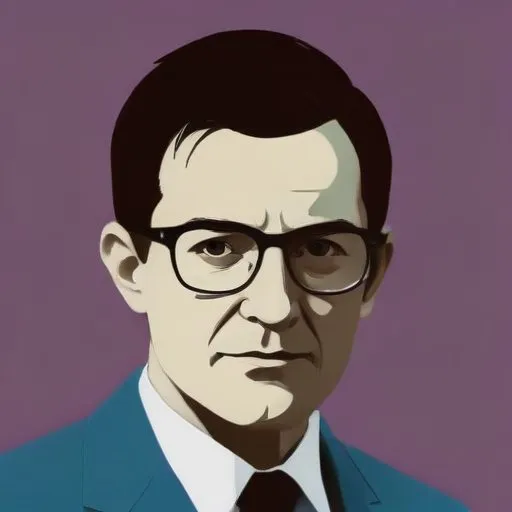
Developed the Lowry-Bronsted acid-base theory, which revolutionized understanding of chemical reactions and remains a fundamental concept in chemistry today.
Martin Lowry, a renowned English physical chemist, is best known for developing the groundbreaking Brønsted-Lowry acid-base theory, a fundamental concept in chemistry that has far-reaching implications in various fields. Simultaneously, yet independently, Lowry and Danish chemist Johannes Nicolaus Brønsted discovered this theory, which revolutionized the understanding of acid-base reactions.
Born on October 26, 1874, in Low Moor, Bradford, West Riding of Yorkshire, England, Lowry was part of a Cornish family. His father, Reverend E. P. Lowry, was a minister of the Wesleyan Church in Aldershot from 1892 to 1919. Lowry's educational journey began at Kingswood School in Bath, Somerset, and later at the Central Technical College in South Kensington, where he discovered his passion for chemistry.
Under the guidance of Henry Edward Armstrong, a prominent English chemist, Lowry studied chemistry and later became Armstrong's assistant from 1896 to 1913. During this period, he worked as a lecturer in chemistry at the Westminster Training College (1904-1913). In 1913, Lowry took on the role of head of the chemical department at Guy's Hospital Medical School, becoming the first teacher of chemistry in a medical school to be made a University Professor at the University of London.
Lowry's most notable appointment came in 1920, when he became the Chair of Physical Chemistry at the University of Cambridge, a position he held until his death in 1936. Throughout his career, Lowry was an active member of the Faraday Society, serving as its president from 1928 to 1930. In 1914, he was elected a fellow of the Royal Society.
During World War I, Lowry contributed significantly to the war effort, acting as director of shell-filling (1917-1919) and working for the Trench Warfare Committee, Chemical Warfare Committee, and Ordnance Committee. His services earned him the Order of the British Empire and the Order of Saints Maurice and Lazarus.
Martin Lowry's work on the Brønsted-Lowry acid-base theory has had a profound impact on the field of chemistry. His theory, which states that an acid is a proton donor and a base is a proton acceptor, has far-reaching implications in fields such as biochemistry, environmental science, and pharmacy. Lowry's contributions have paved the way for a deeper understanding of chemical reactions and have influenced generations of chemists.
Through his work, Lowry has left an indelible mark on the scientific community, and his legacy continues to inspire and educate scientists around the world.
In 1904, Lowry married the daughter of Reverend C. Wood, and the couple had two sons and a daughter together. Lowry passed away on November 2, 1936, leaving behind a rich legacy in the world of chemistry.
Born in 1886
Organic chemist and professor who pioneered the development of organic synthesis methods, leading to the discovery of numerous natural products, including alkaloids and steroids.
Born in 1918
Organic chemist and Nobel laureate who developed a new way to synthesize complex molecules, revolutionizing the field of chemistry. His work led to the creation of new medicines and materials.
Born in 1920
A British chemist and academic who was awarded the Nobel Prize in Chemistry in 1967 for his work on flash photolysis, a technique used to study fast chemical reactions. He made significant contributions to the understanding of chemical kinetics and reaction mechanisms.
Born in 1822
Union general during the American Civil War, known for his disastrous defeat at the Second Battle of Bull Run. He was relieved of his command and later served in the Indian Wars.
Born in 1917
Pioneering organic chemist who synthesized complex natural products and developed new methods, earning a Nobel Prize in Chemistry. His work revolutionized the field of organic chemistry.
