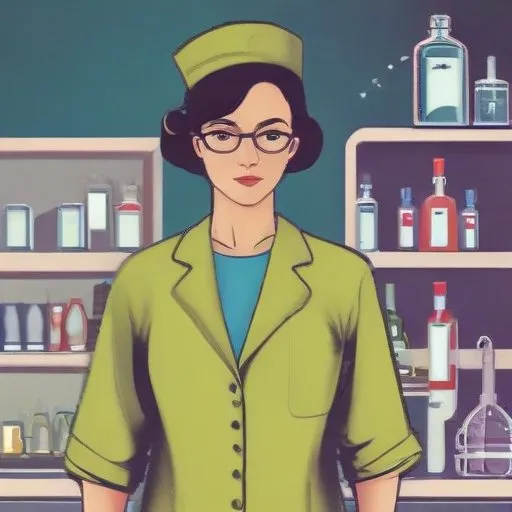
Mary Engle Pennington: The Pioneering Chemist Who Revolutionized Food Safety
Mary Engle Pennington was a trailblazing American bacteriological chemist, food scientist, and refrigeration engineer, renowned for her groundbreaking contributions to the preservation, handling, storage, and transportation of perishable foods. As the first female lab chief at the U.S. Food and Drug Administration, she paved the way for women in STEM fields and left an indelible mark on the world of food science.
Early Life and Education
Born on October 8, 1872, in Nashville, Tennessee, to Henry and Sarah Malony Pennington, Mary's curiosity in chemistry was sparked at the tender age of 12, after reading a library book on medicinal chemistry. This curiosity led her to approach a University of Pennsylvania professor for guidance, only to be told to return when she was older. Undeterred, Mary entered the University of Pennsylvania in 1890, completing her B.S. degree in chemistry with minors in botany and zoology in 1892. Although the university didn't grant degrees to women at the time, she was awarded a certificate of proficiency instead.
A Trailblazing Career
Mary's academic prowess and determination earned her a Ph.D. from the University of Pennsylvania in 1895, with a thesis titled "Derivatives of Columbium and Tantalum." Her subsequent research fellowships at Yale University and the University of Pennsylvania laid the foundation for her pioneering work in food science. In 1898, she founded the Philadelphia Clinical Laboratory, where she conducted bacteriological analyses and educated farmers on the handling of raw milk to improve safety.
Preserving Perishable Foods
Mary's most significant contributions came in the realm of food preservation. She developed innovative methods for refrigeration, canning, and freezing, ensuring that perishable foods could be safely stored and transported. Her work had a profound impact on the food industry, revolutionizing the way food was produced, distributed, and consumed.
Awards and Honors
Mary's trailblazing achievements were recognized with numerous accolades, including:
- The Notable Service Medal from President Herbert Hoover
- The Garvin-Olin Medal from the American Chemical Society
- Induction into the National Inventors Hall of Fame, National Women's Hall of Fame, and ASHRAE Hall of Fame
- Five patents for her groundbreaking inventions
Legacy
Mary Engle Pennington's pioneering work has had a lasting impact on food safety, paving the way for future generations of scientists and engineers. Her legacy serves as a testament to the power of determination, hard work, and innovation, inspiring countless women to pursue careers in STEM fields.
Personal Milestones
Throughout her life, Mary faced numerous challenges, including gender bias and lack of recognition. However, she remained committed to her work, driven by a passion for improving food safety and quality. Her personal milestones, including her PhD and founding of the Philadelphia Clinical Laboratory, serve as a testament to her unwavering dedication.
Impact on Modern Society
Mary's work has had a profound impact on modern society, transforming the way we produce, distribute, and consume food. Her innovations in refrigeration, canning, and freezing have enabled the global food industry to thrive, providing safe and nutritious food to millions around the world.
Mary Engle Pennington's remarkable story serves as a beacon of inspiration, reminding us that with determination, hard work, and innovation, we can overcome even the most daunting challenges and leave a lasting impact on the world.
FAQ
What was Mary Engle Pennington known for in the scientific community?
Mary Engle Pennington was a pioneering American bacteriological chemist and refrigeration engineer, known for her work in food preservation and safety.
What was Mary Engle Penningtons role in the development of refrigeration?
Mary Engle Pennington was a leading expert in refrigeration, and her work led to significant advances in food preservation and safety.
What were some of Mary Engle Penningtons notable achievements?
Some of Mary Engle Penningtons notable achievements include her work on the development of refrigeration systems and her contributions to the establishment of the United States Food Administration.
How did Mary Engle Penningtons work influence the field of bacteriology?
Mary Engle Penningtons work influenced the field of bacteriology, leading to significant advances in our understanding of foodborne pathogens and the development of safer food storage practices.
What was Mary Engle Penningtons legacy in the scientific community?
Mary Engle Penningtons legacy in the scientific community is one of pioneering achievement, paving the way for future generations of women in STEM fields.