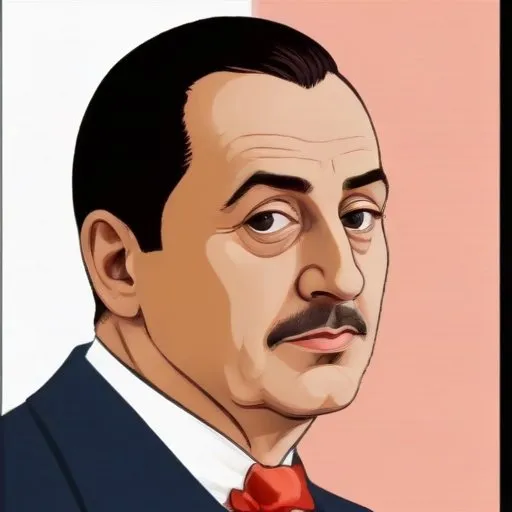
Massimo d'Azeglio: The Italian Statesman and Renaissance Man
Massimo d'Azeglio, a prominent figure in 19th-century Italian politics, is best known for his tenure as Prime Minister of Sardinia and his tireless efforts to unify the Italian states. As a moderate liberal and member of the Moderate Party, d'Azeglio played a significant role in shaping the country's future.
Early Life and Artistic Pursuits
Born in Turin on October 24, 1798, Massimo Taparelli, Marquess d'Azeglio, came from an ancient and noble Piedmontese family. His father, Cesare d'Azeglio, held a high position at court and was an officer in the Royal Sardinian Army. During his residency in Rome, young Massimo developed a passion for art and music, which led him to pursue a career as a painter, much to the dismay of his conservative family.
Political Career and Rise to Prominence
D'Azeglio's political career began in Rome, where he led an abstemious life and devoted himself to art. He eventually entered politics, becoming a member of the Piedmontese parliament in 1849. His moderate liberal views and strong leadership skills earned him recognition, and he was appointed Prime Minister of Sardinia in 1849, a position he held for almost three years.
Key Reforms and Achievements
During his tenure as Prime Minister, d'Azeglio implemented several significant reforms, including:
- Consolidating the parliamentary system, ensuring the young King Victor Emmanuel II accepted his constitutional status.
- Working towards a peace treaty with Austria, strengthening Sardinia's position in the region.
- Introducing freedom of worship, promoting religious tolerance and coexistence.
- Supporting public education, recognizing its importance in shaping the country's future.
- Seeking to reduce the power of the clergy in local political affairs, promoting secular governance.
Later Life and Legacy
After his tenure as Prime Minister, d'Azeglio continued to play an active role in politics, serving as a senator and working towards resolving the Roman Question through reconciliation between the Vatican and the new Italian Kingdom. His efforts ultimately contributed to the annexation of the United Provinces of Central Italy.
Philosophical Contributions and Beliefs
D'Azeglio's moderate liberal views were rooted in his belief in the importance of individual freedom, religious tolerance, and secular governance. He advocated for a federal union between Italian states, recognizing the need for a unified Italy.
Inspirational Quotes
"The liberty of the individual is the highest good, and it is the duty of the state to protect it."
"Unity is not a sacrifice, but a gain; not a limit, but a means to achieve greater things."
D'Azeglio's contributions to Italian politics and society continue to inspire generations. His commitment to individual freedom, religious tolerance, and secular governance has left a lasting impact on the country's development. As a statesman, novelist, and painter, Massimo d'Azeglio serves as a testament to the power of vision, leadership, and dedication to creating a better future.
Personal Milestones and Key Life Events
- Born on October 24, 1798, in Turin, Italy
- Became Prime Minister of Sardinia in 1849
- Served as a senator after his tenure as Prime Minister
- Died on January 15, 1866
Massimo d'Azeglio's remarkable life and achievements continue to inspire and educate, leaving behind a legacy that will forever be etched in the annals of Italian history.
FAQ
What was Massimo dAzeglios role in Italian politics?
Massimo dAzeglio was a prominent Italian statesman and politician, who played a key role in the unification of Italy, and served as Prime Minister of Sardinia-Piedmont from 1849 to 1852.
What were Massimo dAzeglios contributions to Italian literature?
DAzeglio was also a prolific writer, and his literary works include novels, poetry, and essays, which dealt with themes of Italian identity, politics, and culture.
How did Massimo dAzeglio influence the Risorgimento?
DAzeglio was a strong advocate for Italian unification, and his writings and political activities helped to shape the Risorgimento movement, which ultimately led to the creation of a unified Italian state.
What was Massimo dAzeglios relationship with Camillo Benso di Cavour?
DAzeglio had a close and collaborative relationship with Camillo Benso di Cavour, who was the Prime Minister of Sardinia-Piedmont, and the two worked together to achieve Italian unification.
Why is Massimo dAzeglio an important figure in Italian history?
DAzeglio is an important figure in Italian history due to his significant contributions to Italian politics, literature, and the Risorgimento movement, which helped to shape the modern Italian state.