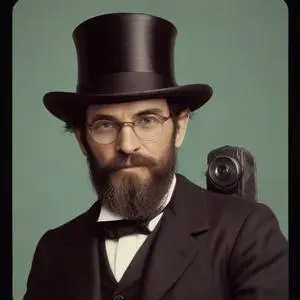
Mathew Brady: The Father of American Photography
The Civil War's Visual Chronicler
Mathew Brady is renowned for his captivating and poignant photographs of the American Civil War, earning him the title of one of the earliest and most famous photographers in American history. His pioneering work brought the harsh realities of war to the public eye, humanizing the conflict and leaving an indelible mark on the nation's psyche.
Early Life and Education
Born between 1822 and 1824 in Warren County, New York, Brady was the youngest of three children to Irish immigrant parents, Andrew and Samantha Julia Brady. Little is known about his early life, but at the age of 16, he moved to Saratoga, New York, where he met portrait painter William Page and became his student.
The Apprenticeship and Experimentation
In 1839, Brady and Page traveled to Albany and then to New York City, where he continued to study painting with Page and with
Samuel Morse, Page's former teacher. Morse, who had met Louis Jacques Daguerre in France, introduced Brady to the daguerreotype technique, which would become the foundation of his photographic career.
Rise to Prominence
Brady opened his own studio in New York City in 1844, quickly establishing himself as a sought-after photographer. He went on to capture the likenesses of prominent figures such as U.S. presidents
John Quincy Adams,
Abraham Lincoln,
Millard Fillmore, and
Martin Van Buren, as well as other public figures.
Visualizing the Civil War
When the Civil War broke out, Brady's innovative use of a mobile studio and darkroom enabled him to take thousands of vivid battlefield photographs, bringing the reality of war to the public's doorstep. Although he didn't take most of the photographs himself, relying on his assistants, his studio's output during this period remains unparalleled.
Legacy and Decline
After the war, Brady's fortunes declined sharply. The government did not purchase the master copies of his photographs as he had anticipated, and his business struggled to recover. Despite his significant contributions to American photography, Brady died on January 15, 1896, in debt and largely forgotten.
Philosophical Contributions and Beliefs
Brady's work was not only a testament to his technical skill but also reflected his profound understanding of the human experience. He believed that photography had the power to shape public opinion and bring people closer to the truth. Through his lens, he humanized the faces of war, emphasizing the importance of empathy and compassion.
Influence on Modern Society
Brady's pioneering work paved the way for modern photojournalism, inspiring generations of photographers to follow in his footsteps. His photographs continue to captivate audiences, serving as a poignant reminder of the devastating consequences of war and the importance of preserving our collective history.
Personal Milestones and Key Life Events
- 1844: Opened his own studio in New York City
- 1861: Began photographing the American Civil War
- 1865: Photographed the surrender of Confederate General Robert E. Lee at Appomattox
- 1896: Died on January 15th in debt and largely forgotten
Trivia and Fun Facts
- Brady was known for his fastidious attention to detail, often taking hours to prepare a single photograph
- He was a prolific photographer, capturing over 7,000 images during his lifetime
- Brady's photographs were often reproduced in newspapers and magazines, making him one of the first photographers to reach a mass audience
Historical Context and Legacy
Mathew Brady's photographs continue to fascinate audiences, offering a unique window into America's past. His innovative spirit, combined with his technical skill, has earned him a permanent place in the annals of American history. As we continue to navigate the complexities of our world, Brady's work serves as a powerful reminder of the importance of empathy, compassion, and the human experience.
FAQ
What is Mathew Bradys significance in the history of photography?
Mathew Brady is considered one of the most important photographers in American history, known for his pioneering work in the field of documentary photography. He is best known for his portraits of prominent Americans, including Abraham Lincoln.
What was Mathew Bradys role in documenting the American Civil War?
Mathew Brady played a crucial role in documenting the American Civil War, taking thousands of photographs of battles, soldiers, and landscapes. His photographs provided a vivid and poignant record of the conflict.
What were Mathew Bradys techniques and innovations in photography?
Mathew Brady was a pioneer in the field of photography, experimenting with new techniques such as wet plate collodion process. He also developed a mobile studio, which allowed him to take photographs in the field.
What are some of Mathew Bradys most famous photographs?
Mathew Brady took many famous photographs, including portraits of Abraham Lincoln, Robert E. Lee, and Ulysses S. Grant. He also took iconic photographs of Civil War battles, such as the Battle of Gettysburg.
What is Mathew Bradys legacy in American history?
Mathew Bradys legacy in American history is that of a pioneering photographer who documented the Civil War and preserved the images of prominent Americans. His photographs continue to be an important part of American cultural heritage.