


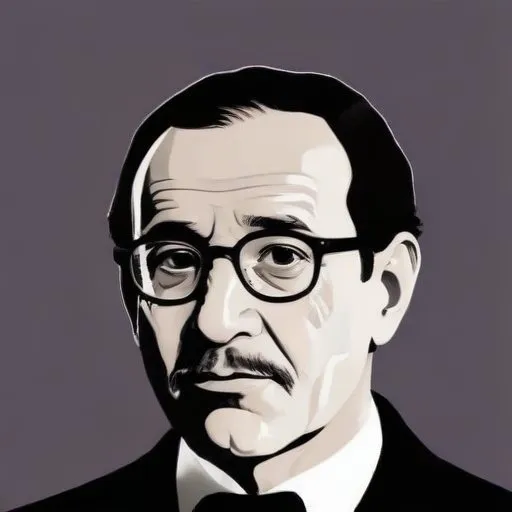
French zoologist and philosopher who studied and classified many animal species, and wrote influential works on natural history and philosophy.
Mathurin Jacques Brisson, a French zoologist and natural philosopher, is renowned for his groundbreaking contributions to the field of ornithology and his work on the classification of animals. His magnum opus, "Ornithologie", published in 1760, remains an iconic work in the field of bird studies, lauded for its meticulous descriptions and accurate classification of bird species.
Born on 30 April 1723 in Fontenay-le-Comte, western France, Brisson's early life was marked by a keen interest in natural history. He abandoned his studies for ecclesiastical orders and instead worked as the curator of a private natural history collection owned by René-Antoine Ferchault de Réaumur, a wealthy French naturalist.
This exposure sparked Brisson's fascination with the classification of animals, particularly birds. He drew inspiration from the works of Carl Linnaeus and Jacob Theodor Klein, pioneers in the field of taxonomy.
Brisson's "Le Rgne animal", published in 1756, showcased his expertise in zoology and laid the foundation for his magnum opus, "Ornithologie". This six-volume work, published in 1760, is a testament to his meticulous observations and dedication to the field.
While Brisson's work did not conform to the binomial system, his introduction of genus names was later accepted by the International Commission on Zoological Nomenclature (ICZN). Linnaeus, the father of taxonomy, heavily relied on Brisson's work when updating his "Systema Naturae" in 1766, incorporating 240 bird species based exclusively on Brisson's research.
Brisson's work had a profound impact on the field of ornithology, influencing generations of scientists and naturalists. His emphasis on accurate descriptions and classification paved the way for future research and discoveries.
Today, Brisson is remembered as a pioneer in the field of zoology and natural philosophy, his contributions continuing to inspire and inform modern scientists and researchers.
Following the death of his patron, Réaumur, in 1757, Brisson abandoned zoology and went on to succeed Jean-Antoine Nollet as professor of physics at the Collège de France in 1762.
Little is known about Brisson's personal life, but his dedication to his work and his contributions to the field of ornithology have left an indelible mark on the scientific community.
Mathurin Jacques Brisson's legacy continues to inspire and inform modern scientists, his contributions to the field of ornithology a testament to his dedication and passion for natural history.
As we reflect on his life and work, we are reminded of the importance of meticulous observation, accurate classification, and the pursuit of knowledge. Brisson's pioneering spirit continues to inspire generations of scientists, naturalists, and enthusiasts alike.
Born in 1744
A French soldier, biologist, and academic who developed a theory of inheritance of acquired characteristics, proposing that organisms adapt to their environment and pass on those traits to their offspring.
Born in 1769
Founded the field of comparative anatomy, establishing extinction as a fact and creating a framework for understanding the natural world through fossil records.
Born in 1775
A pioneer in the field of electromagnetism, he formulated fundamental laws that describe the relationship between electric currents and magnetic fields. His work laid the foundation for many modern technologies, including electric motors and generators.
Born in 1786
A mathematician and politician who made significant contributions to the development of electromagnetism and served as Prime Minister of France, advocating for social reform and education.
Born in 1749
Developed nebular hypothesis of the origin of the solar system and formulated Laplace's equation, a fundamental concept in mathematics and physics. He's considered the founder of celestial mechanics.
Born in 1736
Developed calculus, number theory, and celestial mechanics, making significant contributions to the fields of mathematics and astronomy.
Born in 1752
Developed the theory of elliptic integrals, and his work on number theory laid the foundation for modern cryptography.
Born in 1774
A French polymath who made significant contributions to the fields of physics, astronomy, and mathematics, particularly in the discovery of chromatic polarization and the Biot-Savart law.
