


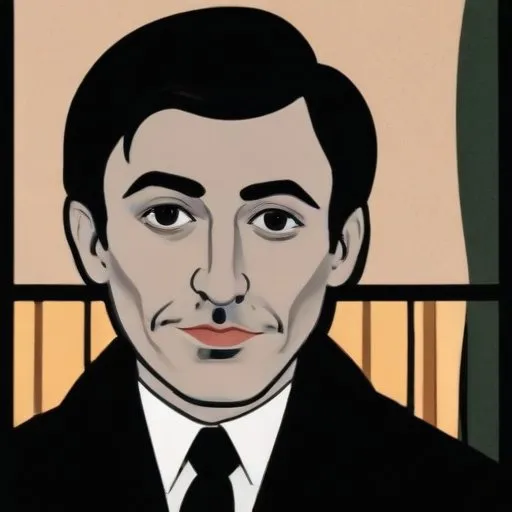
A French painter renowned for capturing the quiet, melancholic beauty of Parisian streets and buildings in bold, expressive colors. His unique style blended Fauvism and Cubism.
Maurice Utrillo, a French painter of the School of Paris, is renowned for his captivating cityscapes, particularly his depictions of Montmartre, the iconic quarter of Paris where he was born and raised. His unique style, characterized by bold colors and distorted forms, has made him one of the most celebrated painters of urban landscapes in the 20th century.
Utrillo was born Maurice Valadon on December 26, 1883, to Suzanne Valadon, an 18-year-old artist's model. The identity of his father remains a mystery, with speculation surrounding a possible liaison with either Pierre Puvis de Chavannes or Renoir. However, in 1891, Spanish artist Miquel Utrillo acknowledged paternity, although the veracity of this claim is still debated.
By the 1920s, Utrillo's unique style had earned him international recognition. His paintings, characterized by their vibrant colors and distorted forms, captured the essence of urban life in Montmartre. In 1928, the French government honored him with the Cross of the Légion d'honneur, a testament to his contributions to the art world.
Throughout his life, Utrillo struggled with mental health issues, leading to repeated internments in mental asylums. Despite these challenges, he continued to paint, driven by his passion for capturing the urban landscape. His determination and creativity ultimately triumphed, leaving behind a legacy of over 1,000 paintings that continue to inspire and captivate art lovers today.
Utrillo's artistic philosophy was deeply rooted in his connection to the urban environment. He believed that art should be a reflection of everyday life, and his paintings embodied this conviction. His unique perspective on the cityscape continues to influence modern artists, encouraging them to explore the beauty in the mundane.
Utrillo's work has had a lasting impact on modern society. His urban landscapes have inspired generations of artists, architects, and urban planners to rethink the way we approach city design. His paintings continue to adorn the walls of museums and galleries, serving as a testament to the power of art to shape our understanding of the world around us.
Maurice Utrillo's legacy extends beyond his art to the very fabric of urban culture. His unique perspective on the cityscape continues to inspire artists, designers, and thinkers today. As we navigate the complexities of modern urban life, Utrillo's work serves as a poignant reminder of the beauty and complexity of the urban experience.
Born in 1881
A pioneering artist who transformed modern art with pioneering Cubist works, creating a new visual language that continues to inspire and influence art, design, and culture.
Born in 1869
A pioneering artist who revolutionized modern art with bold, expressive, and colorful works that blurred the lines between painting and sculpture, creating a new language of form and color.
Born in 1893
A renowned Spanish artist, famous for his vibrant, dreamlike paintings and sculptures that blended abstraction and surrealism, creating a unique visual language. His works often featured bold colors, biomorphic forms, and a sense of playfulness.
Born in 1904
A renowned surrealist master of bizarre, dream-like paintings and sculptures that blur reality and fantasy, known for iconic works like "The Persistence of Memory" and "The Elephants".
Born in 1898
A Belgian surrealist painter who challenged perceptions by depicting everyday objects in unexpected contexts, creating thought-provoking and witty visual paradoxes.
Born in 1891
A pioneering figure in Surrealism, creating dreamlike, fantastical works that blurred reality and the subconscious, influencing generations of artists.
Born in 1896
French poet and author who founded Surrealism, a cultural movement that explored the subconscious and the world of dreams. He wrote novels, poems, and essays that continue to influence art and literature today.
Born in 1900
A surrealist painter who created dreamlike, fantastical landscapes with melting objects and eerie atmospheres, blurring the line between reality and fantasy.
