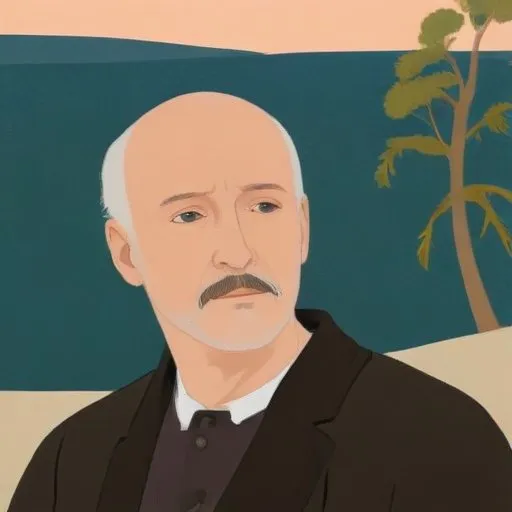
Pierre Puvis de Chavannes: The Painter for France
The Mural Mastermind
Pierre Puvis de Chavannes is renowned for his breathtaking mural paintings that adorned the walls of prominent French institutions, earning him the esteemed title of "the painter for France." With a distinctive style that blended reason, passion, and will, his work has had a profound influence on the art world, inspiring generations of artists.
Early Life and Education
Born on December 14, 1824, in a suburb of Lyon, France, Puvis de Chavannes hailed from an old noble family of Burgundy. His father, a mining engineer, played a significant role in shaping his early life. Initially, Puvis de Chavannes was destined to follow in his father's footsteps, but a serious illness altered his path. During his convalescence in Mcon, he discovered his passion for art, which led him to pursue a career in painting.
He studied under prominent artists Eugène Delacroix, Henri Scheffer, and Thomas Couture, eventually establishing his own unique style that defied classical training. Puvis de Chavannes' dedication to his craft was evident in his diligent attendance of anatomy classes at the Académie des Beaux Arts.
Rise to Prominence
Puvis de Chavannes' Salon debut in 1850 with "Dead Christ" marked the beginning of his esteemed career. However, it wasn't until the French government acquired one of his works that he gained widespread recognition. This milestone propelled him to the forefront of the art world, solidifying his position as a prominent painter in the early Third Republic.
Philosophical Contributions and Beliefs
Puvis de Chavannes' art was characterized by its innate sense of reason, passion, and will. This unique blend of qualities resonated with writer Émile Zola, who praised his work as "an art made of reason, passion, and will." This philosophical approach to art set Puvis de Chavannes apart from his contemporaries, making him a pioneer in the field.
Influence on Modern Society
As a cofounder and president of the Société Nationale des Beaux-Arts, Puvis de Chavannes played a pivotal role in shaping the artistic landscape of France. His work inspired many notable artists, including Robert Genin, and his designs and suggestions aided medallists in their craft.
Career Highlights and Major Works
- "The Sacred Grove" (1884) – A monumental mural painting that adorned the walls of the Sorbonne University
- "The Life of Saint Genevieve" (1876-1898) – A series of murals that decorated the Panthéon in Paris
Legacy and Historical Context
Puvis de Chavannes' remarkable career spanned over four decades, during which he left an indelible mark on the art world. His innovative style and relentless pursuit of artistic excellence have ensured his legacy as one of France's most celebrated painters.
Awards and Honors
- Grand Prix de Rome (1855)
- Chevalier de la Légion d'Honneur (1877)
- Officier de la Légion d'Honneur (1885)
Pierre Puvis de Chavannes' remarkable life and career serve as a testament to his unwavering dedication to his craft, leaving behind a rich cultural heritage that continues to inspire generations of artists and art enthusiasts alike.
FAQ
What style of painting is Pierre Puvis de Chavannes known for?
Pierre Puvis de Chavannes was a French painter and illustrator known for his unique style, which blended elements of neoclassicism, realism, and symbolism. His work is characterized by its dreamy, ethereal quality and a strong focus on composition and color.
How did Pierre Puvis de Chavannes influence the development of French art?
Pierre Puvis de Chavannes played a significant role in shaping the course of French art, inspiring a generation of artists, including the likes of Paul Gauguin and Henri Matisse. His innovative style and techniques paved the way for the development of modern art movements.
What themes did Pierre Puvis de Chavannes explore in his artwork?
Pierre Puvis de Chavannes explored a range of themes in his artwork, including mythology, history, and the human condition. His paintings often featured allegorical and symbolic imagery, inviting viewers to contemplate the deeper meanings behind the scenes.
How did Pierre Puvis de Chavannes balance tradition and innovation in his work?
Pierre Puvis de Chavannes achieved a delicate balance between tradition and innovation, drawing inspiration from classical art forms while experimenting with new techniques and styles. This blend of old and new gave his work a unique and captivating quality.
What is the significance of Pierre Puvis de Chavannes murals?
Pierre Puvis de Chavannes murals are highly significant, showcasing his mastery of large-scale composition and his ability to create works that are both beautiful and thought-provoking. His murals adorn the walls of several prominent buildings, including the Sorbonne and the Paris Panthéon.