


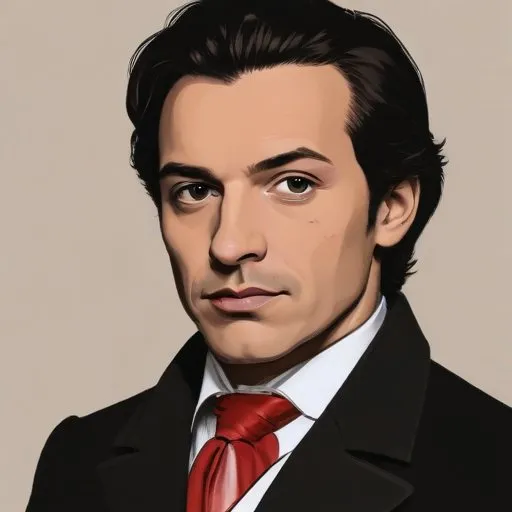
A prominent figure in 19th-century French art, he was a painter and educator who founded his own art school, teaching many notable artists, and was known for his historical and genre paintings.
Thomas Couture, born on December 21, 1815, in Senlis, France, was a trailblazing history painter and teacher, renowned for challenging the traditional artistic establishment of his time. His unorthodox approach to art education and his innovative painting techniques left an indelible mark on the art world, inspiring some of the most prominent artists of the 19th century.
Couture's artistic journey began at the tender age of 11, when his family relocated to Paris, and he enrolled in the industrial arts school, cole des Arts et Mtiers. He later pursued his artistic aspirations at the cole des Beaux-Arts, where he honed his skills under the guidance of renowned artists.
Although Couture faced rejection six times at the prestigious Prix de Rome competition, he remained undeterred and eventually won the prize in 1837. This achievement catapulted him to fame, and he began exhibiting his work at the Paris Salon, earning several medals for his masterpieces, including his iconic painting, Romans During the Decadence (1847).
In 1840, Couture opened his independent atelier, boldly challenging the traditional cole des Beaux-Arts. His innovative approach to art education and his emphasis on individuality attracted a talented group of students, including douard Manet, Henri Fantin-Latour, and Pierre Puvis de Chavannes, who would go on to shape the course of modern art.
Couture's success led to government and church commissions for murals, which he undertook during the late 1840s and 1850s. However, his unorthodox style and refusal to conform to traditional norms led to controversy and mixed criticism, prompting him to leave Paris in 1860.
In 1867, Couture published his seminal work, Mthode et entretiens datelier (Method and Workshop Interviews), which outlined his innovative technique and working methods. This groundbreaking publication was later translated into English as Conversations on Art Methods in 1879, the year of his passing.
Thomas Couture's legacy extends far beyond his own artistic achievements. His pioneering spirit, innovative approach to education, and his influence on modern art movements have made him a celebrated figure in the art world. His students, who went on to become prominent artists, continue to shape the course of art history, ensuring Couture's impact will be felt for generations to come.
"Biography is the exaltation of personality, and personality is the scourge of our time." — Thomas Couture
Born in 1780
A renowned French Neoclassicist painter and illustrator, celebrated for his exquisite portraits and historical scenes that epitomize elegance and refinement. His work continues to inspire artists and art enthusiasts alike.
Born in 1798
A Romantic-era master of expressive brushstrokes and vivid color, creating iconic works that captured the drama and emotion of historical and literary scenes.
Born in 1746
A visionary artist who pioneered Romanticism, capturing the human experience through bold, emotionally charged paintings and sculptures that continue to inspire and unsettle.
Born in 1791
A Romantic-era master of dramatic and emotionally charged art, known for his powerful depictions of horses and the human experience.
Born in 1796
A French painter and etcher, renowned for capturing the essence of landscapes and figures with a unique blend of realism and romanticism, creating dreamy, ethereal scenes.
Born in 1808
A prolific artist of the 19th century, he created powerful social commentary through caricatures and sculptures, exposing the flaws of French politics and society. His works continue to influence satire and cartooning today.
Born in 1819
A pioneer of Realism, this artist rejected idealized representations, instead depicting everyday life and people in a raw, unromanticized manner, influencing the development of modern art.
