


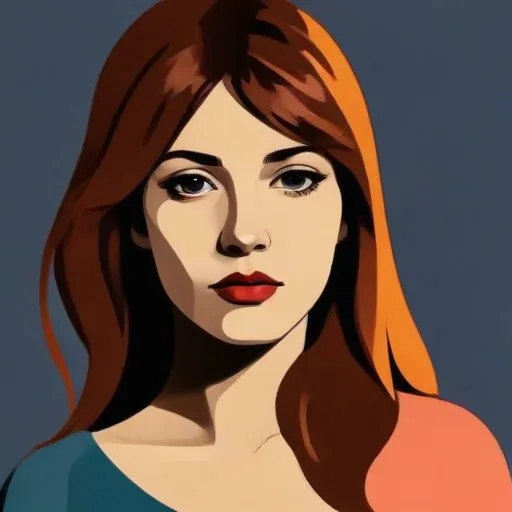
A French model and painter who was a muse to famous artists like Renoir and Degas, and later became a renowned painter in her own right, known for her bold and expressive works.
Suzanne Valadon was a pioneering French painter who defied conventions and pushed boundaries in the art world. Born Marie-Clémentine Valadon in 1865, she was the first woman to be admitted to the Société Nationale des Beaux-Arts in 1894, paving the way for future generations of female artists.
Valadon grew up in poverty in Montmartre, Paris, with her mother, an unmarried laundress. Despite the challenges she faced, she was drawn to the arts from a young age. Her early jobs, including working in a milliner's workshop and as a waitress, only fueled her passion for creativity. At 15, she landed a job as an acrobat in the circus, where she met artists like Toulouse-Lautrec and Berthe Morisot, who would later inspire her own artistic career.
Valadon's artistic career was marked by a series of firsts. She was the first woman to exhibit at the Salon des Indépendants in 1893, and the first woman to paint male nudes, a taboo subject at the time. Her bold and unapologetic approach to art earned her recognition from her contemporaries, including Renoir and Degas.
Valadon's artwork is characterized by its sensuality, intimacy, and honesty. Her subjects often included female nudes, portraits of women, still lifes, and landscapes. She rejected traditional representations of the female form, instead opting for a more realistic and unidealized portrayal. Her use of bold colors and expressive brushstrokes added to the emotional depth of her paintings.
Valadon's impact on modern art is undeniable. She paved the way for future generations of female artists, including Frida Kahlo and Georgia O'Keeffe. Her work continues to inspire artists today, with its raw emotion, intimacy, and sensuality. As a testament to her legacy, her paintings can be found in museums and private collections around the world.
Valadon's personal life was marked by turmoil and tragedy. She had a son, Maurice Utrillo, with a father who was never identified. She later married Paul Mousis, a banker, but the marriage ended in divorce. Despite her challenges, Valadon remained dedicated to her art, continuing to paint until her death in 1938.
Valadon's life and work spanned a tumultuous period in French history, from the Belle Époque to the interwar period. Her art reflects the changing values and attitudes of her time, as well as her own struggles as a woman and an artist. Today, she is recognized as one of the most important female artists of her generation, and her legacy continues to inspire and empower artists around the world.
Born in 1841
A pioneer of Impressionism, creating vibrant, intimate portraits and landscapes that capture the beauty of everyday life. His works evoke a sense of joy and warmth, celebrating the human experience.
Born in 1864
A post-Impressionist master of capturing Parisian nightlife, known for vibrant, expressive paintings and posters of cabarets, brothels, and high society. His works exude a sense of decadence and joie de vivre.
Born in 1884
An Italian artist famous for elongated, emotive portraits and nudes that blended primitivism with cubism, capturing the essence of his subjects with expressive simplicity.
Born in 1883
A French painter renowned for capturing the quiet, melancholic beauty of Parisian streets and buildings in bold, expressive colors. His unique style blended Fauvism and Cubism.
Born in 1880
A pioneer of Fauvism, a style characterized by vivid colors and energetic brushstrokes, creating a new language of art that paved the way for modernist movements.
Born in 1877
A Fauvist painter who captured the vibrant spirit of Parisian nightlife and high society with bold, expressive brushstrokes and vivid colors.
Born in 1848
A post-Impressionist master who broke away from traditional European art forms, creating bold, expressive, and emotive works that explored the human experience and the beauty of the natural world.
Born in 1882
A pioneer of Cubism, creating fragmented forms and multiple perspectives in art, revolutionizing modern art movements.
