


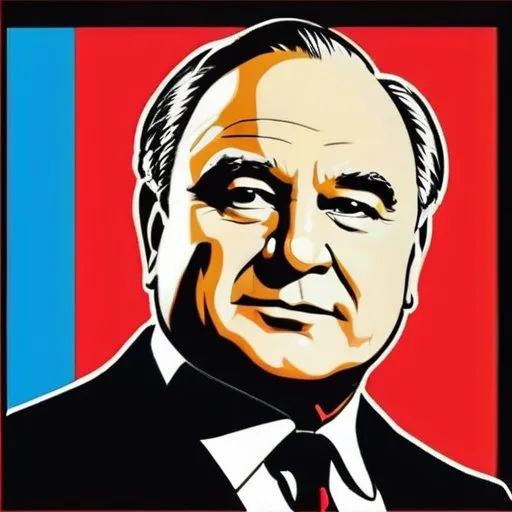
A Canadian-British mogul who dominated the newspaper industry and played a significant role in shaping British politics during World War II. He's renowned for his influential journalism and wartime leadership.
Max Aitken, Lord Beaverbrook, was a British-Canadian businessman, politician, and newspaper proprietor who left an indelible mark on British media and politics in the early 20th century. Known for his audacious entrepreneurial spirit, Beaverbrook built a media empire that spanned across the globe, earning him the nickname "The Press Lord."
Born on May 25, 1879, in Maple, Ontario, Canada, Aitken moved to England in 1906, where he began his career as a stockbroker. However, it was his venture into the newspaper industry that catapulted him to fame. In 1910, he acquired the Daily Express, which became the flagship of his media empire, Amalgamated Press.
Under Beaverbrook's leadership, the Daily Express became Britain's best-selling newspaper, with a circulation of over 2 million copies. He also acquired the Evening Standard, Sunday Express, and other publications, making him one of the most powerful media moguls in the country. His influence extended beyond the media world as he entered politics, serving as a Member of Parliament (MP) from 1910 to 1916 and then again from 1918 to 1938.
During World War I, Beaverbrook played a significant role in the British war effort, overseeing the Ministry of Information and later serving as the Minister of Aircraft Production. His contributions earned him a barony in 1917, and he became known as Lord Beaverbrook.
Beaverbrook's approach to journalism was guided by his strong belief in the power of the press to shape public opinion. He was a fierce defender of press freedom and advocated for a free and independent press. His philosophical views were reflected in his editorial policies, which emphasized sensationalism, populism, and simplification of complex issues.
At the height of his empire, Beaverbrook's net worth was estimated to be around £10 million, equivalent to approximately £500 million today. His business acumen and shrewd investments made him one of the wealthiest men in Britain.
Beaverbrook's impact on modern society is undeniable. He played a significant role in shaping British public opinion, influencing politics, and setting the tone for popular journalism. His legacy continues to inspire media moguls and politicians alike.
Despite his many achievements, Beaverbrook was not without controversy. He was accused of sensationalism, bias, and exploiting his newspapers for political gain. His flamboyant personality and extravagant lifestyle also drew criticism.
"I run the newspaper to make a profit, not to make a friend."
"The best way to get a good headline is to start with a good story."
Beaverbrook's life and career spanned a transformative period in British history, from the Edwardian era to the post-World War II era. His legacy serves as a testament to the power of entrepreneurship, politics, and the media in shaping public opinion and national discourse.
Beaverbrook's contemporaries included other influential newspaper proprietors, such as Alfred Harmsworth, Lord Northcliffe, and David Lloyd George. While they shared some similarities, Beaverbrook's unique approach to journalism and politics set him apart.
Beaverbrook's relationships with prominent figures, including Winston Churchill and George Bernard Shaw, are well-documented. He was known for his charm, wit, and generosity, earning him many friends and admirers.
Beaverbrook's influence on popular culture is evident in the many films, books, and plays that feature him as a character or reference his life and work. His flamboyant personality and media empire have become synonymous with the golden age of British journalism.
Beaverbrook was a committed philanthropist, donating to various causes, including education and healthcare. He also supported the arts, particularly music and theater.
Max Aitken, Lord Beaverbrook, was a trailblazer in every sense of the word. His life and career serve as a testament to the power of human ingenuity, entrepreneurial spirit, and a commitment to public service.
95 Years Old
A media mogul who built a vast empire of newspapers, TV networks, and film studios, shaping global news and entertainment landscapes.
82 Years Old
A Canadian historian and author who wrote extensively on Canadian and world history, including biographies of prominent figures like Franklin D. Roosevelt and Richard Nixon.
Born in 1867
A conservative leader who served as Prime Minister three times, known for his role in navigating Britain through economic crises and advocating for imperial protectionism.
Born in 1871
Prolific writer of historical novels and adventure stories, also a talented landscape painter.
